

That final mortgage payment disappears, freeing up what feels like a full $2,000 in monthly cash flow. But even with a paid-off home, property taxes and maintenance often run $12,000 a year – that's another $1,000 every month you still account for.
It feels like the ultimate financial freedom in retirement, this 'free and clear' housing. Yet, true financial freedom asks you to look beyond that immediate relief.
It means understanding the ongoing costs and the potential for that capital to work elsewhere. The real value of a paid-off home isn't just the absence of a mortgage. It's a complex equation of benefits, costs, and opportunities. By the end of this, you'll have a clear framework to weigh the financial and emotional aspects of your $450,000 home against your personal retirement goals.
Your Paid-Off Home: Key Retirement Figures
No Mortgage Frees Up Substantial Monthly Cash Flow
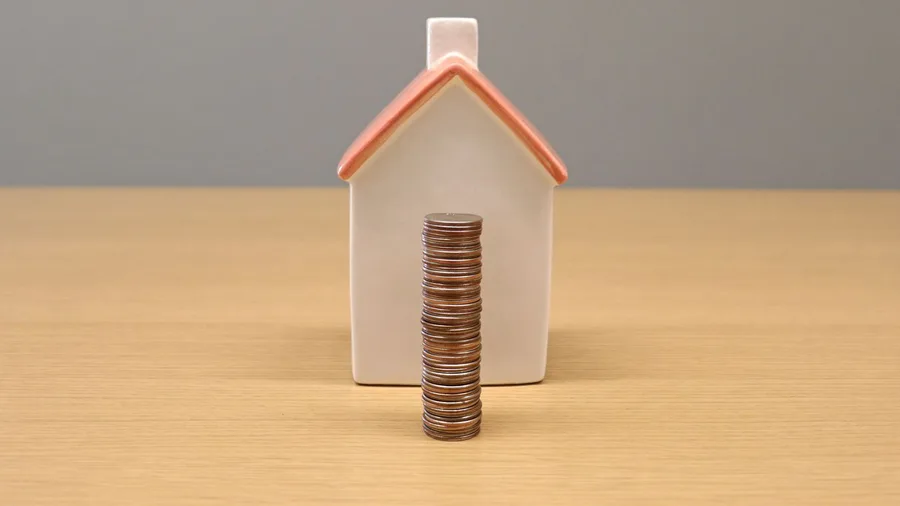
Eliminating your mortgage payment immediately boosts your monthly disposable income.
That's a direct and tangible benefit. Instead of sending a check to the bank, that cash stays right in your hands.
This isn't theoretical. A hypothetical $2,000 monthly mortgage payment, once it's gone, translates to an impressive $24,000 more cash annually in your household.
This significant sum is more than just a number on paper. It's $24,000 you can redirect toward daily living expenses, cover unexpected costs, or even increase your savings rate. For many, this additional cash flow means the difference between simply getting by and truly enjoying their retirement years without the constant pressure of a major housing bill.
It offers immediate financial breathing room, taking away a constant worry. You're not renting, where a monthly housing expense is a permanent fixture. With a paid-off home, a substantial portion of your former housing cost is now flexible cash flow, available to make choices that truly fit your retirement lifestyle and goals.
Equity Acts as a Stable, Tax-Advantaged Portfolio Segment

Your home equity offers a significant store of value, keeping your wealth separate from volatile market swings you'd see in the stock market. This provides a steady anchor in your financial portfolio, a reassuring presence amidst economic uncertainty.
A powerful advantage of this asset comes through tax law. When you sell your primary residence, single filers can exclude up to $250,000 of capital gains from tax. For married couples, that exclusion is $500,000. This tax-free growth makes your home a uniquely valuable part of your overall wealth strategy.
It's a distinct kind of security.
However, home equity is primarily a store of wealth, not an income-generating asset. Your paid-off home offers security and a place to live, but it won't automatically send you monthly income like a pension or a dividend fund. Understanding its role as a secure wealth container and tax shield is key for your retirement income plan.
Home Equity — Tax Advantages at a Glance
🏠 Primary Residence
Key Asset
💰 Capital Gains Exclusion (Single)
$250,000
👨👩👧 Capital Gains Exclusion (Married)
$500,000
🛡️ Market Stability
Low Volatility
Property Taxes and Maintenance Are Ongoing Costs

Even without a mortgage, owning a home incurs significant recurring expenses. These costs demand a consistent place in your retirement budget. It's a real consideration. While equity offers stability, the physical home carries its own set of ongoing financial burdens.
These aren't small bills. Property taxes, for instance, average $5,000 annually.
Then there are combined costs for annual home insurance and general maintenance. These typically run around $7,000. That covers everything from a leaky roof to routine upkeep like painting or tree trimming. Unexpected needs and regular responsibilities truly add up.
Together, these expenses combine for a total of $12,000 annually. This is a considerable strain on a fixed retirement income. It directly offsets some of the cash flow benefits you gain from not having a mortgage payment.
What's more, these ongoing costs tend to rise over time. Property values increase. This often leads to higher taxes. Maintenance and repair services also grow more expensive. This slow but steady increase erodes the perceived 'free' value of a paid-off home. It makes it less 'free' than it might initially feel when that mortgage check finally stops.
Ongoing Costs vs. Mortgage Savings
Understanding the Real Monthly Housing Outlay
Capital Tied Up Limits Investment Opportunity

Beyond the direct costs of property taxes and maintenance, having significant capital tied up in a paid-off home means that money isn't working for you in other investments, potentially limiting your overall returns.
This is what's known as an opportunity cost: the benefit you miss out on when choosing one option over another. For a home valued at $450,000, that capital could be invested elsewhere.
If you were to invest that $450,000 conservatively at an average of 4% per year – which no one can promise, as investment returns fluctuate – it could generate somewhere around $18,000 in annual returns.
That $18,000 is a hypothetical annual return you're not earning because your capital is illiquid, meaning it's tied up in your home rather than being in cash or marketable securities.
This situation reduces your financial flexibility, as that wealth isn't readily available to invest in other income-generating assets like bonds or dividend stocks, or to cover other retirement expenses. It's a trade-off: security in a paid-off home versus potential growth and income from diversified investments.
Capital in Home vs. Invested — A Comparison
Capital in Paid-Off Home
- Fixed asset, stable value
- Tax-free capital gains on sale
- Illiquid, difficult to access
- Ongoing costs (taxes, maintenance)
Capital Invested (4% return)
- Potential for income generation
- Liquidity for emergencies
- Market risk and volatility
- Taxable returns (unless Roth)
Home Equity Offers Less Liquidity Than Other Assets

Accessing the cash value of your home equity isn't quick or easy; it requires specific financial processes and often comes with costs and delays, unlike withdrawing from a savings account or selling stocks.
While a paid-off home holds substantial value, that equity is illiquid. You can't just swipe a card or click a button to use it. Getting cash means engaging in more complex financial transactions.
Common methods include selling the home outright, which involves listing, showings, and closing procedures that can take months. Another way is a Home Equity Line of Credit, or HELOC, which functions like a second mortgage, letting you borrow against your home's value.
You might also consider a reverse mortgage, allowing you to convert equity into cash without monthly payments, but it comes with its own set of fees and considerations.
Each of these approaches involves significant timeframes, paperwork, appraisals, and often closing costs or other fees. This lack of immediate access means home equity is less suitable for unexpected, urgent financial needs compared to genuinely liquid assets you can access within days or even hours.
Downsizing Can Unlock Significant Tax-Free Cash
Selling your current, paid-off home and moving into a smaller, less expensive residence can free up a substantial amount of tax-free cash for your retirement.
This strategy, often called downsizing, involves selling your existing home and then purchasing a new, smaller home for less money. The difference in price becomes cash in your pocket.
The real benefit here often comes from the primary residence capital gains exclusion. This allows single filers to exclude up to $250,000 of profit from their home sale from taxes, and married couples up to $500,000, provided they meet certain ownership and use tests.
Imagine selling your $450,000 paid-off home and buying a new one for $250,000. That would free up $200,000 in cash, potentially entirely tax-free because it falls under the exclusion limit.
This move offers a significant trade-off: you get financial liberation for retirement planning, but it often means leaving behind a home with deep emotional ties. It's a deeply personal decision that balances a family home against significant financial flexibility.
💰 Downsizing for Retirement Cash Flow
Evaluate Needs
Assess current living needs, desired location, and emotional attachment to the existing home.
Research Market
Determine the sale value of your current home and potential purchase price of a smaller home.
Calculate Net Proceeds
Factor in selling costs, moving expenses, and capital gains exclusion to estimate available cash.
Execute Sale & Purchase
Coordinate the sale of your current home with the purchase of a new, less expensive residence.
Invest Unlocked Cash
Allocate freed-up funds to income-generating investments or a secure emergency fund.
Reverse Mortgages Provide Tax-Free Income Streams

A reverse mortgage lets you convert a portion of your home equity into cash payments without selling your house.
This means you can access money tied up in your home, which for a $450,000 paid-off home could be substantial, while still living there. You can get these funds as a single lump sum, set up a line of credit you draw from as needed, or receive scheduled monthly payments.
Crucially, the money you receive through a reverse mortgage is typically tax-free, and it doesn't have to be paid back as long as you continue to live in the home and meet the loan terms.
The loan only becomes due when you permanently move out, sell the property, or pass away, at which point your estate or heirs would settle it.
It's a specific solution.
This setup is particularly helpful for retirees who find themselves 'house-rich but cash-poor' – meaning you own a valuable home but lack liquid funds for daily expenses or a comfortable retirement lifestyle. It allows you to supplement your income without taking on new monthly mortgage payments, easing the strain on a fixed income when every dollar counts.
💡 PRO TIP
Reverse Mortgage Insight
A reverse mortgage lets you tap equity without monthly payments, but it accrues interest over time, reducing your home's inheritance value. Understand all fees and impacts before committing.
Home Equity Offers a Backup Emergency Fund

The equity you've built in a paid-off home absolutely can serve as a vital financial buffer, a true last-resort fund for major, unforeseen expenses. It offers a deep breath when catastrophic worries hit.
You typically access this security through a Home Equity Line of Credit (HELOC) or a cash-out refinance. A HELOC lets you borrow against your home's value as needed, like a flexible loan.
However, accessing these funds isn't as simple or fast as pulling money from a checking account. The process demands an application, a credit check, and typically involves paying for an appraisal, which can cost a few hundred dollars.
It is slow.
The full process takes weeks, even a month or two. Its illiquidity makes home equity unsuitable for routine emergencies, like a sudden $500 car repair or a broken appliance.
Instead, it functions as a critical safety net for truly catastrophic needs. Imagine a prolonged health crisis or a major structural repair not covered by insurance, where $100,000 or $200,000 could make all the difference.
Accessing Home Equity for Emergencies
Frequently Asked Questions
Does a paid-off house mean I have no housing costs in retirement?
No, a paid-off house eliminates the mortgage payment, but you still face ongoing expenses. These include annual property taxes, home insurance premiums, and regular maintenance costs, which can total $12,000 or more per year.
Is my home equity considered part of my retirement portfolio?
Yes, home equity is a significant asset, but it is typically illiquid. It provides stable value and tax advantages upon sale, but it does not generate income like traditional investments. It is a store of wealth rather than a cash-flow source until accessed.
Should I pay off my mortgage before retirement or invest the money instead?
This is a common dilemma. Paying off the mortgage provides guaranteed savings on interest and boosts cash flow. Investing the equivalent funds could yield higher returns, but with market risk. Your choice depends on your risk tolerance and financial priorities.
How does downsizing my home impact my retirement finances?
Downsizing can free up substantial tax-free cash, especially with the primary residence capital gains exclusion. This cash can then be invested for income or used to bolster your liquid assets, significantly improving your financial flexibility in retirement.
What are the biggest risks of relying on home equity for retirement income?
The biggest risks include illiquidity, potential for property value depreciation, and the fees and complexities associated with accessing equity through HELOCs or reverse mortgages. Also, ongoing maintenance costs can reduce the net value of your home over time.
Weighing Your Paid-Off Home's Role in Retirement
A paid-off home in retirement is a powerful asset, offering both emotional security and tangible financial benefits through increased cash flow. However, its true value is found only by running the numbers and understanding both its quiet costs and its overlooked opportunities.
Consider your personal goals, health, and desired lifestyle. If preserving your family home is paramount, factor in the ongoing costs and opportunity trade-offs. If financial flexibility is the priority, explore options like downsizing or carefully structured reverse mortgages. Your home is not just a place to live; it is a financial lever waiting for a thoughtful plan.
Re-evaluate Your Retirement Numbers Today
Start by listing your current annual home expenses (taxes, insurance, maintenance). Then, calculate how much cash flow your paid-off home genuinely provides after these costs.