
It can feel like everyone else's investments are taking off, while your own portfolio is just inching along. You're contributing steadily, but the numbers barely seem to budge. This comparison trap is real, and it's where most people get discouraged.
That slow initial progress is normal.
It's an inherent part of compound growth, the essential prelude to its most powerful phase where time itself becomes the dominant contributor to your wealth.
There's a predictable tipping point when your earned returns finally begin to dwarf your ongoing contributions. This is where your investments truly accelerate and start to 'explode' in value.
Knowing this shift helps you commit.
Your Money's Acceleration Point
What Is Compound Growth, Really?
Compound growth, often described as a kind of financial magic, is simply the process of earning returns not just on your initial investment, but also on all the interest and gains your money has already earned.
Think of it like a financial snowball effect. You start with a small snowball – your initial investment. As it rolls down a hill, it picks up more snow, getting bigger.
Crucially, it's not just growing from the new snow you add (your contributions); it's growing because the already-bigger snowball is picking up even more snow faster.
This is a key difference from simple interest, which calculates returns only on the original amount you put in, never reinvesting the earnings.
With compounding, every dollar earned by your investments gets folded back in to generate its own returns, creating an accelerating cycle.
That ongoing reinvestment of all earnings is what allows your money to truly start working for itself, generating returns on top of returns.
Why Compound Growth Feels Like Crawling at First

That feeling of slow, almost imperceptible growth in your investment account is completely normal in the early stages of compounding.
When you first start out, your total invested principal is relatively small. Even with a decent return rate, the actual dollar amount it generates each year feels modest.
Consider an initial investment of $10,000 earning an average 8% return. In that first year, your investments would generate only $800.
Now compare that to the $6,000 you might contribute yourself over the year, adding $500 to your account each month.
That $6,000 of new cash infusion absolutely dwarfs the $800 earned by your investments.
This significant imbalance means that new money you put in makes up the bulk of your portfolio's growth, making the overall increase feel slow and incremental. It's not that it isn't working; your contributions are just working harder than your returns right now.
🌱 The Compound Growth Journey
Seed Your Fund
Make your initial investment to establish a starting point for growth.
Consistent Contributions
Add money regularly; this drives early growth more than returns do.
Slow Start
Your contributions will significantly outweigh the returns generated by your small principal.
Tipping Point
Annual returns begin to match or exceed your new contributions.
Exponential Leap
Returns rapidly outpace contributions, leading to dramatic wealth expansion.
Maximize Time
Allow decades for the snowball effect to reach its full, powerful momentum.
The Tipping Point: When Your Money Starts to Explode

While early growth can feel like a crawl, there comes a critical 'tipping point' when your money's organic returns finally begin to outpace your personal contributions.
This isn't an exact calendar year everyone hits, but rather a powerful phase where the returns generated by your accumulated principal and gains start to significantly outweigh the new money you're adding.
For instance, using our example of a $10,000 initial investment with $6,000 annual contributions and an 8% average return, this shift typically happens around year 7 or 8.
At this point, the portfolio value is approximately $75,000. An 8% return on that amount generates about $6,000 in annual earnings.
Suddenly, your investment earnings are roughly matching your entire year's worth of contributions.
This is the moment your money truly becomes self-sustaining and starts to 'explode', taking over the heavy lifting of growth from your personal efforts.
Growth Factors: Speed Up or Slow Down?
- Higher Initial Investment — More money at the start provides a larger base for immediate compounding.
- Consistent, Larger Contributions — Regularly adding capital rapidly increases the principal that generates returns.
- Higher Average Annual Return — Even a few extra percentage points dramatically compress the growth timeline.
- Frequent Withdrawals — Taking money out reduces your principal, slowing the compounding effect significantly.
- High Investment Fees — Erode returns over time, acting as a drag on your portfolio's growth.
- Stopping Contributions Early — Removes a key driver of early growth and limits future compounding potential.
- Market Timing Attempts — Trying to predict market ups and downs often leads to missed gains and poor returns.
What Speeds Up (Or Slows Down) Your Compounding?
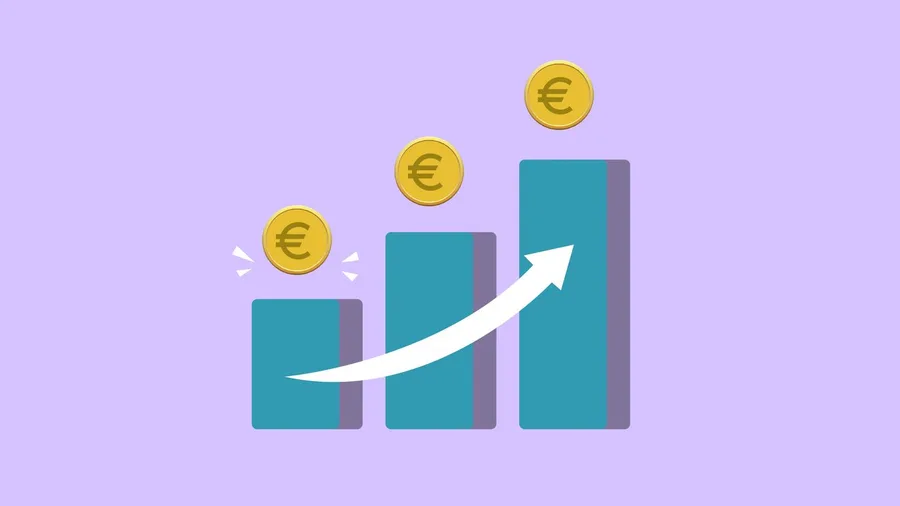
The exact timing of when your compound growth truly takes off is highly dependent on a few key choices you make.
A larger initial investment, for example, provides a significantly bigger base for your money to start working immediately. Instead of waiting for smaller contributions to build up, that $10,000 upfront, as in our ongoing example, earns 8% from day one, giving compounding a head start.
Beyond the initial sum, the consistency and amount of your ongoing contributions play a massive role. Adding $500 every month, totaling $6,000 a year, rapidly builds the principal that generates returns. The more frequently and substantially you add to your investment, the quicker your accumulated balance grows to a point where annual returns begin to outweigh these new additions.
Then there's the average annual return rate, which acts like a multiplier. Even a difference of just a couple of percentage points can dramatically compress the timeline to reach that acceleration phase. A higher return means your money works harder, faster, causing the portfolio to double more quickly and reach its 'explosion' point sooner.
These factors work together, directly influencing how quickly your earned returns can match and then surpass the money you're personally putting in.
💡 PRO TIP
The Power of Patience
The hardest part of compound growth is resisting the urge to pull money out when returns are low or to abandon a consistent plan. Trust the process, especially when it feels slow.
Time Is Your Biggest Ally in Compound Growth

While factors like your initial investment and contribution size certainly shape your portfolio, the single most powerful ingredient you have in compound growth is simply time.
Time is your greatest asset.
It's the critical element that allows the snowball effect of compounding to truly gather immense momentum. Each year, your earnings aren't just added to your base; they also start earning their own returns, creating a powerful cycle that accelerates dramatically over decades.
This isn't just about waiting; it's about giving your money enough cycles to compound repeatedly.
The results are stark.
Consider the example we've been tracking: an initial $10,000 investment with $6,000 added annually at an 8% average return.
After 20 years, that portfolio value reaches around $350,000. That's a solid sum. But look at what happens in the next ten years: by year 30, the value nearly triples to approximately $900,000.
That's a jump of about $550,000 in just the final decade.
Compare that to the $340,000 accumulated over the entire first 20 years. This huge difference in growth clearly shows how time's amplified impact allows your invested money, rather than your new contributions, to do the heavy lifting later on. Your patience pays off exponentially.
Early Start vs. Delayed Start: The Cost of Waiting
Beginning at 25 (30 Years)
- Total contributions: $190,000
- Years generating growth: 30
- Estimated portfolio value: ~$900,000
- Compounding generated: ~$710,000
Beginning at 35 (20 Years)
- Total contributions: $130,000
- Years generating growth: 20
- Estimated portfolio value: ~$350,000
- Compounding generated: ~$220,000
- Lost growth from delay: ~$490,000
Seeing Your Own Future: Projecting Your Growth

Once you understand the underlying mechanics, applying these powerful growth dynamics to your own finances can reveal your unique financial path.
See your future clearly.
The simplest way to visualize your own investment acceleration is by using online compound interest calculators. These free tools let you plug in your actual initial investment, how much you plan to contribute monthly or annually, and a reasonable expected rate of return, like the 8% we've used in our examples.
The real benefit of these calculators is their ability to draw out the decades of growth, often with a graph that visually shows the non-linear curve. You can pinpoint the approximate year where your earned returns start truly outpacing your contributions, identifying your own personal 'explosion' point. This makes the long-term commitment feel much more concrete.
For more tailored insights, especially when tax implications or specific goals are involved, consider talking to a fee-only financial advisor. They can offer personalized projections and strategies that fit your unique situation, helping you make informed choices.
Track your progress.
Make it a habit to review your investment growth not just every year, but over five, ten, and twenty-year spans. Witnessing that non-linear acceleration firsthand, seeing the numbers jump significantly in later decades, will be a powerful reinforcement for staying committed to your long-term plan.
Frequently Asked Questions
What if I can't start with $10,000?
That is perfectly fine. The specific starting amount matters less than simply starting and being consistent. Even $100 a month, consistently invested, will begin building wealth over time and allow compounding to work its magic. The key is to begin.
Is 8% a realistic annual return?
Historically, a diversified portfolio invested in broad market index funds has averaged returns in the 7-10% range over long periods. However, past performance does not guarantee future results, and returns can fluctuate significantly year-to-year. This 8% figure is used for illustrative purposes.
Should I prioritize paying off debt or investing first?
This depends heavily on the interest rate of your debt. Generally, high-interest debt (like credit cards with 18%+ APR) should be tackled first, as the guaranteed return of avoiding that interest often outweighs potential investment gains. For lower-interest debts, a balance can be struck.
What role does inflation play in compound growth?
Inflation erodes the purchasing power of your money over time. While your nominal portfolio value grows, its 'real' value (what it can actually buy) is reduced by inflation. Your investment returns need to outpace inflation for your wealth to truly increase.
How often should I check my investment portfolio?
For long-term investors, frequent checking can lead to emotional decisions based on short-term market fluctuations. Reviewing your portfolio quarterly or annually is usually sufficient to ensure your asset allocation is still appropriate and to make any necessary adjustments.
Can I lose money with compound growth?
Yes, compound growth is not without risk. If your investments perform poorly for an extended period, or if you withdraw during a market downturn, you can certainly lose money. Compounding amplifies both gains and losses. It is why a long-term perspective is so critical.
Unlocking Your Exponential Wealth Journey
Building real wealth through compound growth hinges on three core actions: start early, contribute consistently, and stay patient. These are the levers that allow your money to truly build on itself over time.
The initial period where your funds just inch along will eventually give way to rapid acceleration. Your consistent contributions become the fuel for massive growth from accumulated returns. Trust this process, identify your personal tipping point, and watch those small, steady efforts translate into an explosion of wealth.