

The property tax bill lands in the same week as the moving quote for the truck you haven't booked yet, and the no-income-tax math you did on the back of an envelope starts to look shakier than it did in the spreadsheet.
That gap between the brochure and the bill is the whole subject here. Nine states are commonly listed as having no income tax – Alaska, Florida, Nevada, New Hampshire, South Dakota, Tennessee, Texas and Wyoming among them – and each really does skip a state income tax on your retirement withdrawals. But that income tax is one bill among several, and the others don't disappear when you cross a border.
Run the test on one illustrative couple: $80,000 in annual retirement income, a $420,000 home, two cars, moderate spending. Subtract property tax, homeowners insurance, sales tax and the cost of housing before you compare states, and the list narrows fast. Texas, Florida, Washington and New Hampshire are the four where the offset can erase the break for that profile; the other five hold up better on the same arithmetic.
By the end you'll be able to name each state's main offset, match it against your own home value and spending, and confirm current income-tax, sales-tax and property-tax treatment with the state revenue department and the county assessor before you commit. The nine states are a starting list, not a shortlist – which one is cheaper depends on which cost is biggest in your own budget.
Quick Tips Before You Start
Price the house first
Pull a real listing in the town you like and get its insurance quote before you compare tax rates.
Call the county assessor
Property tax is local, so the assessor's appraisal and exemptions matter more than the state's reputation.
Add up taxable purchases
Sales tax only bites what you actually buy, so estimate a year of goods, not just big-ticket items.
Ask about flood coverage
A standard homeowners policy usually excludes flood, and separate coverage is a real line item.
Verify with the revenue department
Confirm current income, sales and property tax treatment with the state's own revenue office before you sign.
Four States Where the No-Income-Tax Gain Can Shrink
Four of the nine carry an offset large enough to cancel a meaningful part of the income-tax break. None of them is a bad state — they're states where the cost lands on a specific line, and only some retirees carry that line.
Run the subtraction on these first. If your gain survives here, the other five states are easy.
| State | Main offset to check | Retiree it may suit |
|---|---|---|
| Texas | Property tax plus homeowners insurance | Renter or modest home value |
| Florida | Insurance and storm risk | Inland, low-risk or self-insuring |
| Washington | Housing cost and sales tax | High income, low taxable spending |
| New Hampshire | Local property tax bill | Renter or modest home value |
| Alaska | Everyday costs and travel | Low consumption, cash cushion |
| Nevada | Sales tax | Low spender or renter |
| South Dakota | Sales tax on heavy spending | Cost-focused, climate-tolerant |
| Tennessee | Sales tax on heavy spending | Moderate spender, modest home |
| Wyoming | Sales tax and rural services | Wants space and low costs |
1. Texas: Property Tax and Insurance Eat the Gain
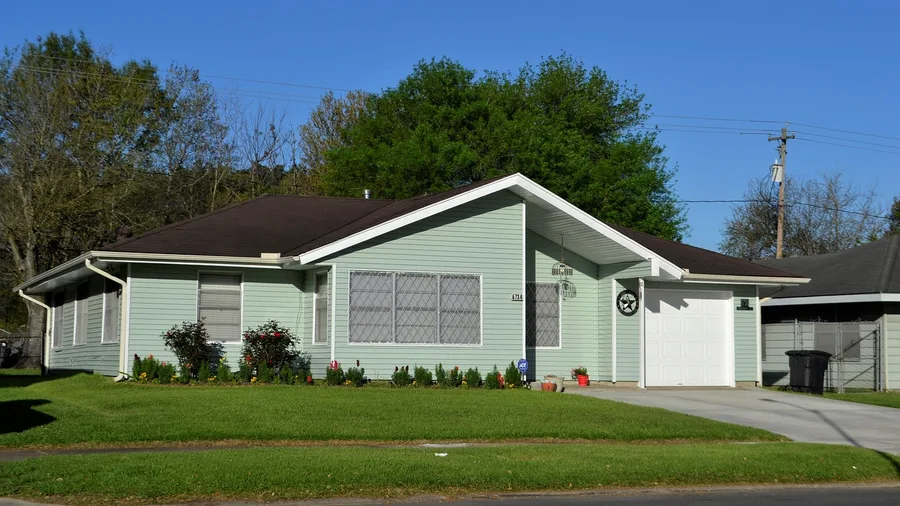
You picture the moving truck and the zero on the state tax line, and the relief feels already spent. Then the county sends a bill for the house.
Texas charges no state income tax, and retirement-account withdrawals come through that way too, but each account type is treated a little differently, so the Texas Comptroller is where you confirm the rule for the accounts you actually hold before you count on it.
Here is the offset that shows up first. On an illustrative $340,000 home, homeowners insurance runs about $4,900 a year, and that bill arrives whether or not you ever touch the house, before property tax gets a word in. Property tax itself is set locally, meaning the appraisal, the exemptions you qualify for and the final bill come from your county assessor and can swing by thousands between one county and the next, so the slogan tells you nothing and the assessor's notice tells you everything.
So automate the part that removes the guesswork. Set your insurance premium on autopay and a monthly transfer into a dedicated property-tax account of roughly one-twelfth of last year's bill, then leave it alone and let the county notice be the yearly check-in instead of a January scramble.
And the benchmark is portable: if you rent, the property-tax bill never reaches you, and if you downsize to a smaller, cheaper house, both the tax base and the insurance premium shrink with it. A $340,000 home with $4,900 in insurance is the number to beat, not a prediction.
💡 Tip: Renters skip property tax entirely, and a smaller home shrinks both lines at once. If the gain is thin, a downsize fixes it faster than a move.
The Costs That Decide This, in Plain English
2. Florida: Insurance and Storm Risk Erase the Gain

$6,800. That is the annual homeowners insurance figure on an illustrative $410,000 Florida home, and I have watched a couple budget for it line by line and still get surprised, because it is not the whole bill.
Florida does not tax state income, and for a retiree drawing from retirement accounts that is real money kept, but the insurance premium sits against that gain before a single property-tax dollar is counted. The base policy is the floor, not the ceiling: separate flood coverage, a hurricane deductible that shifts more of the repair onto you, and condo HOA or mitigation costs all tend to arrive in the same season. Sales tax and local fees keep running underneath too, so a retiree with heavy taxable spending watches the same gain thin out faster.
The part I got wrong early on was treating insurance as a fixed line. It is not. Inland and away from the surge zones, the premium drops sharply, and a retiree with a large enough cash cushion to carry a high deductible can bring it down further, which means the same state can pencil out two different ways depending on where the house sits.
Run your own subtraction before you follow the grandkids to the coastline. Pull a quote for the specific address, add flood and the deductible you can genuinely absorb, and see what is left of the income-tax break. Renters skip the property-tax bill entirely, which is a different sum altogether.
⚠️ COMMON MISTAKE
Comparing states on income tax alone
The tax break is one number. The insurance quote, the county tax bill and a year of groceries are three more. Add all four before you decide anything.
3. Washington: Sales Tax and Housing Cost More

For a heavy spender, yes, and for a light one, no.
Washington taxes no state income, but an illustrative $590,000 home is the priciest in the no-income-tax set and $13,200 a year in groceries and utilities for a couple is the second-highest figure after Alaska, so housing and daily costs are where the gain gets tested first. Sales tax reaches taxable purchases rather than everything you buy, and the Washington Department of Revenue has the current rules, so the honest starting point is not a full spreadsheet. It is one month of receipts.
Start there. One month tells you how much of your spending is actually taxable, and that small sample is enough to see whether the sales-tax side is a dent or an erasure. A couple with high retirement income and modest taxable purchases can still come out well ahead.
💡 Tip: Estimate one year of taxable purchases before you compare. Big spenders and modest spenders get different verdicts on the same state.
Three Ways the Illustrative Couple Lands in Washington
Same state, same $80,000 income, three different spending profiles
4. New Hampshire: Property Tax Is the Quiet Cost

The belief goes like this: no income tax, so the state has to be cheap. New Hampshire keeps $1,600 a year in homeowners insurance on a $480,000 house, roughly a quarter of what Florida charges on a smaller one, so it's easy to assume the math works itself out. Then the property tax bill arrives.
That bill is the quiet cost, and it's the whole ballgame. The town assessor sets the appraisal and the rate, not the state, which means two New Hampshire towns a few miles apart can hand you two very different numbers on the same house, and the gain from skipping income tax can vanish into the larger one. If you rent, you sidestep it. If you buy modest, you shrink it.
And if you spend heavily on taxable goods, the sales tax side may still leave you better off than a high-sales-tax state. Pull the actual rate from the New Hampshire Department of Revenue before you count on that.
Rent or Own in a No-Income-Tax State
If you rent
- No property tax bill to subtract anywhere
- Insurance is a renters policy, a fraction of the homeowner figure
- Mobility if the state disappoints you
- But: sales tax and everyday costs still apply in full
If you own
- Property tax set by the county assessor, not the state
- Homeowners insurance ranging from $1,600 to $6,800 in this set
- Flood and storm coverage as a separate line
- But: a smaller home shrinks every one of these
Five States Where the Break Holds Up Better

The remaining five keep more of the income-tax break, either because the offset is small or because the state is cheap on both housing and everyday costs.
Same test, better inputs. Here is where the subtraction usually comes out in the retiree's favor.
5. Alaska: No Income Tax, but Remote Costs Add Up

I remember looking at a $14,800 line for groceries and utilities on a couple's budget and thinking it had to be a typo. It wasn't. Alaska's everyday costs run higher than anywhere else in this set, and that's before the stuff a tax table never shows you.
No income tax is real. But on a $380,000 house, the $2,400 insurance bill is modest, and the damage lands somewhere else entirely: shipping, fuel, limited competition. Every can of beans and every kilowatt carries a premium baked into the same line.
Here's where I'd stop and do my own math. If you need to see a specialist in Seattle twice a year, price those flights and hotel nights out of your annual budget before you fall in love with the tax break. For a retiree with frequent care needs, travel and health-care access can quietly eat the whole gain.
So who does Alaska actually suit? Outdoors-oriented retirees who live lean, don't mind the logistics, and keep a cash cushion for the surprises. The $14,800 everyday figure and the $2,400 insurance bill are your benchmark to beat.
This is the part I'd take to someone who knows your numbers. A fee-only fiduciary can run your actual spending, travel and health-care pattern against these figures instead of a generic profile.
Because the honest answer depends on how often you fly south, and no state tax chart can tell you that.
Alaska's Subtraction Test at a Glance
🏠 Check this first
Everyday costs above $14,800 and where the extra goes
🛡️ Insurance as a share of home
$2,400 on $380,000 is about 0.6%, so a higher quote means a tougher market
🛒 Ask before you book
Two Seattle trips with flights and hotel nights – price one year of both
✈️ The threshold that flips it
If travel for care tops your annual cushion, the zero tax stops being a win
🎯 Skip Alaska if
You need frequent specialist care, or a fixed budget with no room for shipping and fuel surprises
The line that decides it
Subtract a full year of care trips from what the zero income tax saves you. A negative number is your answer, whatever the chart says.
6. Nevada Rewards a Certain Kind of Retiree

The worry is that a state with no income tax hides a sales-tax trap. Nevada is not a haven or a trap; it rewards a specific kind of retiree, and you can figure out which kind you are with two columns and a calculator.
The illustrative $430,000 home and $11,600 annual groceries-and-utilities bill sit lower than Alaska's, though not the lowest in the set. Start a simple two-bucket subtraction: bucket one is fixed costs, your property-tax bill from the county assessor plus car insurance; bucket two is sales tax on your taxable purchases, with current rules from the Nevada Department of Taxation. Fill both for your own home value and spending, not the illustrative ones.
The structure pays off plainly. Low-spending retirees keep more of the break, renters skip property tax entirely, and a modest home shrinks the bill; the $430,000 figure is the housing exposure an owner should test first.
7. South Dakota: Low Costs Keep the Tax Break

Put South Dakota's $290,000 median home against the $10,700 a couple spends on groceries and utilities there, and both sides of the ledger sit lower than almost anywhere else on the list. Housing is the cheapest in the nine-state set by a wide margin, and the everyday line is low enough that property tax and sales tax have less to bite into. That is the move: run the subtraction with both numbers before you run it with feelings.
Sales tax still applies here, and a heavy spender hands back part of the no-income-tax gain at the register, so the break holds up best when taxable purchases stay moderate. The other costs do not show on a tax bill at all. Bitter winters, thin rural health care, and fewer services turn into travel, time, and comfort, and those are real dollars over a decade.
For a retiree who wants low costs and can live with the climate, the math is straightforward: $290,000 in housing and $10,700 in groceries and utilities leave little room for any tax to erase the gain.
🧾 The Subtraction Test, Start to Finish
Estimate the income-tax saving
Work out what skipping the state income tax is worth on your own retirement withdrawals.
Price one real house
Pick a listing in a town you'd actually live in and use that price, not a state average.
Get the insurance quote
Ask an agent for a homeowners quote on that address, and separately for flood coverage.
Call the county assessor
Ask for the property tax bill on that address and which exemptions you qualify for.
Add a year of taxable purchases
Estimate what you buy that gets charged sales tax, and apply the state's current rule.
Subtract everything
If what's left of the income-tax saving is still positive, the state holds up for you.
8. Tennessee: High Sales Tax, Low Property Tax

Start with what a year of Tennessee actually costs a couple before any tax question gets asked. A $330,000 home and $10,900 in groceries and utilities put the everyday side close to the low-cost end of the set, so a household arriving from a high-tax state will feel the housing line ease first. Then the sales tax arrives, and it does not care what your home is worth.
Here is the honest cost. Tennessee taxes what you buy, and a household spending freely on taxable goods hands back a slice of the income-tax break at every register, all year, in amounts small enough to miss. Rules come from the Tennessee Department of Revenue, so confirm what is taxable before you map a budget. A big spender feels this most. A moderate one barely notices.
Now offset it. Property taxes here tend to run light next to the sales-tax bite, and that bill swings on your county rather than the state slogan. Ask the assessor what a $330,000 home would pay in the county you are eyeing. If the answer is low, the sales tax has to work harder to cancel your gain. For a homeowner with a modest property, that combination is the reason to keep reading.
This state fits people whose spending is steady and unflashy. It costs the retiree who wants to spend freely, because every taxable purchase takes a bite. Neither is reckless. Run your own yearly taxable spending against a low property-tax bill and see which number is bigger, then decide. If only one thing gets checked this week, check the assessor's bill.
💡 Tip: Check whether your biggest recurring purchases — groceries, prescriptions — are exempt before you assume the sales tax hits everything.
9. Wyoming: Low Taxes and Low Density

On the numbers in this example, yes: a $330,000 home and $11,100 a year for groceries and utilities keep both housing and the everyday line moderate. That is the same cost base as the state just before it, only the trade-off changes shape entirely.
The common mistake is treating no income tax as no taxes at all. Sales tax is still charged, and the local property tax bill still arrives, so a retiree who moves on the slogan alone is comparing an incomplete number. Get the sales-tax picture from the Wyoming Department of Revenue and the property bill from the county assessor. Then subtract both. A clean comparison starts there.
The other mistake is ignoring what isolation costs. Wind, distance and rural health-care access do not appear on a tax table but they appear in your week: a long drive to a specialist, a winter that keeps you indoors. Count those in travel and time, not just dollars. For a retiree who needs frequent care, they can matter more than any tax line.
Wyoming suits a household that wants space, keeps costs low, and can plan around limited services. The $330,000 home and $11,100 everyday figure are the benchmark, so plot your own numbers against them. If rural care is a concern, price a few trips before committing. The quiet advantage is real; so is the drive.
Frequently Asked Questions
Is a no-income-tax state always cheaper for retirees?
No. Four of the nine here can hand back a large part of the gain through property tax, insurance, sales tax or housing cost. The answer depends on which of those lines you actually carry — a renter and a homeowner in the same state can get opposite results.
How do I find the real property tax bill on a house?
Call the county assessor for that address and ask for the current bill, the assessed value, and which exemptions you'd qualify for at your age. Property tax is set locally, so the state's reputation tells you almost nothing.
Should I pay off my mortgage before moving to a no-income-tax state?
Run it against your own budget first. Keeping the mortgage means carrying the property tax and insurance, but selling early can trigger costs of its own. A fee-only fiduciary can look at the whole picture with your actual numbers.
Do I still owe state income tax after I move?
Possibly, for the year you move — many states tax income earned or received while you were a resident, and part-year rules vary. That's a question for a CPA who knows both states, not a blog post.
How much does homeowners insurance vary across these states?
In the illustrative set here, from $1,600 a year in New Hampshire to $6,800 in Florida. That spread alone can exceed the income-tax saving for a modest-income retiree, so quote it before you commit.
How do I confirm the current tax rules?
Go straight to the state's department of revenue for income and sales tax questions, and the county assessor for property tax. Rules change, and the official source is the only one worth signing a purchase agreement against.
Check Your Biggest Cost Before You Pick a State
There is no single winner among the nine. Run this profile – $80,000 in retirement income, a $420,000 home, two cars, moderate spending – and Texas, Florida, Washington and New Hampshire are the four where offsetting costs can shrink or erase the no-income-tax gain, while Alaska, Nevada, South Dakota, Tennessee and Wyoming hold up better on the same test.
So the list is a starting point, not a finish line. The $6,800 Florida insurance bill and the $4,900 Texas one are the kind of line items that decide the answer, not the zero on the state tax line.
Check your largest cost first – property tax and homeowners insurance if you own, sales tax if you spend heavily – then claim the tax breaks and match the state to your own home value and spending. Confirm the current income-tax, sales-tax and property-tax treatment with the official state revenue department and the county assessor before you choose. The state that leaves more in the bank is the one whose main offset misses your actual costs, and that is a question the moving quote can't answer for you.
Run the four-line subtraction tonight
Write the income-tax saving at the top of a page, then subtract property tax, insurance, sales tax and everyday costs for the one state you're actually considering.