

Divide $312,000 by $1,865 and you get 167 payments. That is a little over 14 years, so the monthly check passes the lump sum at roughly age 79.
Before 79 the lump sum is ahead in raw dollars, after 79 the check is. That crossover is the spine of the decision, and it holds only until you add what the arithmetic leaves out.
The letter in front of you is an age-65 offer: $312,000 once, or $1,865 a month for life under a joint-and-50%-survivor form. Both figures are pre-tax and before any fee. The break-even at 79 assumes the pot earns nothing, ignores inflation, tax timing, survivor value and plan risk, so it is a starting line and not an answer.
What you can actually run is this: what each option pays, the age the check catches the lump sum, the return the pot would have to earn to match it, and the risks the arithmetic leaves out. Your own numbers, health and spouse decide the side, not a rule of thumb. Start by getting written benefit estimates for both forms and a quote on a comparable joint-and-survivor annuity.
The Two Offers — At a Glance
💰 Lump sum
$312,000 once
📅 Monthly check
$1,865 for life
🛡️ Survivor benefit
50% to spouse
⚖️ Break-even
Age 79
📉 Cost-of-living rise
None
How to read it
Both figures are pre-tax and before any fee, so neither is spendable as written.
The offer: $312,000 once or $1,865 monthly

Two numbers sit on that letter, and they are not the same kind of thing. One is $312,000 paid once. The other is $1,865 a month, paid for as long as the reader lives, under a joint-and-50%-survivor form.
Read the survivor clause slowly, because it changes what the monthly number is worth. The check stops at the reader's death, except that 50% keeps going to the spouse, at $932.50 a month, for the rest of the spouse's life. The lump sum has no such clause attached. Whatever is left of the $312,000 when the reader dies is what the survivor inherits, and nothing refills it.
Here is the part the letter leaves in small print or out of it entirely. Both $312,000 and $1,865 are stated pre-tax, before any fee, before any withholding. Neither one is spendable as written, and neither one will be spendable the same way once the tax treatment lands in a separate year, which it does, and which is a different problem from this one.
So before any opinion about which side is better, the terms have to be fixed in plain words: a pot the reader must manage and can outlive, against a lifetime payment that stops but carries the spouse at half. Everything after this is arithmetic on those two facts.
| Factor | Lump sum | Monthly check |
|---|---|---|
| What it pays | $312,000, once, pre-tax | $1,865 a month for life, pre-tax |
| Survivor | Whatever your spouse has not spent | 50% continues to your spouse |
| Break-even | Behind the check from age 79 | Ahead of the lump sum after 79 |
| Inflation | Can grow if invested | No annual increase, ever |
| Investment decisions | Entirely yours | None — the plan manages it |
| Plan failure | Removed from the pension plan | Covered by PBGC up to a statutory maximum |
The check catches the lump sum at 79
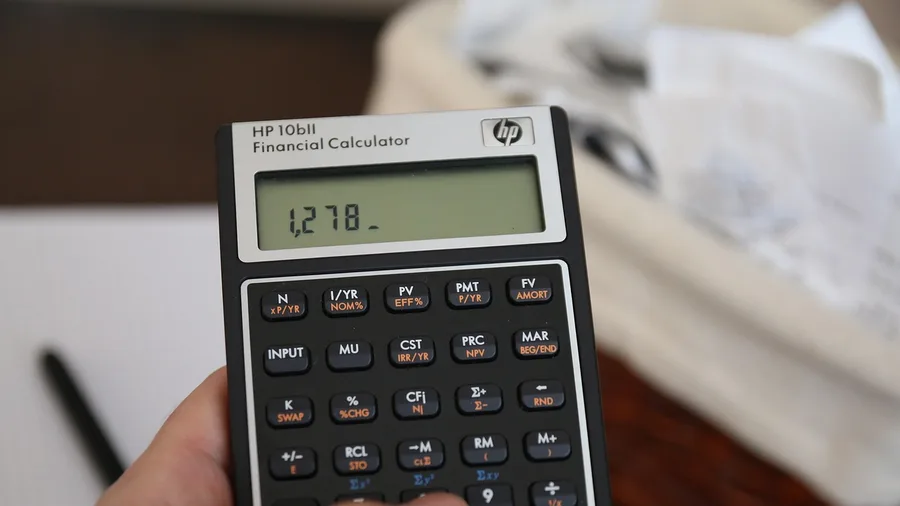
Divide one by the other and the break-even age lands near 79. $312,000 divided by $1,865 is 167 payments; 167 months is almost 14 years; 14 years past 65 is roughly 79.
What that means: if the reader takes the pot at 65 and simply spends $1,865 out of it every month, the money runs dry around the 79th birthday. Take the check instead and at 79 the reader has collected the same $312,000 and keeps collecting. Before 79, the pot is ahead in raw dollars because there is still something in it. After 79, the check is ahead forever, because there is no more pot to run down. No return is assumed on either side, and no inflation is assumed either. That is what makes it honest and what makes it only a starting point, since a pot earning nothing is a pot nobody actually keeps.
The reader's own version is one line of division. Their lump sum divided by their monthly benefit gives the payment count. That count divided by 12 gives the years after 65 to the crossover. A $250,000 pot against $1,400 a month is 179 payments, close to 15 years, age 80. Run it before reading another word about returns, because every adjustment that follows is measured against this same line.
⚠️ COMMON MISTAKE
The break-even assumes a drawer
Dividing the lump sum by the monthly check assumes the $312,000 earns nothing for 14 years. It is the starting line, not the answer. Put a return on the pot and the crossover slides.
The lump sum must beat a known payout

That break-even assumed the $312,000 sat still. Put it to work and the check no longer just catches the pot at 79; it has to outrun whatever the pot earns. The first thing to know is what the check already pays: $1,865 times 12 is $22,380 a year on $312,000, which is a payout rate of about 7.2%. That is the number the reader's own investing has to be compared against, not the stock market headline.
What return the pot must actually earn to match the check is a figure for the reader's calculator or a planner, because it moves with the horizon and with whether the principal gets spent. The mechanism is simpler than the math: any return above zero pushes the break-even age later, because the pot is growing while the check is flat. Fees, advice costs and cash sitting idle all come out of the pot's return and none of them touch the check, so a 7.2% benchmark quickly becomes a 6% or 5% one after a 1% adviser fee and a cash cushion.
That is why the same arithmetic comes out close for a confident low-cost investor and lopsided for someone who would park the $312,000 in a savings account. Those two readers are looking at the same letter and getting different answers.
What the check has to outrun
Illustrative math on the $312,000 offer; returns are not guaranteed
Assumes the check stays flat with no cost-of-living increase; both figures are pre-tax and before fees.
Tax timing can outweigh the headline math

The check and the lump sum do not show up on the same tax return. One is a single $312,000 event in the year you sign; the other is $22,380 a year arriving on a schedule, and the two get treated very differently by the code.
A lump sum you roll straight into an IRA is not taxable that year at all. Take it in cash instead, and the whole $312,000 stacks on top of your other income in one bracket, which is where the ranking can quietly turn. Withholding is a separate lever: the plan can hold back 20% on a cash payout, and that money is not a tax bill, it is a prepayment you settle up in April. Get the withholding number wrong and year one looks worse than the election actually was.
Run both side by side in the same bracket and the pre-tax advantage can shrink or flip. The rate you need belongs to your own return, so the working figures come from IRS Publication 575 and a call to the plan administrator, not from this page.
One more line goes in the same column: the 50% survivor continuation is taxable income to your spouse.
A flat check loses ground every year

The check pays the same $1,865 in year one, year fifteen and year twenty. Nothing in the plan adjusts it for prices, so the number on the stub never moves while the cost of the things you buy keeps climbing. That is the second erosion, and it runs the whole time the check does.
Picture year 15. You are 80, the check still says $1,865, and the rent, the prescription copay and the grocery total have all drifted up. At 3% inflation, $1,865 in today's money is roughly $1,200 of purchasing power by then. By year 20 the same check buys closer to $1,030. Nothing changed on paper; everything changed at the till.
The lump sum has the opposite shape, in principle. A $312,000 pot invested for growth can rise with prices, but only if someone actually invests it. Left in a savings account earning less than inflation, the pot erodes too, just with more steps and a monthly statement to remind you.
the check buys you a paycheck you never have to manage, and it charges you the entire cost of inflation protection in exchange. It prices that protection at zero.
This bites hardest for anyone retiring in their sixties with 25 years of spending ahead. Over that stretch the pot has to clear inflation, fees and tax just to match the same basket of goods.
The check keeps paying your spouse

Die first and the check keeps going to your spouse at half the amount, $932.50 a month, for as long as your spouse lives. The lump sum keeps going only as whatever your spouse has not already spent.
Your spouse is 63. If you die at 80, that survivor payment could run two, maybe three decades after you are gone, which is the part the break-even chart never shows. The check already prices that promise. The pot does not; to replicate it you would have to take part of the $312,000 and buy a joint-and-survivor annuity, and that quote has a price tag and an insurer behind it.
Call it what it is: survivor insurance bundled into the pension, paid for in the smaller monthly number rather than a separate premium.
For a married reader in average health whose spouse has no pension of their own, this is often the factor that settles the question before the return math gets a vote. If your spouse has their own pension, or there is no survivor to protect, the case weakens fast.
Lump sum versus check, matched on the same job
What the lump sum is good at
- Bequest and estate flexibility
- Paying off a mortgage outright
- Buying a better annuity later if rates move
- Options the check can never give you
What the check is good at
- No investment decisions, ever
- Drawdown math is somebody else's job
- Income that cannot be outlived
- A survivor payment already built in
The lump sum hands you the investing mistakes

The check removes the withdrawal decisions; the pot hands them to you, and that is the real risk with the lump sum. An early market drop while you are drawing income is the classic failure: pull $1,865 a month from a pot that just fell 20% and you lock in losses you never recover. A pot that starts at $312,000 and drops to $250,000 in year one, while you still withdraw the same amount, runs out years before the check would have.
Then there is the family request you did not plan for. A large one-off ask from a relative for $20,000 feels easy because the money is sitting there, but it comes straight out of the years the pot has to last. A high-fee adviser taking 1% a year quietly removes $3,120 annually from $312,000, year after year, while the check pays its full amount with no management cost at all. A cash allocation that feels safe but earns almost nothing is its own erosion.
The check compares by taking all of this off your plate: no investment calls, no drawdown math, no way to outlive the money because it pays for life. That is what the plan has priced into $1,865 a month.
The lump sum does has real upsides worth naming: a bequest to your kids, flexibility to pay off a mortgage at 65 and own the house free and clear, or buying a smarter annuity later with a better rate. Those are genuine. They just sit on the other side of the behaviour question.
The test is honest: do you have a written withdrawal plan and the discipline to follow it through a 20% drop? If yes, the pot is workable. If the honest answer is that you would check the balance weekly and sell when it scared you, the check already prices that behaviour at zero management, and that might be the cheaper buy.
Where the plan-failure risk sits
How much weight to give PBGC coverage, from footnote to deciding factor
- Well-funded plan, strong employer: A footnote. Take whichever option fits your health and spouse.
- Funded but the employer is under pressure: Worth reading PBGC's guarantee table before you elect.
- Stressed employer or a history of underfunding: A real reason to price the lump sum seriously.
- Plan termination already announced: Guarantee limits can fall short of your full benefit — get the numbers in writing.
The check carries the plan's promise

Behaviour is the one risk you can decide to manage; the plan's solvency is not, so the next thing to look up is what stands behind the $1,865 if the employer or its fund runs into trouble.
This is a private single-employer defined-benefit plan, which means the monthly benefit sits behind the Pension Benefit Guaranty Corporation, a federal backstop, but only up to a statutory maximum that depends on your age at retirement and the form of benefit you elect. That ceiling is not printed on your estimate letter, and it is not the same for everyone, so pull the current maximum-guarantee table from PBGC's website and find the line that matches age 65 and a joint-and-50% survivor payment. Whatever that table says is the floor under your check, not the $1,865.
Turn the lump sum over and the backing changes shape entirely.
Rolled into an IRA, the $312,000 is protected by a custodian and by whatever you invest it in, which means no pension fund stands behind it and no PBGC table applies. You swapped a corporate promise for market risk plus the custodian's own soundness, and only one of those has a federal guarantee attached.
Whether this matters comes down to the health of the plan itself.
A well-funded employer with years of contributions on schedule makes the whole question a footnote you note and move past. A stressed one, with funding shortfalls in the news and a sponsor cutting costs, makes it a live reason to look harder at the lump sum, because a partial guarantee is still a cut to the check you counted on. Read the plan's most recent funding notice, usually a few pages, before you decide which column this lands in for you.
Health moves the break-even more than arithmetic

The break-even at roughly 79 only pays off if you and your spouse are still collecting past it, which is why a doctor's waiting room is a more honest input than a life-expectancy chart.
If your health is below average, with a serious diagnosis or a family history that runs short, the check's advantage sits after a crossover you may not reach, and the lump sum's edge in the years before becomes the money you actually spend. That tilts the arithmetic toward taking the pot.
Long-lived parents and grandparents pull the other way, and the tilt gets stronger when you add a younger spouse. With the 50% continuation, a spouse at 63 could be collecting that halved check well into their eighties or nineties, which stacks two or three decades of payments on the far side of 79 where the check already wins.
Population life-expectancy tables are the wrong tool here, because they average everyone, including people whose health looks nothing like yours. Your own history, your spouse's age, and any diagnosis that changes the picture belong in your version of the calculation, not the national average.
Nobody knows the answer. This is a tilt in the odds, not a verdict, so treat it as one factor pushing on the break-even rather than the thing that decides it for you.
Other savings and debts decide the close call

Cash outside the pension is the number that decides the close call, and for the example household it is $60,000. Mortgage paid off, no credit card balance, so that $60,000 sits there free and clear with nothing else claiming it. That is the position in which taking the monthly check is comfortable rather than scary: a new roof or a $9,000 transmission bill gets paid out of savings, not out of the $1,865 you live on that month.
The check is illiquid on purpose. You cannot draw $20,000 of it early, but you cannot accidentally spend it either.
Reverse the picture and the math changes sides. If the reader is carrying $14,000 on a card at 24% and has $800 in savings, the lump sum's liquidity starts to outweigh the bigger payout, because a liquid $312,000 can clear that debt in a single afternoon and the illiquid check cannot. The check is the better long-run buy and still the wrong buy for a household that would be borrowing at credit-card rates to get through the year.
So the first step before locking either option is not another calculation — it is the portfolio math behind a retirement decision: 12 months of expenses sitting outside the pension, in cash and reachable. Work out the monthly figure honestly, multiply by twelve, then check whether the money is already there. If it is close, top it up before the election deadline. If it is years away, that gap is the argument, not a footnote to it.
Price an annuity quote before you sign

You settle that by pricing the same promise on the open market. Ask an insurance broker for a quote on a joint-and-50%-survivor annuity for $312,000, ideally one that includes inflation protection, from a highly rated insurer. That quote is the stand-in for a buyer: what the same lifetime, same survivor payments actually cost when you purchase them retail.
Reading it takes one comparison. If the plan's payment comes in above the quote, the check is the better deal and you can stop looking. If the quote pays more, the lump sum wins that test, and you have the number in writing to prove it.
The quote takes about a week and costs nothing, and it belongs in your hand before the election deadline, not after. If you plan to buy the annuity outright with part of the $312,000, check the insurer's rating with your state insurance department or a fee-only planner before anything is signed. Ratings are public, and a quote is only as good as the company behind it.
🧭 The order to run before the election deadline
Get both benefit forms in writing
Ask the administrator for the lump-sum figure and the joint-and-50%-survivor monthly figure on the same page.
Divide the lump sum by the monthly check
Your payment count and your crossover age, in one line of arithmetic.
Convert it to a required return
$1,865 times 12 divided by the lump sum gives the rate your pot must beat after fees.
Price a joint-and-50%-survivor quote
The same promise on the open market is the benchmark for whether $1,865 is generous.
Look up the PBGC guarantee figure
PBGC's current maximum table for your age and benefit form, compared with your monthly amount.
Get both after-tax numbers
Bring both estimates to a tax preparer before you sign anything.
Frequently Asked Questions
At what age does the monthly pension beat the lump sum?
On these numbers, at about 79. Divide $312,000 by $1,865 to get 167 payments, then divide by 12 — just over 14 years from 65. That crossover ignores returns and inflation, so treat it as the starting point rather than the answer.
Should I take the pension or the lump sum if I am in poor health?
Poor health tilts toward the lump sum, because the check's advantage sits after 79 and you may not collect it. Family longevity and a younger spouse pull the other way. Nobody can predict this for you, so treat it as a tilt rather than a verdict.
Can I take the lump sum and buy my own annuity instead?
Yes, and it is worth pricing before you elect. Ask insurers with high ratings for a joint-and-50%-survivor quote on $312,000 with inflation protection. If that quote pays more than $1,865 a month, the employer's check is the weaker deal and the lump sum deserves a hard look.
What happens to each option if my spouse outlives me?
The check continues to your spouse at 50%, $932.50 a month for life. The lump sum continues only as whatever has not been spent. If your spouse has no pension of their own, that survivor clause is often the largest item on the page.
Is my pension guaranteed if the company goes under?
Only up to PBGC's limits. Your private single-employer plan is insured by the Pension Benefit Guaranty Corporation to a statutory maximum, which can be less than your full benefit. Look up the current figure for your age and benefit form in PBGC's guarantee table.
Should I roll the lump sum into an IRA?
Usually worth considering, because it defers tax on the whole amount instead of paying it in one year. But the right answer depends on your bracket, your state and what else you have coming in — take both estimates to a tax preparer and read IRS Publication 575 before you sign.
Which offer to sign, based on where your numbers land
The decision rule is plain. The check is the better buy when the plan's $1,865 beats a joint-and-50%-survivor inflation-adjusted annuity quote on the same $312,000, when health and family history run long, when your spouse depends on the $932.50 continuation, and when you want lifetime income without managing it. The lump sum is the better buy when that quote pays more than the plan, when health is below average, when your spouse has their own pension or there is no survivor to protect, when high-interest debt or no emergency fund is sitting there, and when you have a written low-cost withdrawal plan you trust through a bad year.
Either way, do one thing before the election deadline: get the plan's written benefit estimate for both forms in the same document, and price a joint-and-50%-survivor annuity quote on the same $312,000. That paper is the benchmark.
The two numbers on the letter do not change. $312,000 once, or $1,865 a month. What changes is which risks you can carry and which promises you need bought for you, and you can answer that this week with one estimate and one quote.
Run your own two numbers before the deadline
Divide your lump sum by your monthly check and note the crossover age. Then call two insurers for a joint-and-50%-survivor quote on the same amount — that is your benchmark.