

Fifteen thousand dollars left my account over ten years, and for the first three of them I could not have told you where a dollar of it went. I am 72, a retired schoolteacher in Ohio, and I started in 2014 with a 6-year-old, a 9-year-old and a 12-year-old: $500 each per year, $250 on the birthday, $250 at the winter holidays. Cash, in white envelopes with a sticker on the front.
I thought steady cash proved generosity. Then year one brought a $120 pair of sneakers, and after that a $60 video game, and candy from the drugstore rack. By year four I could see the envelope had no job description.
A fixed annual amount plus a stated split, spend-now and save-for-later, with limits set by the parents, a short note and a stop date – that is the routine that makes the money teach. This is the one I would start on day one.
By the end of this you can set this year's amount and split, open the account before the first gift, write the note, and know that young grandchildren need account-first while teenagers need the end date.
| What I did | What I'd change | Why it matters |
|---|---|---|
| $500 cash per grandchild per year, $250 on birthdays and $250 at the holidays | Keep the $500 and the two dates; add an automatic September transfer for the savings half | A predictable amount and date is the part the parents can plan around |
| Cash only, years one to three | Open the 529 or custodial account before the first gift | Cash first created a three-year spending habit I had to unlearn |
| Same $500 to a 10-year-old and a 16-year-old | Same cash, different savings match by age | Equal dollars do not feel fair when the ages are six years apart |
| No note, no stated purpose | One page, handwritten, dated, read aloud at the birthday dinner | The sentence gives the envelope its job |
| December holiday envelope | Main gift moved to the birthday month | Wrapping paper buries the teaching moment |
| No end date | Set the stop at 18 or high school graduation, announced at the start | A planned end turns the last gift into a launch conversation |
A steady $500 a year beat one big gift
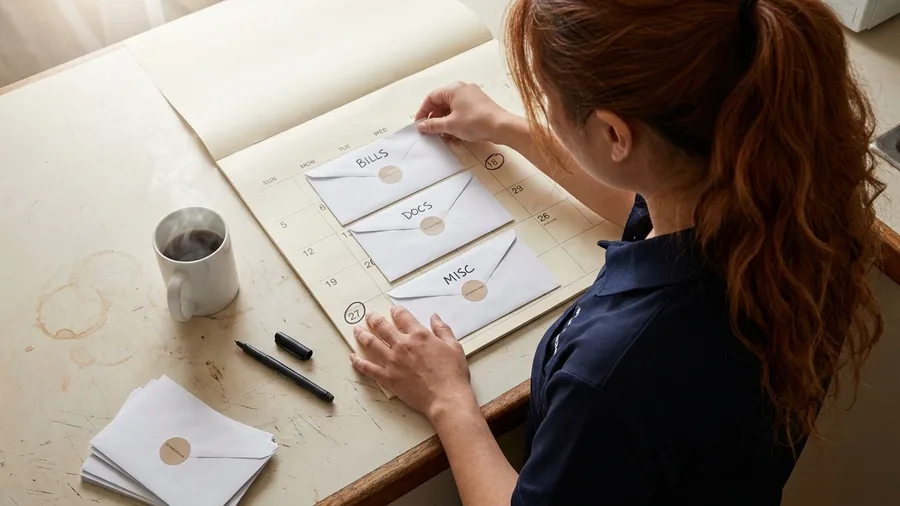
Five hundred dollars per grandchild, every year, for ten years. That is $250 on the birthday and $250 at the winter holidays, and with three grandchildren it came to $15,000. The oldest was 12 when we started, the middle one 9, the youngest 6.
I picked the two dates on purpose. Same amount, same two days, every year. Their parents knew when the money was coming and how much it would be, which made it easier for them to plan around than a surprise check would have been. Predictability, it turned out, was worth more than size.
For the first three years the money went into envelopes. Regular as a birthday card, and about as instructive.
That regularity did build something. My daughter told me the kids started asking in September how much this year's envelope would be; the youngest used to wait at the door. A ritual, a rhythm, a reliable date on the calendar.
But the envelope had no stated job. The $500 was a windfall on a schedule, and a windfall on a schedule is still a windfall. One year it was three pairs of shoes and a video game. One year it was a skateboard. Every year it was cash.
If you want to give this way, fix the calendar first. Same amount, same two dates, every year. It is the baseline, and it is the easiest part of the whole routine to get right.
Cash got spent fast — and that taught me something
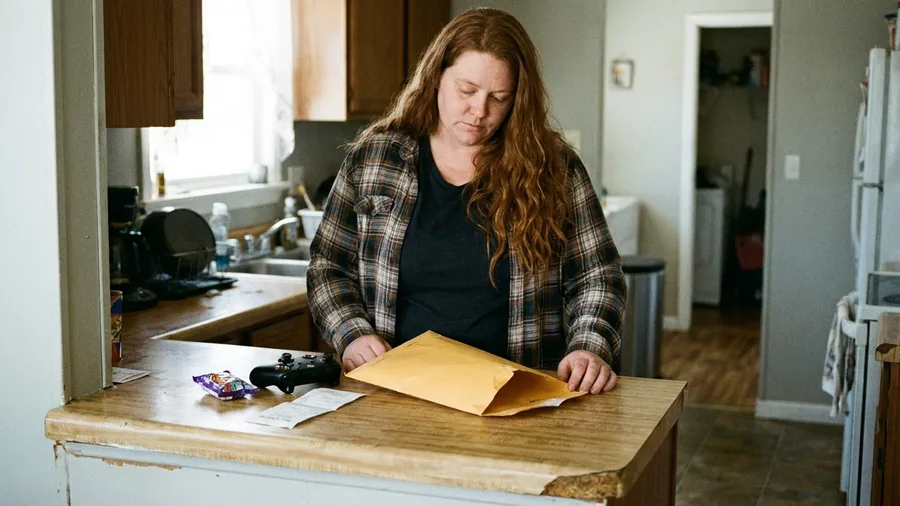
In year one, my grandson bought a $120 pair of sneakers with it. In year two, his sister bought a $60 video game and a bag of candy at the drugstore and it was gone by New Year's. I had no log, no account, no record of where any of it went.
I watched it happen and said nothing. It was a gift, I told myself. What they did with it was their business.
Then came the moment. The youngest was standing at the door with her hand out before I'd said hello. She had started to expect cash just for visiting. Her mother looked at me across the room and said nothing, but I understood.
That is what a gift with no stated job does. It becomes spending money. It also becomes an expectation, and that expectation is a habit nobody asked for.
The spending test is not hard. Ask the child what the money is for. If they can't tell you, the purpose was never set, and the dollar was always going to spend itself.
The fix is to set the purpose before the gift ever reaches their hands. Write it down. Hand it over with the money. It changes what the envelope means.
Splitting cash and a 529 changed the routine

In year four, I split it. $300 in cash, $200 into a 529 college savings plan for each child. A 529 is a state-run account where money grows and is meant for school expenses, and you can set one up at the state's direct-sold plan without any advisor.
The parents kept the paperwork. It was the right call; the account is a long-term thing the family is meant to manage, and the parents would be managing it long after I was gone.
But I kept the statements.
Every birthday, we would sit down together and look at the year's balance. One of them, the middle grandchild, started asking to see the growth. She would read the number out loud and I would watch her face change. Saving had become something she could see.
That was when the gift became a shared review of the account. Not just an envelope. An envelope plus a number that had gone up.
If you're starting, the split is the important thing. It gives every dollar two jobs. The statement is the scoreboard for the save-half, and using the plan's own documents for the rules beats relying on what someone told you at a family reunion.
The envelope I used to hand over, and the one I'd hand over now
What I did: cash only
- $500 cash, no note, no account
- Spent within a week on snacks, sneakers, a game
- No tracking in years one to three
- December envelope opened with the wrapping paper
- No end date, no stated rules
What I'd do now: split with a note
- $300 cash, $200 into a 529, every year
- One page in the envelope naming half for now, half for later
- One-page paper log of date, amount and account
- Main gift moved to the birthday month
- Parents set the limits, a stop date set at the start
Equal amounts did not feel fair to every grandchild
Fairness turned out to be the same rules bent to age, not the same dollar figure handed to everybody. For four years I gave all three grandchildren exactly $500 and felt good about it, because identical amounts look fair on paper. Then my youngest, at 10, watched her 16-year-old cousin walk out of a store with something she couldn't afford and asked me, plainly, why she couldn't have the same thing. I didn't have a good answer, because the honest one was that the same $500 buys a whole lot more when you're 10 than when you're 16.
That's the part identical gifts hide. Equal dollars land unequally.
What I changed was the savings side, not the cash. Each child still got the same $500, but the amount that went into savings stepped up with age, and the share left for spending came down. I sat with each parent, on the same call where we set the spending limits, and asked what felt fair for a child that age. They had opinions, and they were better than mine.
A 10-year-old and a 16-year-old need different spend-and-save ratios, because a teenager has real expenses coming and a younger child is mostly learning. Same rules, adjusted by age, is the version that survives a kid pointing at her cousin and asking why. Your numbers may differ. The rule doesn't. Ask the parents what fair looks like at each age before you hand anyone a check.
How different giving styles land, from harmless to habit-forming
Where our family's choices fell on a decade of watching
- Unlabeled cash dropped at the holidays: Spent inside a week; the December version was gone by January with no conversation
- Cash plus a handwritten note naming the split: The sentence did some work, but there was no account to point at
- $300 cash and $200 into the 529, with a birthday statement review: The version that got a child asking about her own balance
- Same split, plus parents setting the spending limits: No friction, no policing from Grandma, rules a child already knew
Unstated purpose turned the money into fun money
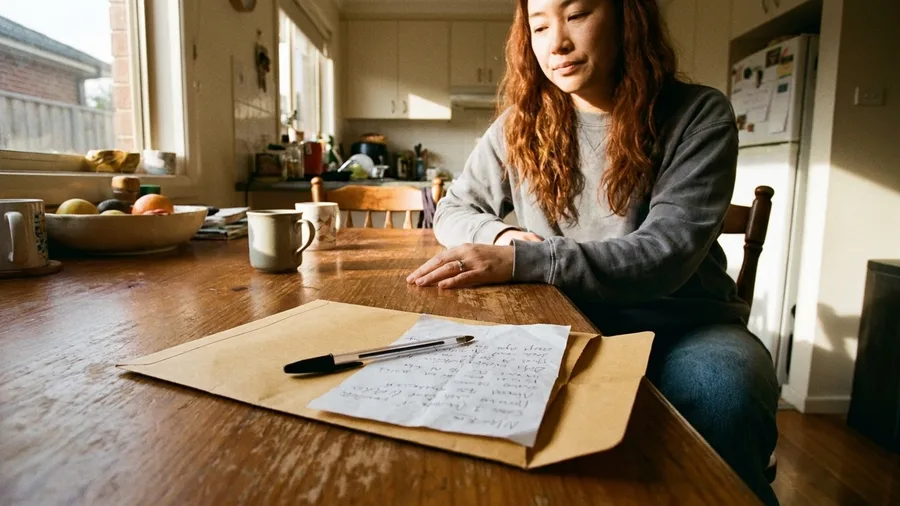
For six years I never once said what the money was for. I handed over an envelope, the child said thank you, and I assumed the lesson was somewhere in the transaction. It wasn't. Without a stated job, the gift was just extra spending money, and that's exactly how all three of them treated it, no matter how carefully I'd split the cash.
The fix cost me five minutes and a piece of paper.
I wrote a short note to go with each gift and read it aloud at the birthday dinner, in front of the parents, so nobody could miss it. The wording was plain: this is for something you want and something you're saving for, half for now and half for later. Then I asked each child to name the savings goal out loud. My youngest said a bike. My oldest, at 17, said gas money for a car, which felt honest.
Here's the catch, and it stung: a $300/$200 split with no sentence attached was still fun money. The account had the job and the child never heard it.
So write the sentence before you write the check. Naming a goal turns the spend-now and save-for-later halves into the child's own decision instead of your rule, and a thing a kid decides is a thing a kid actually keeps. If the child can't name a goal yet, that's your sign the gift isn't ready to hand over.
💡 PRO TIP
Ask them to name the goal
Before the envelope is handed over, ask each child what the savings half is for. A named goal — a bike, a laptop, a trip — is what turns your $200 into their decision instead of your instruction.
Waiting until December made the money an afterthought
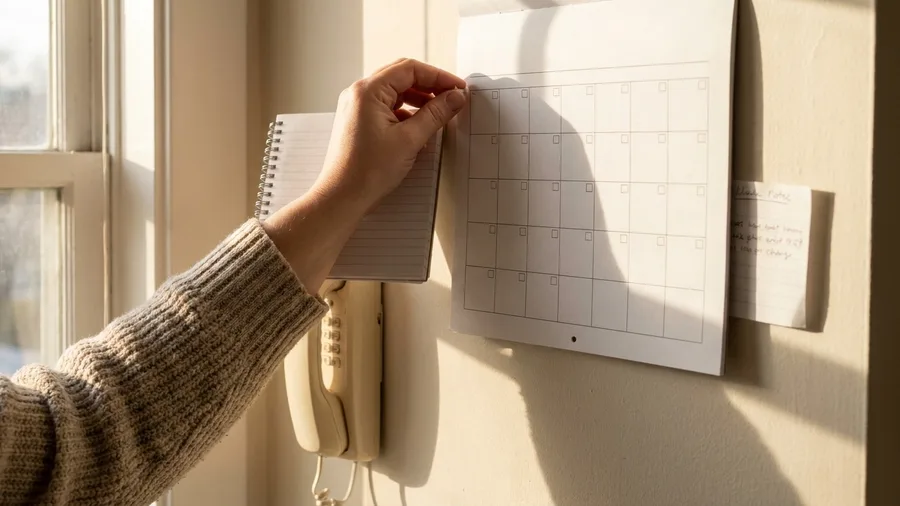
Give the money at the birthday, not in December. I learned that the slow way, after years of watching a holiday envelope disappear into a pile of wrapping paper and get spent by January with no conversation at all.
What killed it was the noise. December is a season of gifts arriving all at once, and cash tucked into it stops being a teaching moment and becomes one more present. I'd hand over the envelope, someone would say thanks between unwrapping, and the money was gone before the tree came down. Nobody ever asked what it was for, because I'd already told them nothing.
The change was timing, and it took one September afternoon to set up. I moved the main gift to the birthday month, where it stands alone and there's room to talk. Then I set an automatic transfer for the savings half to move in September, before the holiday rush begins, so the save-half is already planted when December arrives.
Timing is part of the lesson, not logistics.
I also made a short fall call to the parents, partly to hear how the kids were doing and partly to make sure the savings half landed. Twelve minutes, once a year. If your grandchild's birthday falls in November or December, move the main gift to a calmer month instead. Any quiet month beats a crowded one.
Opening accounts first would have prevented a bad habit
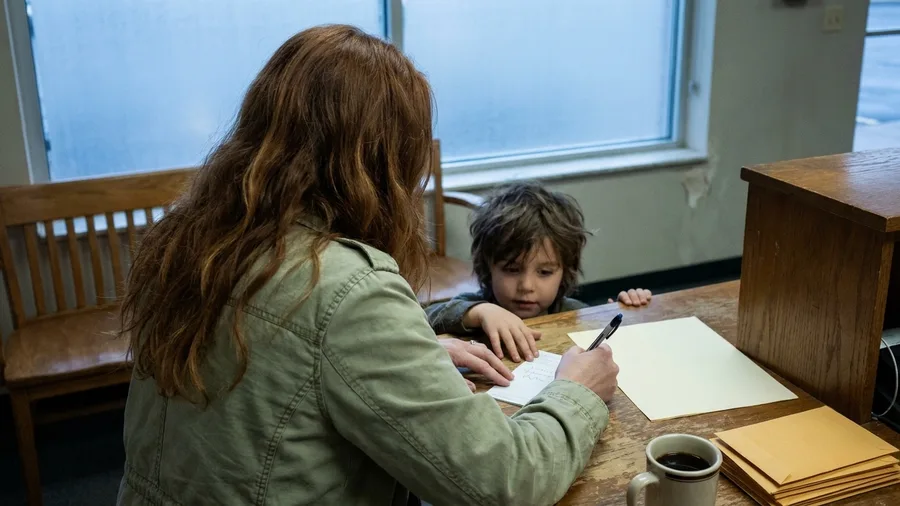
The thing I would set up first is the account, before a single dollar changes hands. I did it backwards: three full years of cash before I opened a 529 for each grandchild, and by then the expectation was set. The 6-year-old had learned that a visit from Grandma meant money in an envelope, and money in an envelope meant the drugstore.
A 529 is a state-sponsored savings plan for education, and a custodial account is a bank or brokerage account held in a child's name with a parent in charge. We used a state direct-sold 529 plan and a local bank custodial account. Opening either one before the first gift gives every later dollar a place to land instead of a pocket to disappear into.
The setup itself took one afternoon. Name a parent as custodian on the custodial account, keep the plan paperwork with the parent who will actually read it, and start a one-page paper log with three columns: date, amount, account. That log becomes the spine of everything else, including the tax conversation.
Here is the part I got wrong and the part that cost me. Cash for three years made the shift to a split harder than it needed to be, because the grandchildren had already built the spending habit before I gave the saving habit anywhere to live. If the first gift is a deposit rather than an envelope, the save-half gets taught first.
You do not need much to start the account. A custodial account usually opens with $25 to $50, and a 529 with whatever the plan sets. Make this year's first gift a deposit and write it on the log before you write anything else. Setup before gift, every time.
The decade by the numbers
What ten years of $500 actually looked like
A yearly accountant check settled the tax question

I never owed gift tax on any of it, and the reason I can say that with a straight face is that I kept the log and handed a copy to my accountant once a year. That single habit turned a question that used to nag at me into a ten-minute review every spring.
The log was one page. Date, amount, and which account it went into, for every gift across all three grandchildren. I gave the accountant the copy with my other tax papers, she told me what she needed to know, and I stopped guessing. Twelve years of giving and the paperwork never once surprised me.
I am not going to hand you a dollar figure for the exclusion or a rate. Those rules change, and a number from a family story is worse than no number. The official source is IRS Publication 559, which covers gifts and estate tax in plain enough language that you can read the section you need over a cup of coffee.
Your job is smaller than you think. Keep the clean log, follow the official publication when a question comes up, and let the routine keep running. A first-year plan to start: one page, three columns, written the same day you make the deposit. The tax question then sits where it belongs, in a folder, instead of in your head at two in the morning.
Letting the parents set the rules kept peace

I asked the parents for the rules before I ever wrote a check, on a ten-minute phone call each year, and that call is the reason this gift never became a fight. They decided the spending limits and the off-limits categories. I enforced nothing.
The year we first split cash and savings, my daughter and son-in-law said no candy and no violent video games with the spend-now half. That was their call, and it was the right one. When a grandchild pushed, I said, take it up with your mother, and meant it. The parent kept the 529 statements, so the whole thing stayed shared instead of me peering over shoulders.
This is the part nobody tells you: giving money without an outside boundary puts the grandparent in the role of police. I hated that role. Handing the rules to the parents let me stay the generous one and freed them to be the grown-ups, and the annual gift stopped being a source of friction at the dinner table.
So before this year's first check, call the parents. Ask two questions: what is off limits, and who keeps the account statements. Write the answers on the same page as your log. The spend-now half needs a boundary, and the boundary should come from the people raising the child.
A yearly letter did more than the money

The letter is the part that turns a deposit into a lesson, and it costs you a page and a pen. Starting in year five I wrote each grandchild one handwritten sheet, dated at the top, tucked into the birthday card. It took maybe ten minutes per child.
The page did three things. It said what the money was for, named a goal or asked a question I wanted an answer to, and said it plainly. To my middle granddaughter at eleven: "Half of this is yours to spend on anything. The other half goes to the account, and I want to hear what you're saving it toward by Thanksgiving."
She wrote back about a horse. The horse did not happen. But she had a name for the money before she spent a dollar of it.
I kept a photocopy of every letter in the same paper log where I recorded each gift, date and amount, so the whole decade sits in one folder on my desk. At the birthday dinner I read the letter out loud at the table, which felt a little foolish the first time and stopped feeling foolish by the second.
Here is the honest comparison. A $500 check with a store-bought card was opened, thanked, and gone by the next weekend. The same $500 with a handwritten page got read, argued over, and remembered. The letter states the spend-now and save-for-later job in my own words, and words from a grandmother carry weight a bank statement never will.
You do not need the amount to be large to write it. Fifty dollars with a page that says "half now, half for later, tell me your goal" does the same work. Write the sentence before you write the check, and keep the copy.
📆 The order I'd do it in, starting this year
Set the amount and the split
Pick the annual number and decide how much is cash and how much is savings before anything else.
Call the parents
Ten minutes to agree the spending limits and who keeps the statements.
Open the account
A state direct-sold 529 or a custodial account at your local bank, with a parent as custodian.
Start the September transfer
Automate the savings half so it lands before the birthday, not after the holidays.
Write the note
One page, handwritten, naming half for now and half for later, with a question to answer.
Log it and announce the stop date
Four lines in a notebook, and tell the grandchildren when the gifts end.
Stop at a set age, not forever
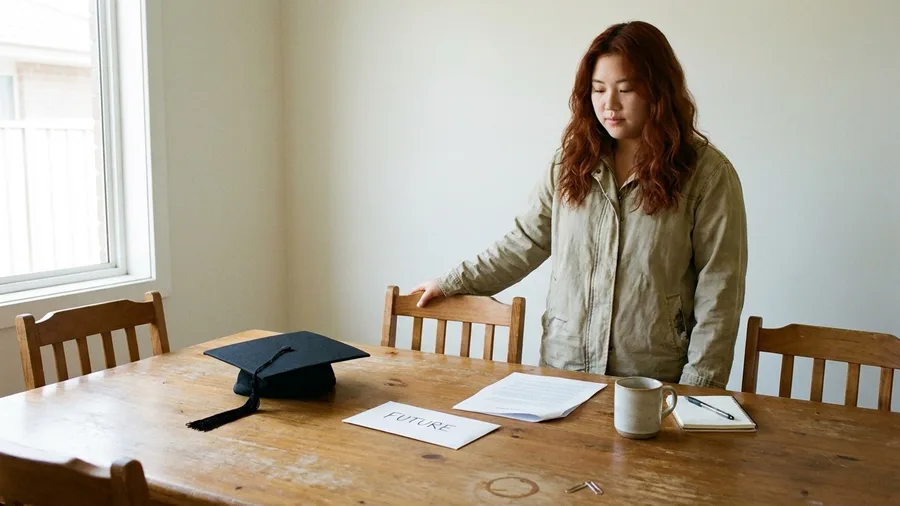
Name the end date when you start, not when you're ready to stop. I told all three at the beginning: the $500 comes every year until you turn eighteen or finish high school, whichever lands first, and then it stops.
That gave the gifts a shape. A child who knows the money has a last chapter treats the years differently than one who assumes the envelope arrives forever.
I got the final one partly wrong anyway. My oldest graduated in June, and her last $500 arrived in a plain envelope with no ceremony attached. What I should have done, and did with the next two, was sit down with her and talk through the last gift: how much to keep for spending, how much to leave in the account, what the first year out of the house would cost her. The check was easy. The conversation was the actual gift.
The stop date does two jobs at once. It turns the final payment into a launch conversation instead of a quiet fade, and it saves you from an expectation that quietly becomes a bill. By year ten I was seventy-two; the same $15,000 stretched another decade was money I might need for myself — and the hardest decade of retirement means nobody has to have that conversation for me.
When the cash stops, the advice doesn't. I still get the phone calls about a first apartment lease and whether a car loan is worth it. That costs nothing and it's what they actually need at twenty-two.
Pick the date now, say it out loud to each child before the next envelope, and tie the last $500 to a real conversation about saving and spending. The routine isn't finished until it has an ending.
Frequently Asked Questions
How much should I give each grandchild per year?
Pick a number you can repeat for a decade without flinching, because the repeat is what does the teaching. I used $500 a year, split $250 on the birthday and $250 at the holidays. If $100 a year is what you can sustain, give $100 every year on the same date and skip the occasional big present.
Should I give cash or put it in a 529?
Both, in a stated split. Cash builds the choosing muscle — a child needs money in her hands to learn what to do with it. The 529 or custodial account gives the other half a job, a balance to watch, and a reason to sit at the table and review the statement once a year.
Do I owe gift tax on money given to grandchildren?
That depends on the amount, your state, and the account type, and it is exactly the kind of question worth one paid conversation. I logged every gift and gave the copy to my accountant once a year. For the federal rules, read IRS Publication 559 rather than relying on a figure you heard at a family dinner.
How do I keep the parents involved without handing over control?
Ask them for the limits, then stay out of enforcement. One ten-minute call before the first gift each year, covering the spending categories they want and who keeps the statements, is enough. The parents set the rules; you write the note.
What if one grandchild needs more help than the others?
Same rules, adjusted for the child. Equal dollars for a ten-year-old and a sixteen-year-old are not equal gifts. I gave equal cash but a different savings share by age, agreed with the parents first, and explained the reasoning to each child so nobody had to guess.
When should I stop giving?
Eighteen or high school graduation, with the date announced at the start. The final gift should come with a conversation about saving and spending rather than a card. After that, redirect your help toward advice — a phone call about a first job offer is worth more than another envelope.
The amount was never the lever — the sentence was
The $15,000 was never the lesson. The routine was: the fixed amount, the $300 cash and $200 savings split I moved to in year four, the limits the parents set, the note each year, and the graduation stop. That first $500 envelope felt like plenty of generosity. By the end it needed three things it never had – a sentence, an account, and an end date.
If your grandchildren are young, the change that matters most is account-first: open the 529 or the custodial account and make the very first gift a deposit. If they are teenagers, the end date matters most – tell them plainly that gifts stop at 18 or at high school graduation, and tie that last $500 to a talk about spending and saving.
So this year, set two numbers on one page: the annual amount, and how much of it is cash versus savings. Everything else – the account, the note, the call to the parents, the stop date – follows from that page. Mine started as an envelope with a sticker on the front.
Set your two numbers tonight
Write down your annual amount and your cash-versus-savings split on one page, then put the parents' call on the calendar for this week. That page is the whole plan.