

The mistake I made at 52 was cashing a $312,000 rollover check into the stock of the company I had just left, because it was the only investment I could describe out loud.
I am 63 now, in Columbus, and I spent 22 years as a logistics manager before that money ever moved. The stock felt familiar. The target-date fund I never read felt like a foreign language, so I skipped it, and the concentrated bet is the one I took.
That is the part worth saying plainly to you: a comfortable pile of employer stock can already be the mistake, and my proof is a calendar. My retirement year slid from 64 to 74, and my wife's slid from 62 to 70 alongside it.
So this is what you leave with: the move to make before any new rollover check clears, and the one signal that should send you to the phone tomorrow. That is the whole win, and it costs an hour.
| Decision | What I did at 52 | What I would do now |
|---|---|---|
| Where the rollover went | 100% into former employer stock | Three index funds: US market, international, bond fund sized to the year the money is needed |
| How much in any one holding | All of it | No single holding above 10% of the portfolio |
| When to review | Never set a date | First Monday in January, every year |
| Dividend check | Treated $6,200-$9,900 a year as proof it was safe | Dividends count as part of total return, not as safety |
| What would have triggered a sale | Nothing | A written 10% cap |
| Retirement age | 64 | 74 (rebuilt target) |
| Who else was affected | No plan for my wife's 62 date | Household target built together, with my wife's date at 70 |
One familiar stock felt safer than a fund I didn't understand

I put the whole rollover into one company's stock because it was the only investment I could describe out loud. In March 2014, at 52, after 22 years at the company, I moved $312,000 from my 401(k) into the former employer's shares.
I never read a prospectus. I could not have told you a single thing a target-date fund held, even though one had been sitting as an option in my plan the whole time. Familiarity walked in and took the seat where a decision was supposed to sit.
one afternoon, one phone call, done. No written allocation target existed anywhere. If someone had handed me a form that said write the percentage you want in this one stock, I would have had to put a number down and look at it, and that number would have scared me.
For anyone holding a rollover form right now, the ticker being recognizable is not a plan. A written target forces a percentage onto paper before the call, and a percentage is the one thing familiarity cannot argue with.
A 34% year convinced me the pick was skill

One good year tucked the choice in for a decade, because I mistook a market gain for my own judgment. In 2015 the stock climbed about 34%, and I read that number as proof I had picked well.
I quit opening the quarterly statements. I started telling coworkers about the gain, and the telling felt better than the reading ever had.
That is how an unwritten decision survives. Nothing was scheduled to ask me a question. No review date on the calendar, no rebalancing rule with a number in it, nothing in the whole arrangement that could have triggered a sale.
A single strong year in one stock is a market data point, not evidence of skill, and the only way to hear that truth is to have a fixed date that forces the question whether you want to answer it or not. Mine would have been the first Monday in January. That year it would have made me look at 34% and ask how much of the account now sat in one company. I did not have that Monday written down anywhere, so the position just kept growing, and so did my confidence.
⚠️ COMMON MISTAKE
The review date that never existed
If you have no scheduled date to look at your allocation, a strong year becomes proof you were right. Put the date in your calendar before you need it — first Monday in January works for me. The rule, not the feeling, does the work.
The dividend check made me stop watching the share price

A check that arrived on its own every quarter made the missing review feel unnecessary, and that is exactly what kept me from selling. The dividend paid about $6,200 a year when I started and about $9,900 a year at the peak.
It landed automatically, so I had no reason to look at the share price, and I looked at it less and less. Income and price are separate things, which is the part I could not hold in my head: the dividend kept arriving while the position underneath it lost two-thirds of its value.
That $6,200 felt like a salary, and a salary feels like safety. A written cap would have measured one number, position size, instead of the one number I was watching, the deposit. Every January I would have seen how big the holding had grown against the account, no feeling required, and a check that clears whether or not the stock is fine cannot make that measurement for you.
The decade in numbers
What the position was worth at each stage
The fall erased $337,000 in twenty months

The share price I had stopped checking is the one that set the bill: about $497,000 at the February 2022 peak, about $160,000 by October 2023, a 68% drop in twenty months. That was the same $337,000 I lost – more than every dollar I put into the 401(k) across 22 years of paychecks.
I went back through the old statements one weekend, adding up the contributions, and the sum came to less than the loss. Twenty-two years of money in, and a twenty-month fall wiped out more than all of it. The statement had it in black and white, and I read the page more than once because I could not make it make sense.
the market did not put me there by itself. Because the position was the whole plan, an ordinary bad year became a ten-year problem. The drop and the size were one decision, made on one phone call in March 2014.
A 34% decline in broad market funds in 2022 hurt plenty of people with diversified portfolios. For most of them it trimmed a balance. For me it took the balance, because there was nothing else in the account to cushion the fall.
If you want the number in your own account, take the dollar value of your single holding and ask what a 68% drop would leave you with. Write it on the same page as your retirement year.
Buying more on the way down used money I needed sooner
Lowering my average cost was not a strategy, and it is not a strategy for you. By mid-2022 the stock was down about two-thirds, and the lower price looked like a second chance. I put $38,000 of savings in between mid-2022 and early 2023, at an average of about $82 a share.
It was my emergency fund. The whole cushion sat in a savings account earning almost nothing, and I told myself the stock was finally cheap. It was cheaper than it had been. That is not the same as cheap.
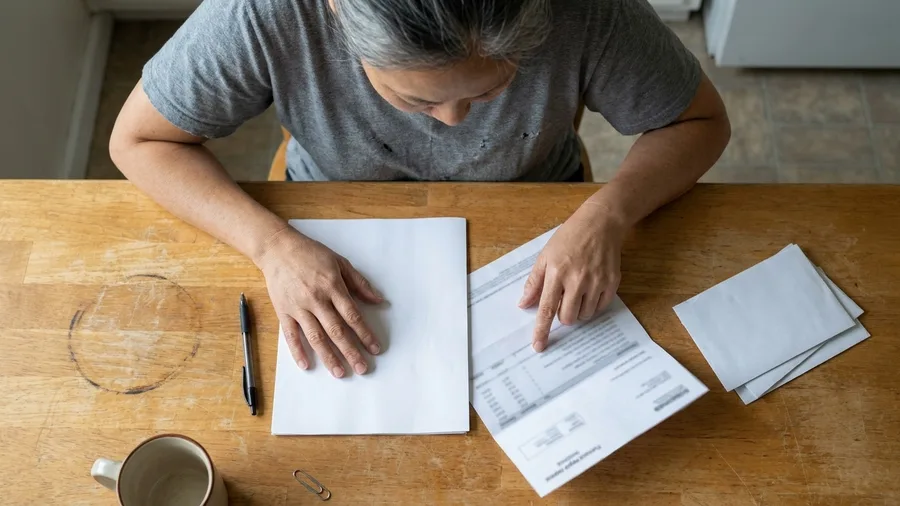
Then the furnace quit in November. A repair that should have come out of savings went on a credit card at a rate I did not look at closely until the statement arrived. That is the part I did not plan for: I turned an investment loss into a cash problem.
Fixing an average price only helps if the position itself is the right size for your risk. Mine was too big before I added a dollar, and I made it bigger. A 10% single-holding cap, written down and checked on a set date, would have made the $38,000 add impossible.
I am not telling you that buying when prices drop is always wrong. I am telling you the money you add to a dip should be money you could lose without changing your month. Mine was not that money.
The bill came as ten extra years at work

I could survive the furnace. What I could not survive was the arithmetic that came after it, which put a 74 where a 64 had been. When I rebuilt the balance from about $160,000 in October 2023, with 22 years of the same saving habits behind me, the honest target came out near $1.1 million. Getting there from where I stood meant putting away roughly $28,000 of new money every year. The old plan had no line like that. The old plan had a date.
The bill arrives in paychecks, not in dollars. Ten more years of them, and every one of those years carries health insurance I only have because I still show up at 63.
That is the part nobody puts on a statement. A paper loss looks like a number in a column, and numbers can feel temporary, like weather. A calendar year is not temporary. I am 63 and I work full time toward 74, and the loss is measured in Monday mornings and in the insurance card in my wallet, not in the balance I see when I log in.
The urgency of the past months has faded. What remains is the schedule.
I have tried to make the sentence gentler and I cannot find a way. If I had kept the written allocation and the 10% cap, the position would have been trimmed in year one, the 2022 fall would have hit a slice instead of the whole account, and the retirement date would have stayed where it was. The furnace was an inconvenience. This is the decade.
When you look at a concentrated position of your own, do the same rebuild I did, on paper, tonight. Take the balance as it stands right now, subtract what you need at your planned year, and write down the annual savings figure the gap requires. If that figure makes you blink, you have found your bill, and better you find it this week than the week after the shares fall.
Would my 52-year-old self pass this check?
My wife's retirement date moved with mine

My wife had a date circled too, and the fall did not leave it alone. She had planned to stop working at 62. By the time we rebuilt the household target, that number had moved to 70, and it moved because my account was the household account whether I had thought of it that way or not.
A 100% position in one stock gave us no ballast when everything dropped. A bond fund and an international index do not make money in a bad year, but they do not move in lockstep with one ticker either. With the whole balance in my old employer, every dollar she was counting on rose and fell on a single quarterly earnings call I had no control over.
The house payoff went second. We had been on track to clear the mortgage and had a trip planned for the spring after I turned 64. Both got pushed back into the same extra years of paychecks I was now measuring. That was the part I had not done the arithmetic on before the rollover: I had run the risk against my own stomach, not against her calendar.
Here is what I would say to anyone with a spouse and a rollover form in front of them. The money sits in one name. The plan does not.
Felt safe vs actually safe
What felt safe at 52
- A stock I could name and had watched for 22 years
- A dividend check arriving every quarter
- No paperwork, no prospectus, one phone call
- A company I believed in because I worked there
What was actually safe
- A written allocation across three index funds
- A 10% cap on any single holding, checked every January
- An emergency fund in a separate account
- A household retirement date built with my wife
A written 10% cap would have caught it in year one
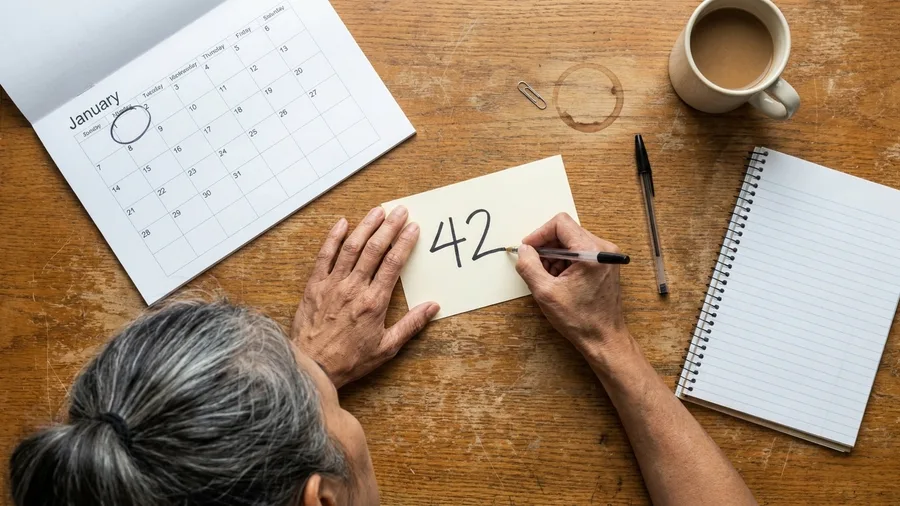
One number written down on the first Monday in January would have ended the position while it was still small. Mine would read: no single holding above 10% of the portfolio, checked on that date every year, no exceptions for a stock I like.
Run it against March 2014. The rollover landed at $312,000, so the cap sat at $31,200. Once the stock crossed that line, the rule said sell back down to it, whether the year had been good or bad, whether I felt clever or not. I would have been trimming in year one, at a size where the sale cost me nothing but a phone call and a little paperwork.
That is the part I keep turning over. The rule did not need me to understand the risk, or to forecast anything, or to sit down and have a hard conversation with myself about my old employer. It just needed to exist on paper before the check cleared, because a written line does not care how familiar a ticker feels.
Set your review date now, before anything else. The first business Monday of January works for me because it is easy to remember and nothing else is happening that week. Put the date in your calendar with the cap written in the event title.
The same cap belongs inside your 401(k), not just in a rollover IRA. Employer stock in the plan you are still contributing to grows the same way, quietly, until it is the plan. A broker or plan administrator can tell you the current percentage of any single holding if the statement does not. Ask for that number this week, and if it is over 10%, you already know what the rule says.
📝 How a rollover turns into a written plan in six steps
Write the target allocation
Name the percentage split across US market, international and bonds before the rollover check clears.
Set the 10% single-holding cap
No single holding above 10% of the portfolio, written on the same page.
Pick the specific funds
Choose a total US market index, an international index and a bond fund sized to the year the money is needed.
Circle the review date
The first Monday in January goes on the calendar as the rebalance date.
Give the adviser standing authority
A fee-only adviser paid a flat $1,800 a year with authority to rebalance without a phone call.
Keep the emergency fund separate
Cash for the furnace, the roof and the car stays in a different account, not in the portfolio.
Three index funds would have made the same drop survivable

The remaining 90% of that $312,000 had somewhere sensible to go: a total US market index fund, an international index fund, and a bond fund sized to the year the money is actually needed. Three holdings, all cheap, none of them requiring me to explain what was inside.
What made the mix work was not the picking. It was the January date. On the first Monday, I sell whatever ran up hardest and put it into whatever lagged, which is rebalancing, meaning you return the account to the percentages you wrote down. That one rule forces you to take money off the winner every year, in small, boring amounts, before the winner gets the chance to become the whole account.
Here is the honest part. A portfolio like that would still have fallen in 2022. Everything did. The difference is that the fall would have been one line on a statement among several, not the end of a plan. A broad mix at those weights would have lost a fraction of my $337,000, and my retirement date would have stayed at 64.
This is what I hold now, rebalanced the first Monday of each January. I pay a fee-only adviser $1,800 a year, flat, with standing authority to do the rebalancing whether I answer the phone or not. The flat fee matters: he is not paid by the trade or by the product, so nothing about his paycheck depends on which fund wins.
One caution before you copy the mix wholesale. How much belongs in bonds depends on when you need the money and what else you have coming in, and that is worth one session with a fee-only fiduciary who can see your whole picture. The shape stays the same either way: broad, cheap, and rebalanced on a date.
The written rule — the parts the prose left out
🚫 Single-holding trigger
Anything over 10% gets trimmed at the January date
💵 First January that would have fired
Jan 2015 — the stock was already past 10% of $312,000
✂️ What the trim would have sold
Enough to bring the stock back to 10%, roughly $31,000 in year one
⏳ Skip this if
The money is needed within 5 years — bonds go up, not three funds
📉 Failure mode
No written cap means January becomes optional, and optional becomes never
Why the cap, not the mix
The three funds were the easy part. The 10% line is what would have forced a sale at 52, before the stock was allowed to become the plan.
The first hour after a rollover is where I would start

Whatever the portfolio looks like on the far side of this, the work starts in the hour before the money lands, while it is still cash sitting in an account with nothing decided. In March 2014, that hour was a phone call in my kitchen and a form I signed without a number on it.
Write two things on one piece of paper before the check clears. The first is the target allocation, spelled out as percentages, like 50 percent total US market, 30 percent international, 20 percent bonds. The second is the cap: no single holding above 10 percent of the account. With $312,000 arriving, that cap means the old employer's stock can hold at most $31,200 of it. The paper takes twenty minutes. My phone call took less than that, and it cost me a decade.
Pick the funds in that same sitting, and put the rebalance date on the same sheet. Mine is the first Monday in January, written down so a future version of me cannot quietly skip it.
There is one test for each fund. If I cannot say what it holds in a single sentence, it does not get the whole balance. A total market index is one sentence. A bond fund is one sentence. That was the reason I went toward the ticker I could pronounce, and it is the wrong reason to hand a retirement to anything.
Here is what I want the reader to notice. The hour is not for picking investments you feel good about. It is for writing the two rules that decide, later, when a position has gotten too big. Fund shopping can wait a week. The allocation and the cap cannot, because once that $312,000 clears as shares, the familiar name starts making the argument for itself again.
Set a timer if it helps. Sixty minutes, two numbers, one date on a page.
💡 PRO TIP
The rule I wish I had written on the check itself
No single holding above 10%, checked every first Monday in January. Write it down before the rollover form is signed. The version in my head at 52 was a preference, and preferences lose to a familiar ticker.
Frequently Asked Questions
How much did the mistake actually cost?
The position peaked around $497,000 in February 2022 and was worth about $160,000 in October 2023. That is $337,000 gone, more than every dollar I contributed to the 401(k) over 22 years. But the real cost was ten extra years at work, because my retirement date moved from 64 to 74.
Is it too late to build wealth at 52 with a rollover?
No, but the sequence matters. Write the target allocation and the 10% single-holding cap before the check clears, then pick the funds and the January rebalance date. Starting at 52 with a written plan and three index funds is a completely different situation from starting at 52 with one stock and no review date.
Should I buy more of a stock when it falls?
Not with money you need within five years, and not if it pushes any single holding past your cap. I added $38,000 on the way down at an average of about $82 a share, and that was my emergency fund. When the furnace needed repair, it went on a credit card. Lowering your average cost does not fix a position that is too big for the risk.
What is a reasonable cap on employer stock in a 401(k)?
Ten percent of your total portfolio, checked on a fixed date. A 10% cap would have forced a sale once my position passed about $31,000 in year one. The exact number is a judgment call, but the written rule and the date are not. Run it past a fee-only fiduciary if your balance is large enough that the choice feels close.
Do I need an adviser if I use three index funds?
Not necessarily, but I pay a fee-only adviser a flat $1,800 a year with standing authority to rebalance. For me it is worth it because the version of me that bought the dip at 52 should not be the last line of defense. You can absolutely do it yourself if you will actually rebalance on the January date.
How do I explain a rollover to my spouse?
Before the check clears, sit down together and write the household retirement date next to the target allocation. My wife's 62 became 70 because I made the rollover decision alone on a phone call. One account was never one person's account.
Write the cap before the check clears
The mistake was never that I owned a stock I understood. It was that the stock I understood was allowed to own the entire plan, with no allocation written anywhere and no cap to argue with.
Go back to the scene. Same $312,000, same March phone call, same 52-year-old me at the kitchen table. The only difference I needed was one page beside the paperwork. Write your target allocation across broad index funds, then write the 10% single-holding cap underneath it, before the check ever clears.
And the signal I would act on tomorrow: if your old employer's stock is more than 10% of the account, that is the day. Ten years is what familiarity costs when nobody ever makes it show its math.