

You think a fixed income only breaks on big things, a medical bill or a roof. It does not. It leaks.
A friend's car-insurance bill landed on a Wednesday three years ago. Her Social Security hit Thursday. That $35 late fee was the first thing I ever measured in Tucson, and it is what started me calling the 20 friends who had recently stopped working.
I am 67, a retired payroll manager. I live on $1,950 a month, pay $950 rent, drive a paid-off 2012 Corolla, keep $38,000 in savings. Not one of those 20 had ever written their month down on paper. The money was not vanishing into anything big. It went in $9, $22, $40 pieces – food, pills, electric, streaming, phone.
So we tested twelve fixes, each $50 or less to start, each on one person's real month: what it cost, the exact first step, the number that moved, and who should skip it.
By the end you can name your own biggest leak, start the one fix that matches it, and track a single month before you add anything else.
Quick Tips Before You Start
Paper first, apps second
One large paper calendar and a pen cost $0 and show the whole month at a glance.
Pick one leak, not twelve
Choose the fix that matches your biggest surprise last month and stick with it for a full billing cycle.
Write the setup cost down
Before you buy anything, jot the price on the calendar so you know what you're betting.
Make the free calls first
Pharmacy and bank calls cost $0 and often save $20 or more every month.
Measure for one month
Don't judge a fix until you've seen its effect on a real statement. Small savings repeat.
1. The $0 Paper Cash-Flow Calendar

I know what the objection sounds like, because I made it myself: a calendar on the wall is for a person with a simpler life than mine. That fear is worth saying out loud, because the fix costs nothing to test and answers it in about four minutes.
$0.
Now fill it in, in this order. Write the Social Security deposit and any pension on the square where the money actually lands. Then every fixed bill – rent or mortgage, electric, phone, insurance. Then the irregulars, the ones that wreck a month because they arrive once a year: the car registration, the insurance premium, the property tax. Put each on the month it truly hits.
The first month I ran this with a friend in Tucson, the grid caught her $35 late fee in plain sight. The car insurance was due on the 12th square. The Social Security deposit sat on the 13th. Nobody had ever seen those two squares side by side, so nobody had ever seen the gap. Four minutes with a pen was the entire repair.
Where it pays and where it doesn't: this calendar earns its keep when income arrives once a month and the bills don't. If every bill is already on autopay and you check those accounts weekly, skip it. The grid only pays for itself where the timing has gone invisible.
The part I did not expect is what the calendar shows you afterward. Look at the completed month and ask two things: which line is the largest, and which ones did I choose this month? For most of the 20 friends, the largest line was food – and that is the line a decision can change this week, not next quarter.
So review it once at the end of the first full month. Read the biggest three lines and the two bills that nearly caught you short. Then keep the calendar where it is and start the second month. You are not tracking to feel bad about a number. You are tracking so the number stops being a surprise.
💡 Tip: Tape it inside a cabinet door, not on the fridge. You'll see it every time you reach for a glass, and guests won't.
| Fix | Setup cost | Measured effect |
|---|---|---|
| Paper cash-flow calendar | $0 | Avoided $35 late fee |
| Five-dinner grocery template | $8 | Saved $40/month |
| Two-pharmacy price check | $0 | Saved $22/month |
| LED and power-strip swap | $25 | Saved $9/month |
| Subscription audit | $0 | Saved $31/month |
| Library card routine | $0 | Replaced $25/month |
| Slow-cooker batch plan | $12 | Cut $35/month takeout |
| Senior-center membership | $30/year | Replaced $40/month activities |
| Prepaid phone switch | $10 | Saved $35/month |
| Bank alert setup | $0 | Avoided $25 overdraft |
| Bike tune-up | $40 | Saved $18/month gas |
| Grandkid gift drawer | $20 | Capped gifts at $240/year from $420 |
2. The $8 Five-Dinner Grocery Template
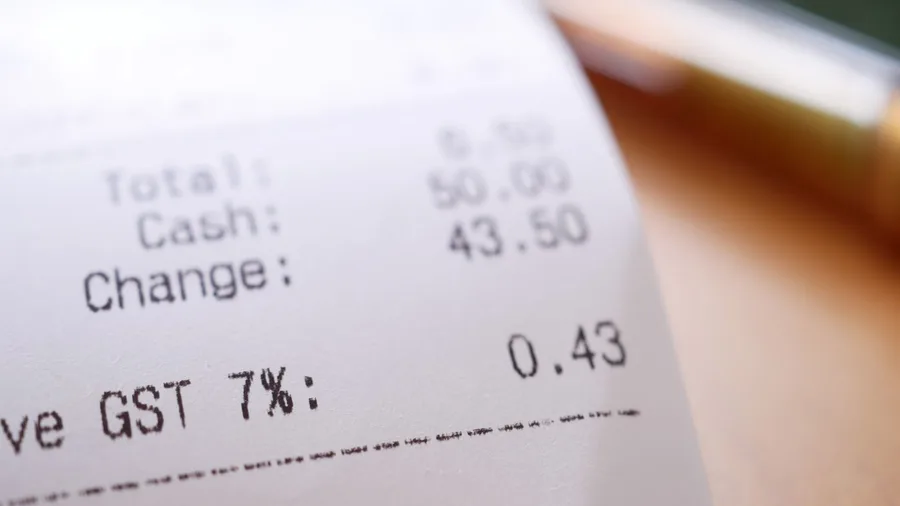
The first time I put a grocery receipt under a magnifying lamp at my kitchen table, I felt a little foolish. Fifty-one dollars, one person, one week, and half of it was food I had bought twice. Until the month is on paper, most people will tell you groceries are not their problem. Then the grid comes out and the food line sits there as the biggest number they can actually change this week.
The stuck belief is that a smaller food bill means eating less or eating worse. It does not. It means buying the same five dinners, written down, once, from a list that does not change.
Here is the setup I used. One five-dinner template, printed and run through a cheap laminator at the copy shop, eight dollars, and a dry-erase marker. The week's dinners go on it, the marker wipes off, the same five meals come back the next week.
That sameness is the whole point, and it is the part nobody believes at first. Variety sends you back to the store on Wednesday for the one ingredient you forgot. Repetition means the second trip never happens. My friend in the house with the salad drawer full of slime had been buying a second package of chicken and a second bag of greens for meals she never got around to cooking; leftovers plus no duplicate buys put forty dollars back in her month.
Eight dollars, once, against forty a month. That arithmetic holds whether the number is forty or twelve.
💡 Tip: Write the five dinners on the laminated card with the dry-erase marker. Wipe it clean every Sunday, never rewrite the grocery list from scratch.
At a Glance
3. The $0 Two-Pharmacy Price Check
Yes, and it takes two phone calls.
On the same weekly run where the grocery list gets checked off, the pharmacy counter is usually right there, and the price quoted for a refill gets paid without a second thought because it has always been that price. That is the trap: a number becomes routine, and a routine rarely gets questioned.
The test costs nothing but a printed list of your current prescriptions and fifteen minutes. Call two pharmacies, and for each one ask for two separate figures on the same drug: what it costs if you paid cash, and what it comes to when your insurance plan is run through. Write both numbers on the same sheet of paper, side by side, before you decide anything.
For my friend with two regular generics, the same pills from the same doctor ran twenty-two dollars lower every month at the second pharmacy she called. That first counter price was a starting quote, not a final price.
Regular generics are where the calls pay off. Never put off a needed medicine over a few dollars, and run the calls again after January, when plans reset.
Two calls, once, for a saving that repeats every month.
💡 PRO TIP
The one-number test
Before you buy anything on this list, write its setup cost on the calendar. If the measured monthly saving doesn't cover that cost within three months, skip the fix. That rule alone saved me from two $30 gadgets I didn't need.
4. The $25 LED and Power-Strip Swap

I was sure my electric bill was already as low as it gets. A bill is a bill the way a prescription is a bill, but nobody ever sets two months of it side by side and asks why the number climbed, and I had not either. So I bought four LED bulbs and one power strip in a single trip to the hardware aisle, $25 total, and changed the four bulbs we burn the most: kitchen, hallway, living room, porch.
The strip took the TV, the phone charger and the printer, and every night I switched it off at the wall. My friend's electric bill dropped $9 a month, and it held there across three straight bills, which is the part that matters: utility creep is small and permanent, and it does not announce itself. If the bulbs in your place are already LED, or a router, a recorder or medical equipment has to stay on, do less than this, and that is still fine.
The first month's measured changes
What actually showed up on statements in this example
5. The $0 Quarterly Subscription Audit
Print last month's bank and card statements, grab a notebook, and write every repeating charge in a single column. The bulbs you can see burning. These you cannot: they drain on a date you never chose, from a card you don't watch. The notebook is the whole system, and it costs nothing. A friend had two streaming services and three app subscriptions running. One service and two apps went, saving her $31 a month, and she told me she missed none of it.
Mark the last time you actually used each charge, then cancel one before its next renewal date. One, not all.
Do the audit again every three months, because free trials quietly convert to paid and the notebook becomes your record of what you already cut. If you sit down with the statements line by line every month already, skip it; you're doing this already.
6. The $0 Library Card Routine

A library card costs $0 and replaces roughly $25 a month in streaming and paperback buying. Cancel a subscription and the hours it filled sit there empty, and empty hours tend to get refilled with spending. The library catalog lets you put titles on hold from the couch, and the event calendar shows what is on this week, so there is always a next thing waiting.
The whole automation is one standing appointment: put a weekly visit on the paper calendar and, each time, borrow one book or sit in one class. A friend who missed the shape of her old workday made the Tuesday visit non-negotiable, and the holds shelf did the rest.
This suits anyone who misses the structure of a job. If getting to the branch weekly is hard, or its hours don't fit, skip it. The card is free; the routine is the part that fails.
Library Card — At a Glance
💳 Cost
$0
📅 Routine
Weekly visit
📚 Borrow
One book per visit
☕ Replaces
~$25/month entertainment
❗ Skip if
Mobility or hours make it unrealistic
7. The $12 Slow-Cooker Batch Plan

The myth is that cutting takeout takes discipline, and that discipline is what fails when you eat alone. I heard that from nearly every friend I helped, and I believed it for a while. It held up for almost none of them – what actually broke a takeout habit was a second dinner already sitting in the freezer, cooked on a day when cooking had felt easy.
A $12 thrift-store slow cooker runs on the same five-dinner grocery list on the dry-erase board, so the two together cost $20. On Sunday, one batch in, four portions out, two of those straight to the freezer. Those two are the whole trick: they cover the Wednesday nights when cooking feels like a chore, and that is how one friend who ate out three nights a week took roughly $35 off her month.
Skip it if the freezer is full or you already cook most days. If you can't picture two dinners you'd actually reheat, that's your sign to work with a dietitian or your own doctor on what fits your health before buying anything.
🗓️ Your first month in four steps
Pick your biggest leak
Look at last month's statement and circle the largest surprise.
Set up the fix
Buy or make only what that one fix requires — never all twelve at once.
Log the setup cost
Write the dollar amount on your paper calendar so you know what you're testing.
Watch one statement
At the end of the month, compare that line to last month's and decide if it stays.
8. The $30 Senior-Center Membership

Thirty dollars a year. That is the whole cost of a membership at the senior center down the street from me, and I want to be honest about what it does and does not fix before you write the check.
The single-container dinners cover the food line on your calendar, but they are a quiet fix – you eat alone, you do not replace the office, and the afternoons with no reason to leave the house stay empty. The membership works if you read the schedule first and confirm it covers the classes you would actually attend, then put two weekly things on the paper calendar: one class, one social. Go once before you judge it, because a first visit is not representative – the woodshop on a Tuesday looks like a room of strangers until the third time.
The trade-off is that $30 is spent whether or not you go. I watched a woman pay it, attend twice, and quit because the ceramics class was full and she never tried anything else. Read the schedule, call ahead, and pick two activities you would attend twice even if you did not love them the first time.
What it replaced for one friend was about $40 a month in paid classes and coffee-shop coffees that were really just a way to be around people. That is the real accounting: $30 a year against $480, and the Tuesday woodshop crowd is the part worth the money.
Skip it if no program on the schedule would be attended twice. $30 spent once is still $30. But if the isolation line is the one with no number printed next to it on your calendar, this is the cheapest way I know to put one there, alongside these real fixes for retirement loneliness.
Free replacement vs paid habit
Keep the free replacement
- Library card replaces streaming
- Senior center replaces paid classes
- Bike replaces short car trips
- Calendar replaces subscription app
Watch the paid habit
- Two streaming services you half-watch
- $40/month of coffee-shop outings
- Three takeout nights a week
- Renewing a $9 app you forgot about
9. The $10 Prepaid Phone Switch
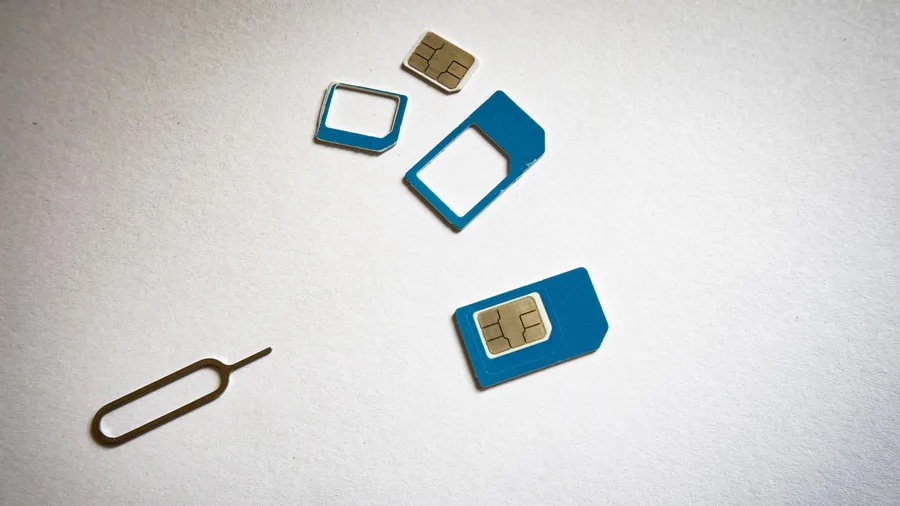
I sat at my friend's kitchen table and laid her last three phone bills side by side, and the third month was $11 higher than the first for no reason either of us could find. That is when she looked at me and said she had no idea what she was paying for. The fix cost $10 – one prepaid SIM card – and the handset she already owned stayed in her pocket, because that is the whole reason the swap is cheap.
First, compare those three bills against each other and against your actual data use, not the data you assume you need – most people on Wi-Fi all day need less than they think. Pick a prepaid plan that fits that real number, then port the number; porting keeps it and cancels the old line in one move. One friend cut $35 a month, same phone, same number.
Skip it if you are still paying off a bundled handset or making international calls you rely on. Otherwise, $10 out against $35 back every month is the biggest single cut on the list for the smallest outlay.
10. The $0 Bank Alert Setup

The belief I hear most is that overdraft fees are a spending problem, that people who get them are the ones not paying attention. I have watched too many careful people get hit to believe that anymore. A charge that lands a day before the deposit is not careless. It is invisible until the bank tells you it already happened.
Here is how it actually works. The alert does not stop the charge. It stops the charge from becoming a fee plus a second fee, because the bank usually processes the debit first and the fee after, and once you are negative every small purchase that day takes another hit. Catching it in the same hour is the whole difference between moving $60 around and eating $25 plus whatever the next two charges cost you. The bank is not trying to trap you so much as it is running on a clock you cannot see.
The friend I set this up for had her insurance debit clear one day before her deposit. She never saw it coming, she was out of the house, and by the time she checked, she was negative. After the alerts went on, the $200 low-balance warning buzzed the same hour the next one landed, she moved money from savings that afternoon, and she has avoided about $25 in overdraft fees over the first two months. That is not a fortune. It is a pick of one small leak sealed before it turns into a habit.
Setting it up takes one sitting, about ten minutes. Open the bank's app, or if the app is more than you want to deal with, call the branch and ask them to turn on three alerts for you: a low-balance warning at $200, a notice on every charge over $100, and a notice on every international charge. The $200 is the one that matters most, and $200 is not fixed – pick a number that sits a little above your rent so it tells you when the cushion is thinning, not when it is gone.
Where this goes wrong is almost always one of two ways. Either someone sets all three and then ignores the buzz – an alert you swipe away is not a fix, it is a phone that is now slightly more annoying. Or someone sets them and never checks, the inbox fills up, and they decide the whole thing does not work. If your alerts already exist and you are already ignoring them, do not set another one; the problem is upstream of the alert, and the honest fix is a weekly look at the balance, not a louder ping.
The other thing nobody tells you is the low-balance number has to sit in front of the rent, not behind it. I have seen people set theirs at $50 and wonder why it goes off after the month has already gone wrong. Set it high enough to leave a real decision available. $200 is a starting point, not a rule.
You set it once and then leave it alone, which is the point. You do not need to check it. It fires, you move money, you go back to your day. Ten minutes of setup against $25 the first two months, and after that a hundred quiet ones. The cost is $0 and the work is one sitting. That is the whole trade.
💡 Tip: Set the low-balance alert at $200, not $50. Fifty dollars arrives too late to move money before the automatic debit clears.
11. The $40 Bike Tune-Up

I thought everything within two miles was close enough to drive, because the car is already paid for and the errand is already on the list. The tune-up changed how I counted the cost of a trip.
A friend asked me to ride with her one morning: pharmacy, then grocery, then a coffee she would have driven to. Four of those a week on a borrowed bike, after a $40 tune-up at the shop, came off her month as about $18 in gas and short-trip wear. That is less than the price of one errand by car.
12. The $20 Grandkid Gift Drawer

A $20 box and a written gift list inside it is the whole move. Every other fix in this run repeats a saving on the same statement twelve times a year. This one lands once, in December, and the money leaves the house in a single afternoon.
I watched a friend with six grandchildren do it: the same card, the same store, and $420 on it every December, most of it decided in one panicked Saturday. With the box, she aimed at $240 for the year instead, one present bought each month and the date and price marked on the list inside the lid. When the wrapped gifts came out that last Christmas, nobody counted them. Not one grandchild said a word about a smaller pile.
Stop and look at the numbers, because this is the slowest of the twelve. Putting $20 into a lid and a list will not show up on the statement until next December, so a fix that pays back inside thirty days and one that pays back inside twelve months are two different bets, and this is the long one. The list is the engine; the box just makes it easy to reach.
If the gift list is long, start in January and buy one a month. Begin in October and you have a partial first year, saving less than $240 against the usual $420.
Stop reading here if gift spending is already set aside monthly and the total has never surprised you. The list and the box would be a second system for work you are already doing; keep the one you have.
💡 Tip: Store the list inside the drawer with the gifts. Adding a line after each purchase is the whole system.
Frequently Asked Questions
I'm already in retirement. Is it too late to start fixing a fixed income?
No. Every fix on this list was made by someone already retired, with money that was already coming in. None of them require saving up first, and most cost $0 to try. The point is awareness, not a windfall.
Which fix should I start with?
The one that matches the biggest surprise on last month's statement. If you can't name one, do the $0 paper calendar first — it is what shows you where the others are hiding. For most people that takes an afternoon.
How much can these twelve fixes actually save in a month?
In this example, the fixes that repeated monthly added up to roughly $230 a month when run together — but nobody should run all twelve at once. Start with one and watch a real statement. Your numbers will differ from mine.
Should I pay off debt or build savings first with these small savings?
That depends on your interest rates and your cushion, and it's a place to talk to a fee-only fiduciary or a nonprofit credit counselor rather than a list. What I can say: a $200 low-balance alert and one month of bare expenses come before extra debt payments in most cases.
Do I need to tell my bank or pharmacy before making these changes?
Only for the phone port and the pharmacy price check. Banks and pharmacies handle these requests all day. If you're unsure what your plan covers, ask for the cash price and the plan price side by side on the same sheet.
Start With the Leak You Can Name
Name the leak that hit you last month, and start there this week. If your month is a blur, the $0 paper calendar. Food waste, the $8 template. Prescription cost, the two pharmacy calls. Utility creep, the $25 bulb-and-strip swap. Isolation, the $30 senior center. Phone bill, the $10 SIM. Overdraft risk, the $0 bank alerts. Short trips, the $40 tune-up.
Test one. Write your starting number, track a full month, then add a second. The twelve together came to $145 in setup in this example and about $315 a month in measured effects – which is exactly why doing them all at once is how people quit.
Back to that Wednesday insurance bill and Thursday deposit: the $35 fee was never the problem. The unseen week was. The calendar that fixed it cost nothing but a pen.
Pick One Fix and Write It Down
Go get a pen and a piece of paper. Write the one fix you're trying this month and the date you'll check the statement. That's the whole step.