

Set the rate $50 an hour too low and 750 billable hours hand back $37,500 a year you never see.
That is not a rounding error. It is the gap between consulting that tops up a retirement and consulting that slowly eats one. The person most at risk is someone like the example running through this piece: 64, a former operations director with 30 years in food manufacturing, planning 18 billable hours a week and about 750 a year, wanting $75,000 from the work, and quietly afraid that a low number is the only way to attract anyone at all.
The reflex is to divide the old salary by 2,080 hours. That treats paid leave, benefits, the employer's overhead and all the unpaid selling time as if they disappeared at retirement, and they did not. The real number is a floor: $75,000 income plus $9,000 in business costs, divided by 750 hours after a 15% profit reserve. ($75,000 + $9,000) ÷ (750 × 0.85) comes to about $132, so the floor is $135 an hour.
From there you can quote a $6,500 project or that hourly rate without flinching, and when someone pushes, offer a smaller scope instead of a smaller price.
Your old salary is the wrong anchor
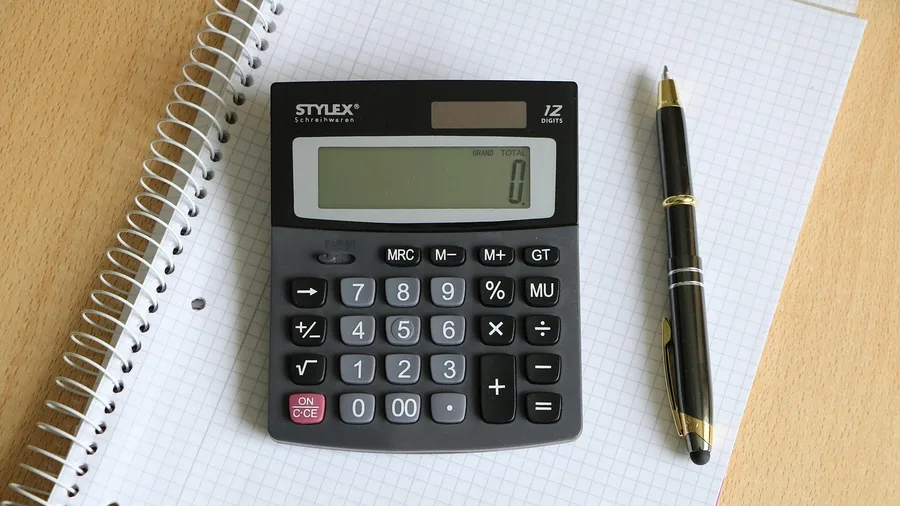
A salary is a record of what an employer paid for a full-time year, and a consulting rate is a price for deliverable expertise, so dividing one by the other gives a number that never had a chance to be right. Take the old pay, divide by 2,080 hours, and the arithmetic quietly assumes paid vacation, health coverage, an employer's payroll tax share and the hours spent selling all still exist. In retirement consulting they don't.
Those 2,080 hours count a year that no consultant actually works.
Run $75,000 of income across 750 billable hours and the same money needs roughly $100 an hour before costs and profit. Run it across 2,080 and it looks like $36 an hour. Same $75,000, two very different prices, and only one of them describes a business where a third of the week goes to unbilled selling, proposals and invoicing.
That is the trap. The 2,080-hour figure is the lower number, so the salary reflex pushes the rate down exactly when it should be climbing, and it makes 30 years in food manufacturing read as a wage being replaced instead of a scarce service being bought. The floor has to be built from the income goal and the real selling hours, and this example builds it from $75,000 over about 750 hours, not from a 40-hour desk year that ended when the badge did.
Bill only the hours you can actually sell

Plan on about 18 billable hours a week, roughly 750 a year, because that is the capacity a consulting business can actually sell and invoice. The other 22 hours in the week still get used. They go to marketing, writing proposals, chasing invoices, travel to a plant, and follow-up calls that feel like work and bill like nothing.
That gap is why the denominator carries so much weight.
Because 750 is the number the rate divides into, fewer sellable hours mean a higher required rate for the same $75,000. Cut the plan to 500 hours and the floor jumps; push it to 900 and it falls, but only if the work is genuinely there to sell. A full-time calendar is not a plan, it is a hope with dates on it.
So the floor has to recover the $75,000 target, the $9,000 of business costs and the 15% profit reserve out of 18 hours a week, not out of 40. Two weeks of a plant assessment at about 30 hours is close to a third of a month's billable capacity, and that is fine. Knowing it is what keeps the next inquiry from being quoted against hours that were never for sale.
Put costs and profit into the rate

Time is only one-third of what a rate has to recover. The other two thirds are the money the business spends to exist and the profit that makes it worth running.
Write down what the consulting year actually costs before you touch the hourly number. For the operations director in this example, that list totals $9,000: accounting and bookkeeping, software subscriptions, mileage and occasional travel to client sites, plus a share of the home office for supplies and the printer that always runs out at the wrong moment. These are not luxuries. They are the overhead every paying engagement quietly pays for, and a rate that ignores them means the $75,000 income figure is really a $66,000 income figure with a stack of receipts sitting on top.
The profit reserve is the piece people skip because it feels greedy. It isn't. The 15% reserve is what absorbs a slow quarter, a client who pays late, and the eventual replacement of a laptop or a vehicle, so a bad month does not have to come out of retirement savings. Knowing which account to drain first keeps that reserve intact when withdrawals actually begin.
Run the full formula, not a partial one: ($75,000 + $9,000) divided by (750 x 0.85). The 0.85 is where the reserve lives – it trims 750 sellable hours down to about 638 revenue-bearing hours, so the reserve is woven into the rate rather than bolted on afterward. That lands at roughly $132, and rounding up to $135 builds in a small cushion without making the quote look plucked from nowhere.
Cover only time, or only income, and the missing pieces get paid by someone. That someone is you, in the form of a shrinking retirement account you may not notice for a year.
| Pricing input | Example figure | Effect on the hourly floor |
|---|---|---|
| Annual consulting income target | $75,000 | Sets the base the floor must recover |
| Annual business costs | $9,000 | Added to income before dividing |
| Billable hours a year | 750 | The divisor that turns income into an hourly rate |
| Profit reserve | 15% | Applied as a 0.85 multiplier on hours |
| Resulting hourly floor | ~$132, rounded to $135 | The minimum rate you accept |
Set a floor you will not cross
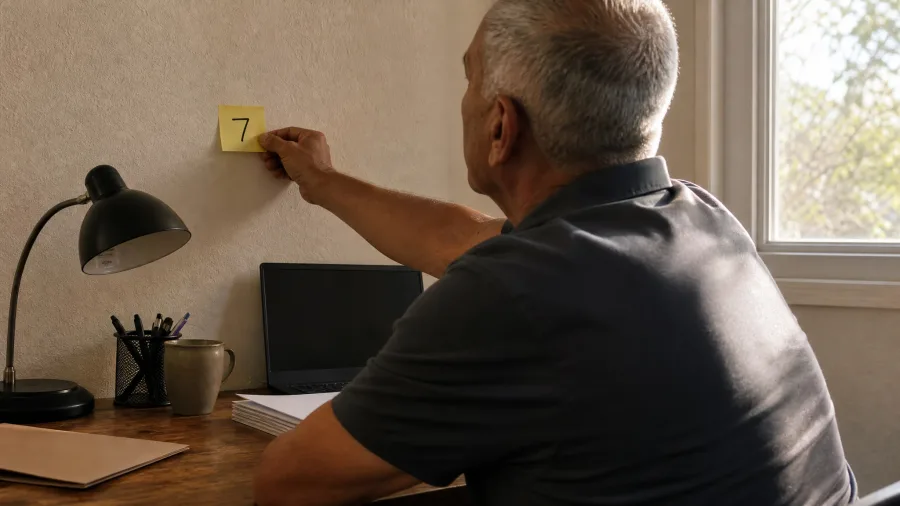
The number the arithmetic produces is $135 an hour, and it becomes useful only when you treat it as a rule rather than a suggestion. That rate carries three things at once: the $75,000 income target, the $9,000 in annual business costs, and the 15% profit reserve built into the 750 sellable hours.
Below $135, the business subsidizes the client.
That is the whole point of a floor. A rate that covers only your time, or only your income, leaves costs and reserves to eat into savings, and a rate that dips under $135 on a busy week does the same thing more slowly. So the rule reads simply: any request under $135 gets declined, or it gets re-scoped until the work fits the number before a single hour is spent. Not after the invoice, not halfway through the assessment.
A floor also needs a review date or it stops being a decision rule and becomes a one-time calculation you made in a good mood. Check it after every three projects, or every 90 days, whichever arrives first. Three projects is long enough to see what your hours actually cost you and short enough that a stale number doesn't quietly drain the year.
The trade-off is real: this rule will cost you engagements. Some of those clients will walk. The ones who stay are paying for 30 years of food-manufacturing operations work, and they are the ones who don't renegotiate every invoice.
Write $135 on a card. When a number arrives below it, you read the card, not your nerves.
💡 PRO TIP
The floor is a rule, not a target
A target is something you aim for and miss. A floor is something you refuse to go below. Write $135 on a sticky note, put it where you take calls, and treat it as the number that decides whether a project happens.
Price the outcome when scope is clear

When the deliverables are defined, quote a project fee instead of hours, and use that fee to clear the floor by a wide margin. Hourly billing suits uncertainty; a fixed fee suits work you can describe in advance. The operations assessment is the clean example: two weeks of work, roughly 30 hours including two follow-up calls, priced at $6,500.
Divide $6,500 by 30 hours and the effective rate is about $217 an hour. That sits well above the $135 floor, and the gap is the reward for quoting an outcome rather than renting out time. Clients buy the result, not a stopwatch.
The fee also stops the second-guessing that hourly work invites. No client watching the clock, no invoice line a finance department can pick apart call by call.
Two things must be written before the $6,500 goes out. The deliverables, spelled out, and a revision limit, so edits have a boundary. Without both, the fixed fee becomes an open-ended promise and those 30 hours turn into 50 at the same price, which drags your effective rate straight back down toward the floor.
Work that is open-ended or unclear stays hourly, or it starts with paid discovery. A fixed fee on a fuzzy scope is how a good rate quietly turns into a bad one.
Charge for discovery and credit it forward

Charge for the first conversation, and put the money toward the job if it goes ahead.
Set the diagnostic at $350 for 90 minutes, and write it up as the first paid step, never as a free sample. The client gets a focused block on the calendar, you get a reason to prepare, and the fee is credited against the project total if they decide to proceed. What changes the atmosphere is simple: when the calendar slot carries a price, the conversation is about whether the work is real and how big it might be, not whether you can be talked into a free proposal. You come out of it with a short one-page summary of the problem, the scope you would take on, and the next step, and you send it within a day while the details are still fresh.
The filter is the whole point.
Free discovery is where the wrong work starts. A casual questioner can eat ninety minutes with no project behind it, and because you have 750 billable hours to protect, that hour is gone – not deferred, not recoverable. A $350 entry point sorts people with a budget and a decision to make from people collecting opinions. The serious ones barely blink; the browsers drift off, and that is the filter working exactly as it should.
Discounts need a trade, not a reflex

A lower fee should buy you something in return, which means every price concession is a trade rather than a habit. Once a client has a real scope in hand, the honest answer to a cheaper request is to change what the money covers: fewer deliverables, faster payment, or permission to use the work as a named reference. Same work for less money is the one trade you don't make.
Here's how it looks in practice. If a client balks at the $6,500 assessment, you can pull the two follow-up calls out of the package and cut the fee accordingly. At roughly 28 hours of work instead of 30, that lands near $6,050, and the effective rate stays comfortably above the $135 floor.
Notice that the floor did the deciding, not your nerves.
Put the trade in writing before any work starts, with the deliverables and the payment terms attached to the reduced number. An email is enough: what is included, what is not, what gets paid and when. That single document is what keeps a one-time accommodation from becoming the client's new expectation on the next call.
And if the only thing they ask for is a lower price, on identical work? You walk. It feels abrupt the first time. But a reflex discount tells the client the number was never a floor at all, just an opening bid, and the next request will go lower still.
Discount request self-check
Friends and family need a written scope

The same discipline holds when the person asking is a friend, because a relationship quietly turns a small favor into unlimited work. A written scope applies even to the free job. So the policy is one pro bono slot per quarter, capped at four hours, described in exactly the same document you'd send a stranger.
Four hours is deliberate. It's enough to look at their problem and give real advice. It is not enough to quietly become their part-time operations director over six months of drop-in calls and hallway questions.
Here's the mechanism people miss. Those twelve free hours a year don't disappear; they come straight out of the 750 billable hours that have to carry the $75,000 income target, the $9,000 in costs, and the 15% reserve. A favor is never actually free. It's billed to your own retirement, at $135 an hour.
If the request is bigger than the slot allows, refer it out and say why: this deserves more time than my one free slot covers, and here is someone who can give it the hours. That is warmer than absorbing it, and it protects the relationship from the resentment that builds when the work keeps arriving and the money never does.
The pro bono slot: how the four hours actually run
Inside the four hours
- 90-minute diagnostic, booked like any client
- Written scope names one deliverable and a date
- Halftime check: still inside the cap or stop
- When the cap hits, refer out with a name
Where the cap breaks
- The cap resets each quarter, never per favor
- Drop-ins count against the four, not after them
- Ask gross revenue or staff count before saying yes
- One free slot filled means the answer is wait
Scope creep is a pricing decision

When a project grows past the brief, the extra calls, edits and meetings are new work, and new work triggers a change order at or above the $135 floor. The scope you wrote for a favor and the scope you wrote for a paying client answer the same question: what exactly is covered, and what sits outside it.
Take the $6,500 assessment. It includes two follow-up calls. A third call, or an added analysis nobody mentioned at the start, is outside that fee, and that isn't a technicality to feel guilty about.
At that point you have two clean options. Bill the additional work at $135 an hour, or re-scope it into a new fixed fee for the added piece. Either way a short written change order goes out and gets a yes before the work begins, not after.
The cost of absorbing it is invisible until you count. Every unbilled extra hour comes out of the same 750, and it quietly drags the effective rate on the whole project below the floor. A $6,500 job that slides from 30 hours to 40 is suddenly paying $162 an hour, then $130, and the savings you were protecting are covering the gap.
The change order feels like friction in the moment. It is the friction that keeps the project priced.
Raise the floor before resentment sets in

Raise your rate at the scheduled review, not in a burst of resentment after a bad week. Put it on the calendar: after every three projects or 90 days, whichever comes first, sit down and ask one question. Does $135 still cover the $75,000 target, the $9,000 in costs and the 15% reserve, or has the market moved past me while I was busy delivering?
Book the review or it does not happen.
The schedule matters because repeat clients make it easy to stay put. That same customer who came back twice is the clearest signal your work is not being overpriced. So when the example consultant arrives at the review, the two repeat engagements are the evidence, and the floor goes from $135 to $150 an hour.
That is a $15 an hour rise, which across 750 billable hours is more than $11,000 a year at full capacity. The math is not the hard part. The message is, and the message goes out before the next project starts, not in the middle of a signed scope. The work already underway stays at the old fee; you honor what you quoted.
A rate that sits still is not neutral. Every month at a stale number is capacity that sells below where it should, and unlike a missed phone call, that hour does not come back. There is no rebill button on a project that closed at the wrong price.
So when the review date arrives, name the new number out loud. Say that starting with the next engagement your rate is $150 an hour and today's scope is unaffected. That sentence is the whole conversation, and it costs less than the slow quiet version, where the floor keeps falling behind you and you start dreading the invoices.
The 90-day rate review
Say the number and stop talking

Say it plainly: the fee is $6,500, or my rate is $135 an hour. Then stop.
All the work of the review means nothing if the number arrives wrapped in apology. Clients hear the wrap, not the figure. When you soften the price, they learn it is soft, and the next conversation starts from wherever you left it.
So the delivery has a shape, and it is two beats. State the figure in one flat sentence, the same way you would confirm a delivery date. Then pause. Let the silence sit, no matter how long it feels. The discomfort is not a signal to keep talking. It is the client doing their own arithmetic, and the first person to fill that gap sets the terms.
The words that will kill the quote are the small ones. Just, only, and I'm new at this all tell the client the floor is a suggestion. Cut them. A quoted rate said without decoration does more to protect $135 than any follow-up argument, because it never opens the door to a discount.
Pushback will come. When it does, do not reach for the price. Reach for the scope. Offer a smaller engagement at the same rate, fewer calls, a shorter assessment, a narrower deliverable. The rate stays at or above the $135 floor and the client gets a number they can work with. You have given on the size of the job, not on the worth of the hour.
That is the move, and it takes about ten seconds to make.
💼 From inquiry to signed agreement
Paid diagnostic
Charge $350 for 90 minutes and send a short written summary.
Define the scope
Name the deliverables, the revision limit and the follow-up calls included.
Quote the fee
State the number and pause. No qualifiers, no apology.
Handle pushback
Offer a smaller scope, not a lower rate below $135 an hour.
Send the agreement
Put the fee, the scope and the payment terms in writing before work starts.
Bill extra work
Issue a change order at $135 an hour for anything outside the brief.
Walk away from below-floor work

Decline the project when the client will not meet $135 and will not cut the scope to fit it. That point is the last test, and it is easier once the number has been said without flinching. If they still push below the floor, the answer is no, or it is a referral, or it is the smaller paid diagnostic. It is not a yes at a lower rate.
The reason is capacity. The 750 billable hours are fixed, and every hour sold below the floor still spends one of them. A $100 hour for ten hours takes the same ten hours that would have carried the $135, the $9,000 in costs and the 15% reserve. Below-floor work does not pad the year, it borrows from it, and the hours never refill.
There is a second cost, and it is quieter. Say yes to a below-floor price once and the client learns the number was negotiable all along. The next project opens at the discounted rate, and the one after that tests it further. Offering a smaller paid diagnostic instead of a cut keeps a warm contact alive without teaching that lesson.
Some of these clients will walk. Let them. A prospect who cannot meet the floor was never going to make the target easier, and the hour you freed is the hour you sell at full rate next month. The referral costs you nothing and leaves a good impression.
Walking away is the move that keeps the rest of the arithmetic honest. Refuse the number, keep the relationship where you can, and hold the 750 hours for work that pays for itself.
Frequently Asked Questions
Should I base my consulting rate on my old salary?
No. A salary divided by 2,080 hours assumes paid leave, benefits and unbilled selling time that do not exist in consulting. Start from the income you need from consulting, add business costs, divide by the hours you can actually bill, and add a profit reserve.
How many billable hours should I plan for in retirement?
Plan for the hours you can genuinely sell each week, not the hours you could theoretically work. The example uses 18 billable hours a week, about 750 a year. That leaves room for proposals, invoicing, travel and follow-up calls, which are all unbilled.
What is a reasonable profit reserve for a solo consultant?
Fifteen percent is a workable starting point. It covers slow months, late-paying clients and the tax bill without touching your retirement savings. If your costs are higher or your client base is concentrated, raise it.
How do I handle a client who asks for a discount?
Offer a smaller scope rather than a lower rate. Remove a deliverable or the follow-up calls, put the revised fee and scope in writing, and keep the effective hourly rate at or above your floor. If price is the only concession requested, walk away.
When should I raise my consulting rates?
Review the rate after every three projects or 90 days. Raise it when clients accept without pushback, referrals arrive faster than you can serve them, or repeat clients keep coming back. Tell clients before a new project starts.
Is it okay to do free work for friends and family?
One pro bono slot per quarter, capped at four hours, with the same written scope you use for paid work. Larger jobs get referred out. Free work consumes the same billable capacity your income target depends on.
Build the floor before the next inquiry lands

One calculation decides every pricing question that follows: the floor from target income, billable hours, business costs and profit reserve. Everything after this entry is only as good as the number you settle on here.
Run it this week, before anyone calls. Write down the income you need from consulting, add your annual business costs, and divide by the billable hours you can genuinely sell. Then apply the 15% reserve as a multiplier on those hours, so 750 becomes 637.5, and the same $84,000 spread over it is $132 rather than $112. Round up. That number is the floor.
For the example, $75,000 plus $9,000 is $84,000, and 750 hours times 0.85 is 637.5, which comes out near $132 and rounds to $135 an hour. Skip the reserve and the math quietly hands back $112. The $23 gap is your profit reserve, and no client will ever ask you to add it back.
Then keep the script short. State the project fee or the hourly rate, pause, and if the client pushes back, offer a smaller scope rather than a lower price.
The floor does not move because a conversation got uncomfortable. It moves on your review schedule, in your favor.
One number before the next inquiry
Before the next inquiry lands, calculate one number: target income plus annual business costs, divided by billable hours times one minus the profit reserve. For the example that is ($75,000 + $9,000) divided by (750 x 0.85), about $132, rounded to $135 an hour. Write it where you can see it.
Then use the script. Say the fee is $6,500, or my rate is $135 an hour, and pause. If the client pushes, offer a smaller scope, not a lower rate.
Those 750 hours and that $75,000 target are protected by a $135 floor, not by a low rate meant to win the room. And the arithmetic from the first line holds either way: shave $50 off and 750 billable hours hand back $37,500 a year. Every quote from here either defends the floor or spends a year of savings on it.
Calculate your floor this week
Use the formula in this article and write down the one number that decides every future project. Then quote it plainly and hold it.