

Does it ever make financial sense for an affluent retiree to rent a luxury home instead of paying cash to own it outright?
Most retirees assume locking $1,200,000 into a paid-off property is the safest balance-sheet decision available. In reality, that purchase freezes seven figures in dead equity while generating over $50,000 each year in unrecoverable property taxes, insurance, HOA dues, and maintenance.
Dead equity pays zero dividends.
Leasing an equivalent luxury home at $4,500 a month costs $54,000 annually, but it leaves your entire $1,200,000 principal compounding in a liquid portfolio. When non-recoverable carrying costs almost match the rent, keeping your capital liquid eliminates sequence of returns risk, erases transaction friction, and hands you total geographic freedom.
| Financial Factor | Owning ($1.2M Home) | Renting ($4,500/Month) | Net Impact on Liquid Wealth |
|---|---|---|---|
| Upfront Capital Deployed | $1,200,000 (Locked in dead equity) | $9,000 (First month + security deposit) | +$1,191,000 retained in liquid investments |
| Annual Property Taxes | $18,000 (1.5% effective rate) | $0 (Included in lease) | Saves $18,000/year in sunk taxes |
| Annual Insurance | $4,500 (Homeowners policy) | $400 (Renter contents policy) | Saves $4,100/year in risk premiums |
| HOA Dues & Maintenance | $27,600 ($800/mo HOA + 1.5% CapEx) | $0 (Landlord covers repairs) | Saves $27,600/year in property upkeep |
| Total Annual Outflow | $50,100 (100% unrecoverable carry) | $54,000 ($4,500 monthly rent) | Rent costs just $3,900 more than ownership carry |
| Portfolio Yield on $1.2M (6%) | $0 (Zero cash flow from home) | $72,000 gross annual distributions | Yield covers total rent plus $18,000 surplus |
Liquid Portfolios Out-Earn Dead Equity in Real Estate

Locking seven figures into home equity weakens your retirement balance sheet by freezing productive capital inside walls that generate zero spendable income.
Handing over $1,200,000 in cash to buy a residence outright traps wealth in dead equity that never writes you a check. Kept in a diversified liquid portfolio yielding 5% to 7% annually, that principal generates $60,000 to $84,000 in gross distributions each year. That income stream covers a $4,500 monthly luxury lease – $54,000 across twelve months – with cash left over.
Physical property cannot pay your everyday expenses.
Tapping real estate gains always requires severe disruption: you must either put the house on the market or borrow against it through restrictive loan underwriting. Liquid investment portfolios spin off regular dividends and interest payments cleanly, delivering spendable cash without forcing you to take on debt or stage an open house.
Once your net worth crosses $3,000,000, balance-sheet safety comes from dependable liquid cash flow, not from holding unencumbered deeds to physical buildings.
💡 PRO TIP
The Seven-Figure Cash Flow Engine
A diversified $1,200,000 liquid portfolio allocated across broad-market index funds, Treasuries, and municipal bonds generates $60,000 to $84,000 annually without touching the principal balance.
Sequence of Returns Risk Favors Liquidity Over Illiquid Assets
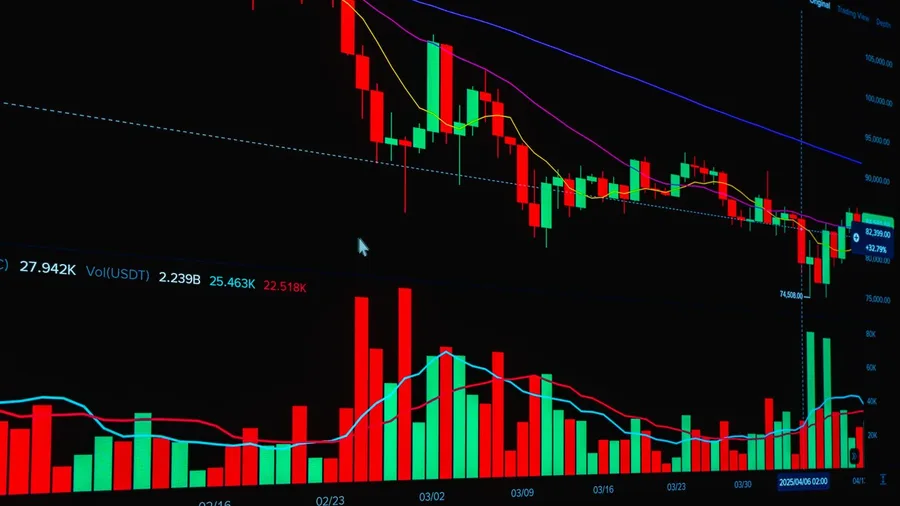
Sinking $1,200,000 into a house creates severe portfolio risk by draining the liquid buffer you need to survive an early retirement bear market without liquidating depressed stock holdings.
When market drops coincide with the first five years of retirement, selling equities at a discount to fund daily living permanently impairs long-term portfolio longevity. Keeping that seven-figure sum liquid provides a deep cash cushion, letting you draw on fixed income or cash equivalents during severe equity downturns.
Borrowing against locked home equity in a crisis is brutal.
Tapping residential equity through a home equity line of credit or a reverse mortgage during a market decline brings painful friction, including strict bank underwriting, high origination fees, and floating interest rates. Lenders frequently freeze credit lines during broad economic stress precisely when you need them most.
Paying $4,500 in monthly rent preserves the entire $1,200,000 investment base, giving you the operational agility to adjust withdrawal rates and rebalance into undervalued assets throughout shifting market cycles.
Transaction Friction Destroys Wealth on Short Time Horizons

Buying a home introduces extreme timing risk because closing costs and broker fees demand at least a decade of stable ownership to break even against leasing.
The round-trip transaction costs on buying and eventually selling a $1,200,000 home typically consume 7% to 10% of the property value, wiping out $84,000 to $120,000 in broker commissions, transfer taxes, title policies, and closing fees. That sunk overhead builds zero equity and vanishes permanently on settlement day.
That lost cash represents 19 to 27 months of rent.
Health changes, the loss of a partner, or a simple desire to downsize frequently push retirees to relocate within five to seven years. Exiting a purchased property on that shortened schedule locks in six-figure transactional losses before normal market appreciation has any realistic chance to offset them.
Renting replaces that massive drag with a single refundable security deposit, keeping your capital whole and allowing you to exit or relocate whenever life circumstances change without paying a penalty to title companies.
5-Year Cost & Liquidity Mechanics: $1.2M Purchase vs. Equivalent Lease
5-Year Purchase Reality ($1.2M Property)
- Annual non-equity carrying drag: $50,100 (taxes, HOA, maintenance, insurance)
- 5-year pure overhead before financing: $250,500 in unrecoverable cash
- Capital flexibility: $1,200,000 fully locked in physical real estate
- Liquidation timeline: 60 to 120 days of showings, staging, and escrow
- Required asset growth to break even: ~5% annualized property appreciation
- Surprise expense risk: 100% responsible for major structural replacements
5-Year Lease Strategy ($4,500/Month)
- Annual housing outflow: $54,000 fixed lease payments
- 5-year total housing cost: $270,000 with zero maintenance obligations
- Capital flexibility: $1,200,000 remains liquid in your investment accounts
- Relocation timeline: 30 to 60 days written notice to exit or downsize
- Growth dependency: $0 home appreciation needed to preserve principal
- Surprise expense risk: Landlord covers all special assessments and repairs
Property Taxes and HOA Dues Never Build Equity

Carrying a deed requires substantial non-recoverable spending that disappears into local government coffers and association ledgers without building a single dollar of home equity.
On a $1,200,000 retirement property, property taxes of $18,000 per year combined with $800 monthly HOA fees generate an immediate $27,600 annual baseline carry. That capital vanishes completely. It funds local school districts and community lawn care, but it adds zero value to your personal balance sheet.
That $27,600 carry cost alone covers more than six months of a $4,500 monthly luxury rental.
These line items also introduce severe budget volatility. County assessors regularly mark up property valuations, while condo boards issue sudden five-figure special assessments when shared roofs or elevators fail. A homeowner cannot decline these bills without risking a lien on the property.
Renting shifts all tax reassessment exposure, municipal rate hikes, and structural community assessments entirely onto the property owner.
Your housing line item stays fixed for the lease.
Ownership Carrying Costs vs. Rental Capital Efficiency
Maintenance and Capital Expenditures Create Unpredictable Cash Outflows

Ongoing physical wear turns residential property ownership into an open-ended liability that dramatically narrows the cost gap between buying and renting.
A standard 1.5% annual capital expenditure reserve on a $1,200,000 home requires budgeting $18,000 each year for aging roofs, failing water heaters, and mechanical repairs. When you add that $18,000 reserve to $27,600 in annual taxes and HOA dues, unrecoverable ownership costs climb to $45,600 per year.
That total leaves ownership just $8,400 shy of a full $54,000 annual luxury rental bill.
Maintenance rarely arrives in tidy monthly increments. It strikes in disruptive spikes, such as a dual-zone HVAC failure on a holiday weekend that demands an immediate $20,000 replacement. These lumpy capital calls create friction for retirees relying on systematic monthly distributions from a liquid portfolio.
Retirees who rent outsource the entire headache of contractor bids, project supervision, and material invoices to property management through one phone call.
The landlord writes the check; you keep your day intact.
Capital Expenditure Mechanics — The Hidden Portfolio Friction
💵 Dedicated Cash Buffer Needed
$35,000 to $50,000 liquid
⏳ Major Component Lifespan
10 to 15 years per system
🏗️ Special Assessment Exposure
Uncapped structural levies
📉 Drawdown Risk Trigger
Selling equities during market dips
🛡️ Tenant Out-of-Pocket Cap
$0 beyond contractual lease
Cash Drag Impact
Holding a dedicated $40,000 liquid repair cushion permanently sidelines capital that would otherwise compound in a balanced portfolio.
Homeowners Insurance Surges in Prime Retirement Markets

Property insurance volatility in popular coastal and southern retirement corridors has fundamentally dismantled the traditional financial case for buying.
Insuring a $1,200,000 residence in coastal or southern retirement markets now averages $4,500 per year, with private carriers pushing through aggressive double-digit renewal hikes annually. When you combine $4,500 for insurance with $18,000 in property taxes, $9,600 in HOA dues, and $18,000 in maintenance, total unrecoverable carrying costs reach $50,100 per year.
That brings ownership carry within $3,900 of a $54,000 annual lease.
The risk goes beyond premium pricing. Widespread policy non-renewals, strict underwriting guidelines, and carrier insolvencies in major retirement states frequently force homeowners onto expensive, high-deductible state-backed residual insurance pools. A single severe hurricane or hail season can double your annual premium overnight or leave you underinsured.
A luxury tenant sidesteps structural property risk completely by paying $300 to $500 annually for high-limit personal property and personal liability coverage.
Building risk and storm deductibles remain entirely the landlord's financial problem.
🔄 The Downsizing Capital Reallocation Sequence
Liquidate Primary Home
Sell the primary residence, capture the federal capital gains exclusion, and convert illiquid home equity into pure cash.
Structure Liquid Income Portfolio
Allocate proceeds across a diversified mix of dividend index funds, short-duration Treasuries, and municipal bonds.
Sign a Flexible Luxury Lease
Secure a 12-month lease in a professionally managed building with turnkey maintenance and on-site amenities.
Automate Rent from Yield
Route the portfolio's monthly dividend and interest distributions directly to cover the rental expense with zero principal drawdown.
Renting Simplifies Estate Distribution for Heirs

Passing down a liquid investment portfolio transfers wealth in days, whereas leaving behind an inherited $1,200,000 home drags heirs into months of probate court, appraisal fees, ongoing utility bills, and potential multi-state legal filings if the property sits outside their home state.
Physical real estate creates immediate administrative work.
By contrast, keeping that $1,200,000 in a liquid brokerage account allows the balance to bypass probate entirely through direct beneficiary designations or Transfer on Death (TOD) registrations. The funds land in each beneficiary's account clean, split to the exact percentage specified without any negotiations.
Splitting cash prevents the common family friction over whether to renovate, rent out, or sell physical property. It also eliminates the awkward burden of choosing which sibling handles the listing.
Liquid financial assets receive the exact same step-up in tax basis at death as physical real estate, resetting capital gains to zero. Your heirs get the full tax advantage without spending six months cleaning out closets, staging rooms, or paying broker commissions.
Estate Settlement Comparison for Heirs
Geographic Mobility Protects Against Lifestyle and Health Shifts

Holding a 12-month lease allows rapid relocation whenever family needs, personal preferences, or health requirements shift during retirement. You avoid the trap of managing an illiquid property across changing life stages.
You can move without waiting on local buyers.
If you want to relocate near grandchildren, access specialized medical centers, or transition toward assisted care, you simply let the lease expire. Renting also offers an easy trial run for state tax residency and climate before locking permanent capital into an unfamiliar neighborhood.
When severe weather hits, storm cleanup and structural repairs remain entirely the landlord's problem. You never have to spend retirement afternoons managing contractors, settling insurance claims, or funding capital repairs.
Eliminating repair logistics while keeping $1,200,000 in liquid investments provides genuine day-to-day freedom. The core purpose of retirement is spending time on your own terms, and renting treats housing as a simple operational expense that adapts whenever your life does.
Flexibility is the real asset.
Frequently Asked Questions
What happens if my landlord increases the rent significantly each year?
Rent inflation is real, but high-end rental markets are constrained by local supply and demand dynamics. More importantly, your unencumbered $1,200,000 investment portfolio continues to grow and compound over time, spinning off increasing dividend and interest distributions that outpace typical annual lease bumps.
Isn't renting psychological money down the drain with zero equity gained?
That belief ignores that $50,100 of your annual homeownership costs on a $1,200,000 property (taxes, insurance, HOA, and maintenance) are also 100% unrecoverable sunk costs that build zero equity. Renting simply bundles those carry costs into one predictable monthly payment while freeing your principal.
Does this rent-versus-buy math work if my net worth is under $1,000,000?
The arithmetic changes for smaller balance sheets. If you do not have sufficient capital to generate $50,000+ in annual portfolio yield, owning a modest, low-cost home can offer valuable housing cost stability. The luxury rental strategy is designed for retirees with $2,000,000 to $5,000,000+ in liquid net worth.
What if real estate prices appreciate rapidly in the retirement market I want?
While residential real estate can appreciate, diversified equity markets have historically outpaced primary home price gains over extended horizons after factoring in carrying costs. Furthermore, home price appreciation is illiquid paper wealth that cannot be spent without selling the house or taking on debt.
How does tax treatment compare between owning and renting in high net worth retirement?
The Tax Cuts and Jobs Act caps the state and local tax (SALT) deduction at $10,000, meaning affluent homeowners cannot deduct the majority of an $18,000 property tax bill. Meanwhile, liquid portfolios can be structured with tax-exempt municipal bonds and qualified dividends to optimize your effective tax rate.
Calculating Your Personal Rent-Versus-Buy Retirement Breakeven
Renting is the mathematically superior choice whenever your annual unrecoverable carrying costs – totaling $50,100 on a $1,200,000 property – combined with the investment return on that preserved capital exceed the $54,000 annual lease.
Buying only breaks even if you guarantee a stay beyond 10 years and care more about custom renovations than balance-sheet liquidity. For everyone else with significant assets, treating housing as a simple operational expense preserves seven figures of compounding wealth, protects your cash flow against market drops, and leaves you completely free to move whenever retirement demands it.
Audit Your Unrecoverable Housing Carry Costs Today
Review your property tax bill, HOA dues, and annual maintenance budget against your liquid portfolio yield to see how much dead equity is costing your retirement cash flow.