

Everyone else's April comes back as a refund. Yours came back as a bill – and the balance that paid it is smaller than it has ever been.
On the last joint return there was a $1,900 refund. On $45,800 of income the next year, there was about $4,600 owed, in the same twelve months the smaller $1,550 Social Security check stopped arriving. A $6,500 swing in the wrong direction, and every instinct says it has to be a mistake – a missed form, a box left unticked, an accountant who fumbled it.
It is none of those. Nothing on that return was recalculated for one person except the size of the box the income sits in. Joint status ends the January after the death; the mortgage, the insurance, the utilities and the property tax stay couples-sized. That is the trap, and it is built into the form, not into you.
By the end of this you will know which filing year you are in, which levers are still open before December 31, and the one comparison to run this week that puts the gap on paper instead of leaving it in your head.
Quick Tips Before You Start
Find the death year
The year your spouse died is still filed jointly, and that is the cheapest tax year you will ever have.
Pull last year's return
Line up the last joint return next to this year's documents before you make any decision.
Check the Medicare premium
The Part B premium is set from a return filed two years ago, which for you may still be a joint one.
List every income source
Write down the salary, the survivor annuity, the Social Security and any IRA distribution on one page.
December is the deadline
Roth conversions, gain harvesting and charitable distributions all have to be finished by December 31.
Why the bill rises as the income falls
The first thing to understand is that the tax return you file now is not the same return with smaller numbers. It is a different machine, built for one person, and it starts measuring your household from the January after the death.
Every entry in this first section asks the same question of a different line: which year's household is this line built from? The honest answer is almost always the two-income, two-check household you no longer have.
1. Your Filing Status Turns Single First

You open the envelope expecting the number to have shrunk along with everything else, and it has gone the other way. That lurch in your chest is real, and the first thing to know is that nobody sent you a bill by mistake.
The status change has a date, not a feeling. Single applies from the January after the death, so if the death came in March two years ago, that year's return was filed jointly and every return since has been single. The fixed costs did not shrink with the status: taxes, insurance and upkeep on the mortgage-free house still run about $9,600 a year, plus utilities, the car and its insurance, all of it now carried by one income of $45,800 instead of $118,000. The return itself is a different machine, not the same machine with less money in it, because the brackets, the standard deduction, the credits and the phase-outs are each built for one filer. Current rules sit in IRS Publication 501 and the Form 1040 instructions.
Here is the swing in plain dollars. A $1,900 refund on the last joint return, then roughly $4,600 owed in the first full year of single filing. That is $6,500 moving in the wrong direction on falling income.
You do not have to fix any of that this week. Start with one thing: pull last year's return and last year's income documents, and put the two numbers side by side on a single sheet of paper. Seeing the gap is where this begins, and it can begin there.
The bill tracks the status switch. Not a mistake, and not a deduction you forgot to claim.
💡 Tip: Mark the January after the death on a calendar and treat every return from that year forward as a single-filer return, even if it feels wrong.
| Line on the return | Last return filed jointly | First full year filed single |
|---|---|---|
| Filing status | Married filing jointly | Single |
| Work and pension income | $118,000 | $45,800 |
| Social Security | $4,300 a month (two checks) | $2,750 a month (one check) |
| Tax result | $1,900 refund | About $4,600 owed |
| Medicare Part B premium | Standard, based on joint income | About $190 a month higher for two years |
2. The Brackets Narrow but the Bills Don't

The same money is not being taxed at a special rate for you, and you are not being punished for the death. The space the income sits in got narrower: the rate steps and the deduction are now measured for one filer, so the same $45,800 climbs higher through them than it did when the table had two people written into it.
It is easy to picture the $35,000 salary and the $900 monthly survivor annuity as a smaller version of the old return, but the two-person widths are gone, not just the two-person salaries. The current tables are in the Form 1040 instructions, and the $310,000 traditional IRA is the number to watch: a required distribution in a year the money isn't needed lands on top of the salary and the annuity and pushes income up through those narrower steps.
So the useful question isn't how to earn less. It's how much income to leave sitting in the low steps each year, and that can wait a paycheck or two while you build the one-page estimate.
3. The Smaller Social Security Check Is Taxed Harder

Because the measure that decides how much of a benefit is taxable is also built for one person. Add adjusted gross income, any tax-exempt interest, and half the benefits, then compare the total with a base amount set by filing status: single is a lower bar, and IRS Publication 915 has the current figures.
The money moved the way you feared, and then the rules moved too. Two checks of $4,300 a month became one of $2,750, so household benefit income fell by about $18,600 a year, but that smaller check now sits against the single filer's base. A larger slice of a smaller benefit lands in the taxable column.
That is the belief worth setting down: nothing is being taken back. The check shrank and the taxable share grew in the same twelve months, the whole headline folded into one line of the return.
Then came April. Nothing withheld on the $900 monthly annuity, nothing withheld on the Social Security, so roughly $4,600 came due all at once as a bill, not a slow bite out of each deposit.
The fix is small and can start this week. File a Form W-4V to withhold from the benefit, or set up quarterly estimated payments, and the same tax spreads across the year. Even a modest withholding, $50 a check, beats the whole number arriving in April.
4. Medicare Still Reads Your Joint Return

The first Medicare premium notice after the funeral arrived in December, $190 a month higher than the one before it, with no letter of explanation attached.
Part B premiums are not set from this year's income. They are set from the return filed two years back – the lookback – and for a spouse widowed in March, the return two years back is often the last one filed jointly, still carrying both salaries and the full pension. So the premium rose in the same season the household lost a check, priced off money that stopped arriving before the bill did. In this household it stayed elevated for two years after the death, then drifted back down as single returns replaced the joint one in the formula.
The fix exists, and it is Form SSA-44. It is the request for a new initial determination after a life-changing event, and death of a spouse is on the list. You file it with the death certificate and a figure for what income actually is now. It can be submitted after the higher premium has already started – you are not too late because the first notice has come and gone.
Here is the honest cost, because this is not free money and not free effort. The appeal only works if the event is documented and the new income number is in hand, which means pulling the death certificate from wherever it was filed and assembling this year's income before you can sign anything. It involves phone time with Social Security and a form that gets rejected if the paperwork is thin. It may still be rejected, and you may have to file it twice.
It is still worth the afternoon, because of the arithmetic on the other side.
Somewhere around $190 a month over two years is roughly $4,500 – the size of the surprise bill that lands in April, recovered one premium at a time instead of found.
The thresholds that decide whether a surcharge applies at all are published at ssa.gov, and they shift; the current numbers are not fixed in this article on purpose. Look up the current figures, then file the appeal against them.
This is the one line on the whole return where the old joint income is still billing a household every month, on a schedule you can interrupt with a signature and a certificate.
💡 Tip: File the SSA-44 as soon as you have the death certificate and your new income figure. You do not have to wait for the next open enrollment.
💡 PRO TIP
The one-hour move that pays for itself
Before you do anything else, file Form SSA-44 for the Medicare premium surcharge. In this example it costs about an hour and can save $190 a month for two years — more than most people save from a whole year of coupon clipping.
5. Capital Gains Lose Their Tax-Free Room

The common belief is that money already sitting in an investment account is untaxed until you sell it, and then you get a joint filer's tax-free allowance on the gain. Half of that is true.
It is true that you are not taxed on the paper gain year to year. What changes after a death is the room: the zero-percent band for capital gains is keyed to taxable income and to filing status, so the single band ends sooner, and a sale that fit inside the untaxed range on a joint return now spills into a taxed one. The size of the gain is what moves the return, not the size of the account. A $520,000 portfolio holding $190,000 of gain can fit the band this year and overshoot next year, simply because what is already on the return changed. Before you sell a slice, run three checks: the current bands in the Schedule D instructions, whether the portion you inherited from your spouse stepped up in value at death – Publication 559 covers it and the answer depends on how the account was titled – and whether your income line for zero capital gains has already shifted. That is the review, and it is worth more in December than April.
The Capital Gains Question — At a Glance
📊 Account value
$520,000
📈 Unrealized gain
$190,000
🏠 Home value
$410,000
📉 Mortgage
$0
💰 Annual carrying cost
$9,600
The number to know first
The gain, not the account size, is what moves your return. Confirm the basis before you sell a single share.
What actually left the household budget
The tax rule is only half the story. The other half is the money that stopped arriving, and the reason it cannot be recovered by any election or form.
This section is about the income lines that changed on their own schedule, separate from the tax code, and why the budget has to be rebuilt around what is actually there now.
6. You Keep the Larger Check, Not Both

Make the call to Social Security and confirm which check you are keeping, because the rule is not the one most people assume.
The mechanics are to be confirmed with SSA before anyone treats them as settled: of the two benefits, the larger continues and the smaller ends. In this household that meant $4,300 a month arriving as two deposits became $2,750 arriving as one, and the smaller $1,550 check stopped. That is not a pause or a deferral. It does not come back through any election, form, or waiting period. Over a year it is about $18,600 of income gone for good.
So book an appointment rather than inferring the answer from a bank statement. Go in with two questions: is the survivor claim on the record correct, and is it dated correctly, and is there anything else on the deceased's earnings record that has not been claimed. Those are the two things the call can actually settle.
The part that catches people is that the tax increase and the income cut are real at the same time. The roughly $4,600 owed is not the lost check being clawed back. It is a second, separate loss that arrived while the first one was still being absorbed.
A widowed household now runs on a single benefit built for one person, while the return that weighs it is still drawn at the size of two.
7. The Pension and the Paycheck Stop Together

A planner once drew the four income lines on a legal pad for me, then crossed out three in the same stroke, because they all stopped inside one twelve-month stretch. The check was only the first of them. His $58,000 salary ended, her own salary came down to $35,000, and the $22,000 pension became an annuity of $900 a month.
That annuity is not a consolation prize invented by the insurer. It is the survivor election he chose at retirement years earlier, when the paperwork asked whether the pension should continue to a spouse, and the answer was yes at a reduced monthly rate. It is now the whole pension line on the return. Nothing else survives from it.
Add the lines up and work and pension income went from $118,000 to $45,800 in a single year. The mortgage was already paid, but the roof, the car and the insurance did not shrink by a dollar, and the house alone runs about $9,600 a year in taxes, insurance and upkeep.
So look honestly at what she can cut in year one. Subscriptions, travel, the second car, the gifts she has been quietly funding. That is a real list and worth doing. Then look at what is locked: the house, insurance, utilities, medical. No single line on the cuttable list is big enough to close a gap that size, which is why the work has to happen on the return, not in the checkbook.
Here is the automated version if you want it out of your head. Set one transfer for the day after each deposit into a separate tax-and-house account, sized at last year's bill divided by twelve, and leave it. Do not adjust it monthly. Check it twice a year against the actual return and change the amount then.
8. The House Is a Decision With a Clock

Walk the house before December, because the house is the one line you can neither leave alone nor fix by cutting a check. Start with the two tax parts the note in your file needs to answer: the step-up in basis on the half you inherited at death, and whether the exclusion still works when a joint filing history meets a sale reported by a single filer. Both are decided by the year the deed transfers, not the year you start thinking about it, and Publication 523 holds the rules rather than this page.
The example's house: bought at $180,000, worth about $410,000, paid off, with taxes, insurance and upkeep running roughly $9,600 a year on a single income. Hold it five more years and that is about $48,000 of carrying cost, and the sale lands in a year that has been single for a long stretch, with both the basis and the exclusion worth checking before you lock that in. A condo has been on her mind since spring, and the year nearest the death is the one with the most room in it; waiting spends that room one month at a time.
Staying put is not the neutral choice it feels like. It is a decision about which tax year the sale eventually falls into.
Sell early versus stay: the numbers behind the clock
Sell in the first year or two
- Roughly $95,000 of gain on your half may never be taxed – the step-up applies to the half you inherited
- The $250,000 single exclusion is tested while your joint filing history is still recent
- Annual carrying cost of about $9,600 stops the month you close
- A $410,000 sale into a $250,000 condo frees roughly $160,000 before costs
Stay five more years
- About $48,000 of taxes, insurance and upkeep leaves your account with no equity built
- The step-up on your half does not grow – the other half's gain keeps accruing to you
- By the later sale the exclusion depends on a single-filer history, not a joint one
- If your health or care needs force a sale, you lose the choice of which tax year absorbs it
What is still yours to decide
The first two sections were about what already happened. This one is about what has not happened yet, and every item on it has a December clock.
None of these moves are complicated. All of them require you to know this year's taxable income before you touch anything.
9. The Year of Death Is Still Joint
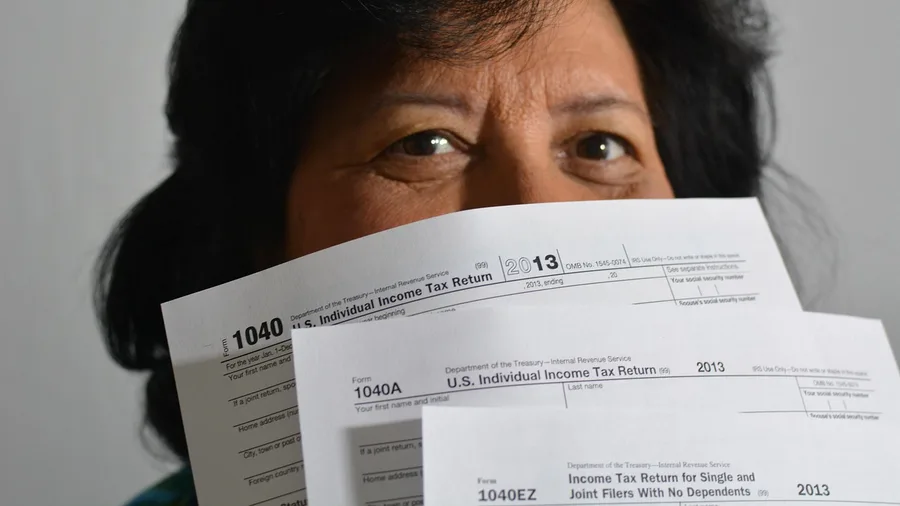
For the year of death, yes, and the surviving spouse signs that return. In this household the death came in March, so that joint return produced the $1,900 refund, which is exactly why the first solo April felt like it came out of nowhere.
What closes after that year is the part most people never hear. Qualifying surviving spouse status, the one that keeps joint rates for two more years, requires a dependent child living in the home, and the conditions sit in IRS Publication 501. With no dependent child, the year of death is the only joint year there is.
So build a one-page calendar and keep it somewhere you will actually look. Across the top, put each tax year. Down the side, four rows: filing status, filing deadline, the standard deduction you are entitled to, and your capital-gains band. Fill in the death year as joint, every year after as single, and leave the qualifying-surviving-spouse row blank unless a child is in the home.
This is a copyable structure, not a theory. One page, one pen, ten minutes, and a dated note in the corner so you know when you last updated it.
The planning consequence jumps straight off that page. Any income or gain you can push into the joint year is the cheapest you will ever pay, because it is measured against two people's brackets, two people's standard deduction and a wider gains band. The identical dollar moved one year later lands in the narrow single structure and costs more.
That is why the house decision and the distribution decision and the timing of any sale all run through this same calendar. The cheapest year is already partly spent.
What it means for you: before you assume there was only one joint year, count the ones actually available to you, and check whether a child in the home changes that count. Then decide what belongs in the remaining joint year while it is still open.
💡 Tip: If the death happened this year, file jointly and write down the exact date. That date decides every return that follows.
10. Decide in December, Not in April

December 31 is the deadline, not April 15. The joint year the two of you filed is the cheapest tax year this household will ever see, and it is closed now. What is still open is the current December, and it is the last cheap year inside this one.
The levers that must be pulled before the calendar turns: a Roth conversion sized to fill the lower brackets, before the door on that year's rates closes. Harvesting gains up to the top of the single band. A qualified charitable distribution, once she meets the age requirement. And withholding set with a Form W-4 for the salary and annuity, plus a Form W-4V for the Social Security. Each one carries a future cost: the conversion raises this year's tax bill to lower future ones, the harvest uses the band now but resets the basis higher, the charitable distribution gives away money that would otherwise be taxed.
A conversion has to be sized against the year's actual income – the $45,800, the taxable share of the $2,750 monthly benefit, any distribution from the $310,000 IRA. Miss that and it overshoots straight into the steps it was meant to avoid. A CPA can run the estimate in an hour. Your part is one page: this year's taxable income, built from last year's return and this year's documents, before any lever is touched.
11. Know When to Pay a Professional

It is tempting to assume that because you filed jointly for years without help, a single return is the same job with one name fewer. That assumption is where it goes wrong. A single return with a W-2 and Social Security income is genuinely doable alone. A single return plus an estate, an inherited IRA, a home sale or a Medicare appeal is a different animal, and the difference is not intelligence. It is sequencing: gain recognized in one year versus another, a distribution timed against a bracket, an appeal filed before a premium locks in.
The free options are real and worth naming. IRS Free File through irs.gov covers straightforward returns, VITA sites listed there serve qualifying groups, and AARP Tax-Aide is built for exactly this kind of filer. None of them are set up for an estate return running alongside a home sale, and asking them to be is not fair to the volunteers or to you.
The trigger for paid help is simple: any one of an estate return, an inherited IRA in its first year, a home sale, or an IRMAA appeal turns the job into a sequencing problem. One hour with a CPA before the first solo April costs a fraction of the $4,600 that arrived unplanned, and that hour is where the SSA-44 appeal, the conversion sizing, and the senior tax breaks retirees miss actually get done.
Know what to bring so the hour is not spent on setup. The death certificate, the last three returns, the estate documents, the SSA statements, and the pension and annuity statements. With those on the table, the line between what you can file yourself and what you hand off is visible before the money moves, not after.
Frequently Asked Questions
Is it too late to fix this if the death happened two years ago?
No. You cannot recover the smaller Social Security check or refile years that have closed, but the open levers — a December Roth conversion, gain harvesting, and the SSA-44 appeal — are still available for the current year. The first step is to build a one-page estimate of this year's taxable income.
Why is my tax bill higher when my income is lower?
Because the return is a different size, not the same return with smaller numbers. Single filing status, the single standard deduction, the narrower brackets, the Social Security base amount and the capital-gains band are all built for one person, while your fixed costs stayed the size they were for two. The bill tracks the structure, not a mistake.
Do I have to sell the house to fix my taxes?
No, but staying is a decision with a cost. The carrying cost in this example is about $9,600 a year, and the tax room in the basis and exclusion rules is widest in the years closest to the death. If you are staying, do it deliberately and check Publication 523 before a future sale.
Should I take extra money out of the IRA to cover the bill?
That is a decision that depends on your own numbers. A distribution stacks on top of your salary and your taxable Social Security and can push you into a higher band, which raises the very bill you are trying to pay. Run it against your own return first, or ask a fee-only fiduciary or a CPA before you withdraw.
Is a Roth conversion worth it for someone in their late sixties?
It may be, if you have a low-income year now and expect higher required distributions later. A conversion raises this year's bill to lower future ones, so the question is bracket room, not age. Size it against your actual income for the year and consult a CPA if you are unsure.
Where can I get help filing this return for free?
IRS Free File through irs.gov and VITA sites listed at irs.gov both serve straightforward returns. AARP Tax-Aide is another option. None of them are built for an estate return plus a home sale, which is where one paid hour with a CPA earns its keep.
Which year are you filing — and what do you still own in it?
If the death happened this year, file jointly for that year and check whether a dependent child in the home opens the extra joint years under Publication 501. If it happened earlier, the open levers are a December Roth conversion, gain harvesting, an SSA-44 appeal on the Medicare premium, and one paid hour with a CPA before the first solo April.
This week, pull last year's return and this year's income documents and lay them side by side – status, income lines, withholding. The $6,500 swing from a $1,900 refund to about $4,600 owed shows up on paper, where you can work on it, instead of in April, where you can only pay it.
Two checks became one. $4,300 a month became $2,750. The bill went up anyway, and now the arithmetic answers how both can be true.
That refund that never came is the detail to keep in view. The bill is not a mistake and not permanent – it is a filing status meeting a December deadline, and you now know which of the two you can still move.
Start with the SSA-44
Pull the last joint return and file Form SSA-44 this week. It is the one move that starts paying you back within a month.