

Everyone else seems to have this figured out. They do not, and the gap between how sorted the neighbours look and how sorted the month actually is usually runs a couple of thousand dollars a year. No one is hiding it. They just never added it up.
A $9.99 streaming charge, a $2.99 cloud bill, a $12-a-year magazine. On a fixed income those feel too small to matter, and that is exactly the trap.
Forty members of a Tucson retiree association brought twelve months of statements to two Saturday sessions in January. One couple's household carried eleven recurring charges totaling $179.83 a month. That is $2,157.96 a year, and nobody ever voted on that line.
The sweep is not a purge. It is a list, a last-use verdict, and a same-day job for whatever comes back. Open one account, write down twelve months of recurring charges, and cancel the single most obviously unused one before its next billing date. That is the whole beginning.
| Charge | Monthly cost | Last used | Verdict |
|---|---|---|---|
| Streaming A | $15.49 | Last week | Keep |
| Streaming B | $9.99 | Four months ago | Cancel |
| Streaming C | $6.99 | Occasional | Keep |
| Gym membership | $39.00 | Not since spring | Cancel |
| Cloud storage | $2.99 | Daily | Keep |
| Magazine (annual) | $12/yr | Unread stack | Cancel |
| Pharmacy auto-refill | $15.00 | Last month | Keep |
| Security monitoring | $29.95 | Active service | Keep |
| Roadside (annual) | $89/yr | One tow in May | Keep |
| Pet insurance | $42.00 | Claim in March | Keep |
| Phone add-on | $10.00 | Never used | Cancel |
The charges that outlive the reason you signed up

You are looking for the automatic charges, not the groceries. The ones that leave your account on a schedule whether or not you touched them that month: streaming, gym dues, cloud storage, a magazine, prescription auto-refills, monitoring, pet insurance.
In the Tucson example, one retired couple's list came to 11 charges totaling $179.83 a month. Broken out, they ran from the small to the steady: three streaming services at $15.49, $9.99 and $6.99; a gym at $39; cloud storage at $2.99; a magazine at $12 a year; a pharmacy auto-refill at $15; security monitoring at $29.95; roadside service at $89 a year; pet insurance at $42; and a $10 phone add-on.
Look at that list and nothing in it is scary on its own. That is exactly the problem.
A $2.99 cloud bill does not feel like a decision anyone made, and neither does a $10 add-on, which is why the sheet has to come before any phone call. The amount is too small to notice, but it is not too small to bill.
Then there were the 40 retirees who showed up to two Saturday sessions in January with their statements in hand. The group setting did something a kitchen table cannot: it made the invisible charges visible across a room at once. The list that surfaced showed the same pattern over and over: streaming stacked across households, gym memberships, magazines nobody could date, phone add-ons, and annual renewals people had forgotten were annual.
The Tucson couple's 11 charges are one member's detail, not the group's average, and that is how to read them.
The first pass is evidence-gathering and nothing else. No cancelling, no shame, no verdicts yet. Just every recurring charge on one sheet, with the amount and the name, so that next week you are looking at a list instead of a feeling. The cancelling decisions come after, once you can see the whole shape of it.
Three statements cover almost everything
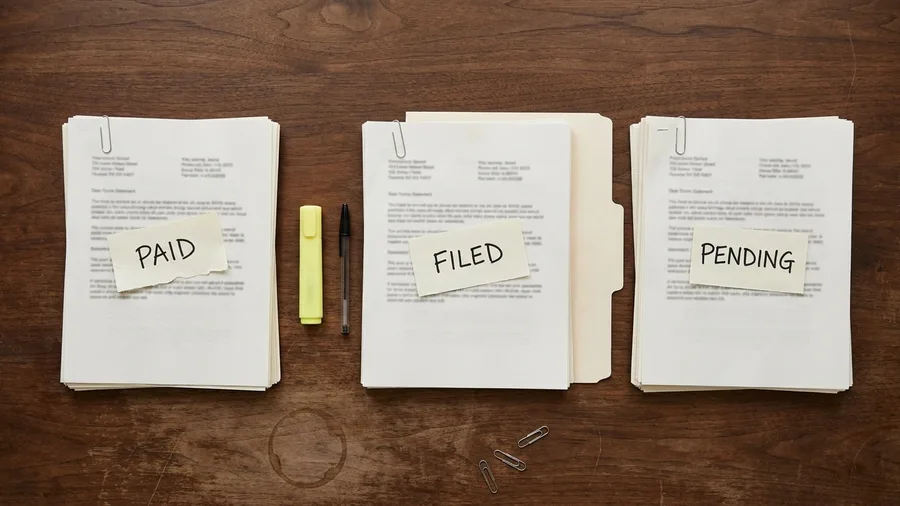
Nearly all of them sit in three places: your bank account, your credit card, and your phone bill. Pull 12 months from each, and you will have caught almost every recurring charge in the house.
Twelve months, not one. That lookback length is not thoroughness for its own sake. An annual renewal shows up in exactly one statement out of 12, so a 30-day or 90-day review will walk right past it and leave you thinking the account is clean when it is not.
The group's instruction in January was plain: bring 12 months of statements from all three sources. That is where the shared list started.
There is a fourth bucket people forget, and it hides in plain sight. PayPal, Apple, Google, the app store: these bill through a card or a phone account, so they appear on your statements as something generic and never announce themselves as a subscription. Go into each of those accounts and look at what is set to renew. A charge routed through an app store is still a charge, and it will keep arriving.
What you are building is one recurring-charge inventory, not a budget. A budget asks what you spend in a category, which invites judgment and rounding. The inventory asks only what bills on a schedule, because the sweep needs a complete list before it can render a single verdict.
This is the tedious part, and it is worth saying so plainly, since it takes an afternoon at the kitchen table with a stack of statements and a highlighter. But it is one afternoon, it happens twice a year at most, and everything downstream depends on the list you get out of it.
The annual renewal is the one that stings

The annual charges are the ones that slip through because they bill once, and there is no $7.42 line on any statement to remind you they exist.
In the worked example the couple had two: the magazine at $12 a year and roadside service at $89 a year. A monthly budget never sees either. The month the charge lands on is the only month it shows up, and by the next statement it is gone from view.
The thing that gets forgotten is the date, not the amount. A free trial converts to paid eleven months after you signed up, in a month you were not expecting anything, and the charge goes through before you have the faintest memory of agreeing to it. The renewal date is the fact that matters, which is why it belongs on the calendar and not only on the sheet.
Set a reminder 7 days before each renewal date. Seven days is the window that actually gives you options: use up what is left, downgrade to a cheaper tier, or cancel before the automatic charge goes through. One day before is too late to do anything but watch it post.
The group's shared list flagged annual charges in their own section, so the once-a-year items did not dissolve inside the monthly totals where nobody would find them again.
Run them at their monthly equivalent and include that in the total. The magazine is $1 a month; roadside works out to about $7.42 a month. Small numbers on their own, both of them, but they change the true monthly burden, and the burden is what this reader is trying to see.
💡 PRO TIP
Convert annual charges to monthly before you judge them
A $89 roadside plan sounds trivial once a year and feels different as $7.42 every month on a fixed income. Divide every annual charge by twelve and put that number in the monthly column. Then the sheet tells one honest story instead of two.
The total is bigger than the parts

Add the monthly column and the annual column together and the number stops being a collection of small bills. In the Tucson example the 11 charges come to $179.83 a month, and multiplied by twelve that is $2,157.96 a year. That is the figure to write at the top of the sweep sheet.
No line item on the sheet feels like $2,157.96. The cloud storage is $2.99. The phone add-on is $10. The cheapest streaming service is $6.99, less than a sandwich, and at that size a charge never triggers the question of whether to cancel it; it just clears the account and disappears into the month. The yearly total is what registers, because $2,157.96 is money a fixed-income household can name a use for.
The group treated that total as the first agenda item of the second January session, before anyone opened a cancellation page or picked up a phone to a provider. Sizing came before deciding, and it was deliberate: a household that starts with verdicts cancels the charge that annoys it most and leaves the seven it never noticed, while a household that starts with the total is deciding how to spend $2,157.96 rather than how to trim a few dollars.
The first-pass target that came out of the group's list was $60 a month, or $720 a year: the gym at $39, one streaming service at $9.99, the magazine at $12 a year and the phone add-on at $10. Those pieces add to $59.99, which rounds to $60, and nobody needs to pretend it is more than it is. It is roughly a third of the total, enough to prove the sweep pays for its own afternoon without gutting the list.
For a fixed-income household, the $2,157.96 is the amount each charge has to be weighed against. Not against how small the bill feels on a Tuesday morning, and not against what the service promised when it was signed up for, but against the year it costs to keep it.
Keep the ones you used this month

The test is last use, not intended use: ask what each charge did for the household in the past 30 days, and let that answer decide. A service touched this week earns another month; one that has sat untouched since spring is the one to cut.
The trap that catches almost everyone is the might-use. The gym at $39 a month is the classic case, a membership held open for a version of the future that has not arrived, and it is expensive precisely because the intention behind it feels sincere. Pause the charge for the moment and the intention survives: if the visits come back, so can the membership, at whatever the rate is then. What does not survive is paying $39 a month for a plan.
One exception is worth naming before the cancellations start. If an annual fee is already paid, the money is gone whether or not the service gets used, but the access is not; a magazine subscription with four months left on it may be worth reading through before the renewal date, and a roadside plan with a paid year may be worth keeping until it lapses.
The other check is replacement cost. If cancelling the cloud storage means paying more for extra space somewhere else, or dropping the pharmacy auto-refill means losing a delivery the household depends on, the charge stays, because the test is net savings and not the number of cancellations on the sheet.
Every line then gets one of three labels: keep, cancel, downgrade. Nothing stays because it is small, and nothing goes because it is old.
The gym is the classic, not the exception

A $39 monthly gym charge is the textbook might-use line item, and it earns its place on the sweep sheet only if someone walked through the door this month. The question isn't whether exercise is good for you.
The I'll go in January fallacy treats a future intention as if it were current use. A membership bought in a hopeful moment keeps billing through the months the resolution fades, and the household on a fixed income pays for a version of the future that hasn't shown up. One couple's sweep found exactly that: $39 a month, a card in the wallet, a routine that never quite started. Run the same test across the other charges and the same shape appears – the $2.99 cloud tier nobody has opened in a year, the memberships tied to a hobby from three winters ago, the extra streaming service that survived a stack of three.
Before cancelling, though, try pausing. Many gyms will hold a membership for a month or two, and a pause that lets you test whether you actually go costs less than a full cancellation and a re-signup fee. Ask about a senior rate while you're on the call; some clubs price it well below the standard monthly, which can change the verdict entirely.
Keep the gym if it is the only social contact in the week or if a doctor wrote the exercise into the plan. Cut something else.
The question is never whether the gym is virtuous, because every membership gets the same question at its own price, and nothing on the list stays just because it is cheap.
Judging a charge: last use versus intention
Last-use test
- Used within the past 30 days
- Has a replacement cost if cut
- Backs up photos, meds or security
- Survives the question at $39 a month
- Gets a keep or downgrade verdict
Intention test
- I'll start going in January
- I might watch it eventually
- It's only $2.99 a month
- I paid for it once years ago
- Nobody remembers the last login
Bundles hide the charge you meant to cancel

The bundle is a problem because the charge and the discount are tangled together, and you cannot judge the line item without seeing the whole bill. The $10 phone add-on in the Tucson list is a good example of how fast a small charge disappears: on a combined phone, internet and streaming statement, it sits beside the base rate, the bundle credit and the fees, and after a month or two it stops reading as a charge at all. It reads as part of the bill. That is exactly what makes it hard to cancel, because the bill is not the same line item twice.
Cancelling that line can also move the price. Cut the add-on and the promo rate on the whole package can come off with it, so the $10 saving shows up smaller than $10, or not at all. The group's method: call the provider before doing anything and ask two questions, what does this add-on cost on its own, and what would the total bill be with nothing bundled.
Get both numbers in front of you.
Compare the total bill under both arrangements, not just the add-on against zero. If the no-bundle total comes out higher, the add-on may be the cheaper way to keep the service you actually need, and the honest verdict is keep, even after you have looked straight at it.
The cost here is a phone call and some patience on hold, and there is no shortcut around it: the rate structure lives with the provider, not on the statement. Do that comparison before you cancel anything, because a line item you kill and a discount you did not mean to lose is a worse month than the $10.
📵 Cancel in this order, one charge at a time
Open the account page
Find the cancel option inside your account first, before you call anyone.
Pick the company's required method
Some accept a click, some require chat or a phone call, a few want written notice.
Make the ask plainly
Say you'd like to cancel and ask for the effective date and any refund due.
Save the proof
Screenshot or forward the confirmation email with the date and final bill.
Check again in three days
Confirm the charge stopped; if not, call back with the confirmation in hand.
Cancelling is a process, not a click

The method is the company's, not yours, and getting it wrong is how a decided cancellation stays on the statement for another year. In the Tucson list there are 11 charges from 11 different companies, and they do not all cancel the same way: some through the online account, some through a chat window, some only by phone, and a few by mail with a form. Before you start, look up which one you are dealing with and schedule it for the day you have 20 minutes and a quiet room.
Then write it down. A cancellation is not done when you hang up.
Save the confirmation email or take a screenshot of the chat, and note three things on the sweep sheet: the date you cancelled, the effective date they gave you, and any refund or final bill. If a script helps, keep it to one line: I would like to cancel this service, please confirm the effective date and any refund. That keeps a retention call factual and gets the terms into writing.
The part that gets dropped is the follow-up. Three days later, open the account and check the charge is gone; if it is still there, call back with your confirmation and ask for the effective date on record.
A charge is cancelled only when the method matches what the company requires and the proof is in your hand. Getting your paperwork in order while you are healthy echoes the legal signers question retirees often leave unanswered. Otherwise the decision was made and the charge was not, and the list rebuilds itself to the next sweep.
The $60 a month, redirected
💵 Monthly saved
$60
📅 Annual saved
$720
🏦 First destination
Emergency fund
🔁 Transfer timing
Same day
📝 Where it is written
Sweep sheet
The rule
The $60 is a saving only once it has a name and a transfer date; otherwise it is a gap in the checking account.
The savings need a job or they evaporate

The money has to go somewhere the same day, or it goes back into ordinary spending where nobody notices it. In the worked example the first pass frees $60 a month, $720 over a year, and $60 is exactly the size of gap that gets absorbed without a trace: it lands in the checking account, it covers a week of groceries, and by March the spending baseline has quietly grown to meet it. The cancellation was real. The saving was not.
The fix is a transfer, set up before the first cancelled charge would have billed, and to a goal you can name. Emergency fund, debt payment, the travel fund, a repair fund for the car. Retirees who want a purposeful plan for their days can borrow answers retirees gave about what they do now. The name matters more than the amount, because a named goal competes with ordinary spending and an unnamed surplus does not.
Even $60 a month, $25 of it automatically, beats $60 you keep meaning to move.
The group's rule is simple: write the goal on the sweep sheet beside the cancelled charge, so the sheet records both what left the budget and where it went.
The point of the sweep was never the moment of cancellation, which feels good for an afternoon. The point is the $720 a year redirected to something the household chose, and a saving with no job is just a temporary gap in the statement.
⚠️ COMMON MISTAKE
Do not cancel before you check the renewal date
Cancelling an annual plan two weeks after it renewed usually means paying for a year you will not use. Check the renewal date first — if it is within a month, use the service up or ask about a refund before you cancel.
Do it again in six months, not five years
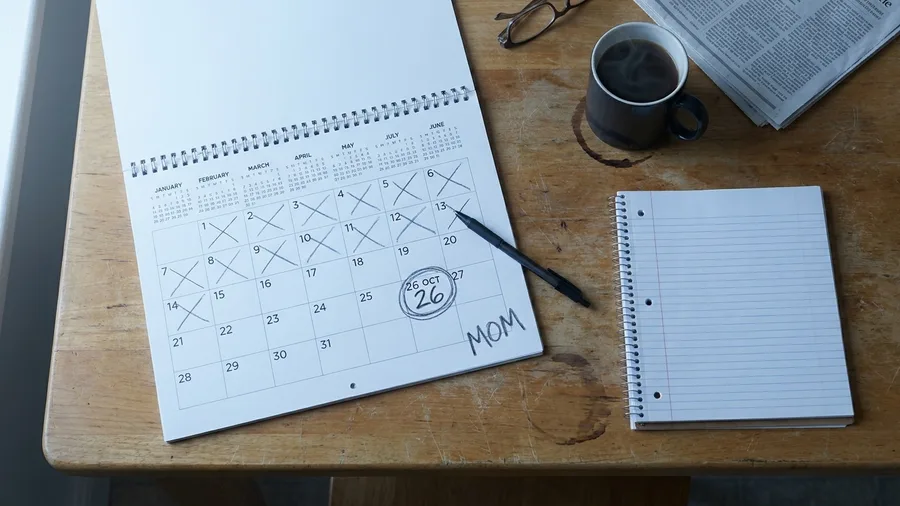
Twice a year is the cadence that keeps the list honest, because a fixed income gives back every gap you leave open. The $60 a month routed to savings holds only until a new trial converts or a promo renews, and those arrivals are quiet. New charges do not announce themselves; they turn up on a statement and settle in for months before anyone notices.
So the repeat is scheduled, not remembered. Put a reminder in the calendar for the same month as the first sweep, six months out, and mark it as a hard date the way you would a doctor's appointment. A cleared morning once in January and once in July is the whole maintenance cycle.
Most repeats are small. The 20-minute check is not a full rebuild: pull the same three statements – bank, credit card, phone – and look only for recurring charges that were not on the list last time. Most sweeps you will find nothing, or one line item, and that is fine. The drag of new subscriptions is that they show up one $4.99 at a time; a 20-minute scan catches them before they have collected a year's worth of charges.
Once a year, the deep clean is worth the longer sitting: run the full 12-month lookback again, because annual renewals and converted free trials still live in only one month of the year and slip past the short scan. That is how the magazine at $12 a year and the roadside plan at $89 a year stay in sight instead of vanishing into a single forgotten month.
The 40-retiree group in Tucson ran their sweep across two Saturdays in January and got the shared list plus one household's full example – evidence of the method, not a subscription to a club where the work never gets repeated. A list rebuilt every six months is the maintenance cycle a fixed budget runs on, and the same two questions – what did this charge do for us this month, and what does it cost over a year – get asked every time. Nothing about it gets easier once a subscription has already been cancelled and then quietly renewed.
Frequently Asked Questions
How far back should I go through my statements?
Twelve months, from your bank account, credit card and phone bill. A shorter lookback misses every annual renewal, because those bill in only one month of the year. If you have time for only one source, start with the credit card, which usually carries the most subscriptions.
Should I cancel a subscription I might use again?
Ask when you last used it, not whether you might. If it was not used in the past thirty days and there is no replacement cost, cancel it and resubscribe later if you miss it. Most services let you restart in a minute, and the $39 a month you save in the meantime is real.
What if the subscription is bundled with my internet or phone plan?
Call the provider and get two numbers: the add-on's cost on its own, and the total bill without the bundle. If cancelling raises the total, keep it. That is a legitimate verdict, and it belongs on the sheet with the reason written beside it.
How do I make sure a cancelled charge actually stops?
Save the confirmation email or a screenshot showing the effective date, then check the account again three days later. If the charge reappears, call back with the confirmation and ask them to honour the date. A decision without proof is not yet a cancellation.
Where should the freed-up money go?
Set an automatic transfer for the same day the charge used to bill and name the destination: emergency fund, debt payment, or a specific goal. Unnamed savings get absorbed into everyday spending within a couple of months.
Is a sweep worth doing if my subscriptions only add up to $30 a month?
Yes, and the smaller number is exactly why. Thirty dollars a month is $360 a year on a fixed income, and the sweep is what stops it growing. The first pass usually turns up charges you had forgotten entirely.
The first move is one account, one year, one cancellation
The sweep works because it swaps a vague worry for a dated list and a last-use verdict. In that Tucson household the eleven charges at $179.83 a month became a $60 a month first pass, and a calendar reminder six months out turned it into a routine instead of a rescue.
Open one account, write down twelve months of recurring charges, and cancel the most obviously unused one before it bills again. One account, one year, one cancellation. The rest can wait for the weekend.
The $9.99 streaming, the $2.99 cloud storage, the $12 magazine that felt too small to bother with — in that household they sit inside a $2,157.96 yearly total. Small bills are only small on their own.
So the difference between the neighbour who looks sorted and anyone else is not frugality. It is evidence. Nobody sat down and decided to keep paying for a gym they never entered, and nobody is watching to see whether they fix it. Keep what was used this month, give the $60 a month a named job, and put the next check in six months on the calendar.
Start the sheet before the next bill lands
Open one statement now and write the recurring charges on it. Cancel one before its next billing date, then set the calendar reminder for six months out.