
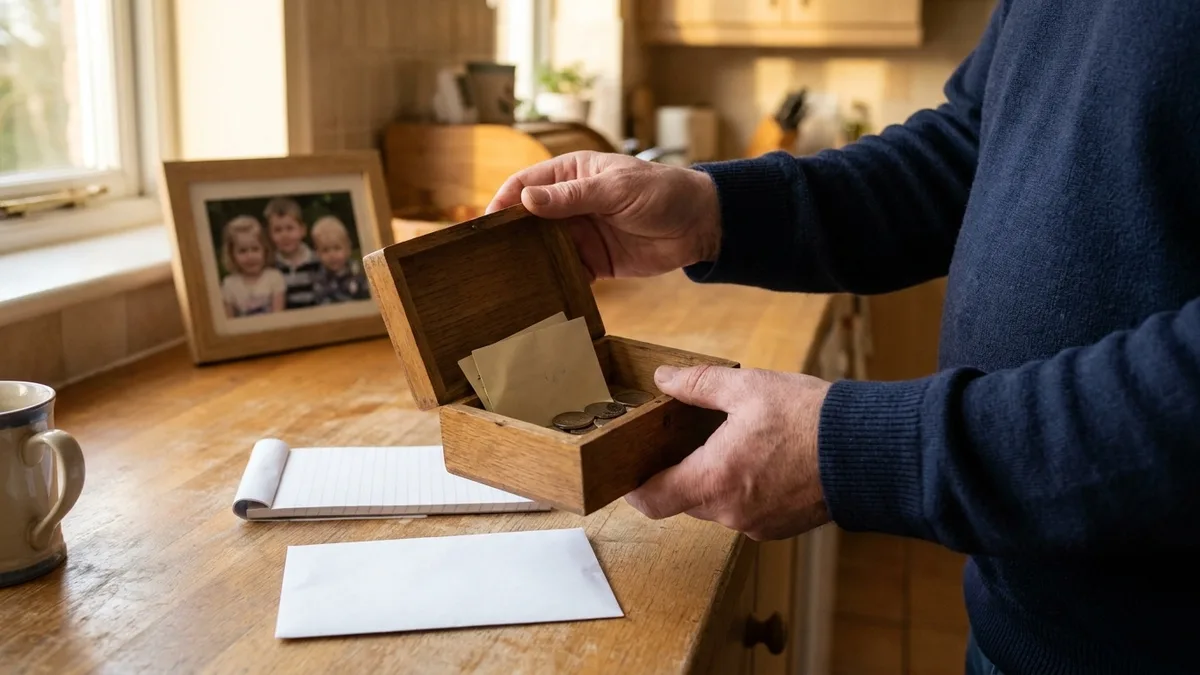
Every other grandparent seems to write the check without blinking, and the gap between that picture and your kitchen table is arithmetic, not generosity.
Right now the giving looks like $50 for birthdays and $100 at the holidays, spread across three grandchildren aged 7, 12 and 17. Then the oldest starts college next year with a $6,000 gap after aid, and the small-envelope habit meets a number it was never built for.
The fear is not the size of the check. It is that a gift made once gets written into someone else's monthly budget and never comes back out.
What separates help from subsidy is not the dollar figure. It is where the money comes from, whether the cost has a name and an end, and who decides the number each year. A married couple with $92,000 from Social Security and a pension, spending $68,000, has room to help – from surplus income, chosen in advance.
By the end you can set one annual figure, match each cost to the right delivery method, and hold a mid-year request without a confrontation. The example here is $2,500 a year per grandchild: from surplus after the $60,000 reserve is funded, tied to a named cost, terms written down, reviewed every January.
| Method | Who controls the money | What it can pay for | Paperwork to expect | Dependence risk |
|---|---|---|---|---|
| Pay the bill directly | Grandparent pays, family receives the service | Soccer club, camp, bursar's office | Invoice or statement; keep the receipt | Low — the payment ends when the season ends |
| Grandparent-owned 529 | Grandparent, for the life of the account | Qualified education costs only | Account application; beneficiary change form | Low for education, none for anything else |
| Custodial account (UGMA/UTMA) | The child, at the state's control age | Anything, once the child controls it | Custodial account application | High — money cannot be redirected or held back |
| Cash or check to the family | The adult child's household | Whatever the household decides | One-line gift note; date and source | Highest — practice becomes an expected deposit |
A fixed yearly amount keeps things fair
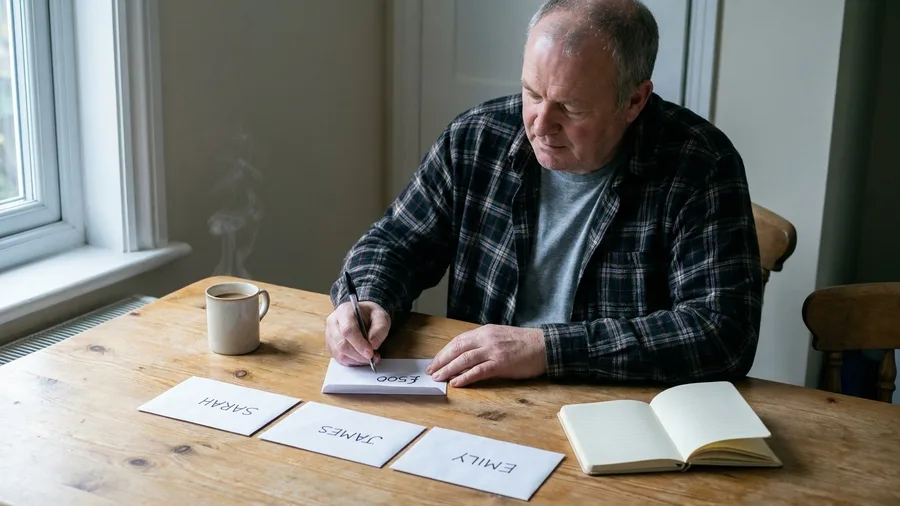
Start with $2,500 a year per grandchild, paid out of income rather than savings. That figure comes from the $92,000 a year arriving in Social Security and pension payments against $68,000 of actual spending, so the money behind it is fresh each year and the $510,000 sitting in the IRAs and brokerage account never has to be touched to make good on it. A gift funded from income is repeatable. A gift funded from principal is a withdrawal with a bow on it.
Three grandchildren at that rate comes to $7,500 annually. The useful part is not the size, it is that $7,500 is a number the household can look at on one page in January, whole, before anything is spent. The alternative most families drift into is discovering the total in eleven separate asks across the calendar, each one reasonable on its own and adding up to something nobody approved.
A flat figure also gets you out of matching requests. When the 12-year-old's $1,800 for travel soccer and camps shows up in spring, and the 17-year-old's $6,000 first-year college gap lands the same year, those get handled on their own terms, outside the standing gift. Otherwise whichever grandchild has the most expensive year quietly sets the rate for all three, and the number creeps upward every time a sport gets pricier.
The number moves in January, and nowhere else. Raise it or lower it once, with the next twelve months in plain view, then leave it alone. A request is the one moment when the answer is being tested, and adjusting mid-year teaches the family that asking is how the rate changes.
Fair is same amount to each child, same month, same rules. It also means never having to rank whose year was more deserving.
What People Believe About Grandparent Gifts
The gift that helps fills a named gap

Put the money against a bill that already exists and has a bottom, and the same annual figure does far more than it would dropped into a general household fund. This family has two such gaps sitting in front of it right now: $1,800 for the 12-year-old's travel soccer and summer camps, and $6,000 for the 17-year-old's first-year college bill once the aid award is applied. Name those two costs out loud and the gift stops being a gesture and starts being a payment with a purpose.
What makes an expense suitable is that it ends. The $9,000 used car budgeted for the oldest at 18 is a clean example: bought once, titled once, done, and nobody expects the grandparents to buy the next one. A phone bill is the opposite shape. It arrives every month, it has no final installment, and the person paying it never gets a natural moment to stop.
The phrasing carries the whole method. 'This is for the soccer season' does something 'here, use it as you need it' cannot, because it pairs the money with a specific invoice and a closing date.
That is what a named cost buys the grandparent: a stopping point that does not require defending. It buys the family something too, a receipt. At the January review both sides can say what the $1,800 did, and a household that can account for last year's gift is a household where the next request arrives with a purpose attached instead of arriving open-ended.
Dependence begins when gifts cover routine bills

The line gets crossed when the gift starts paying bills the household was already covering, and the reliable test costs nothing to run: picture the family without the gift. Would that bill still get paid out of their own earnings? If it would, the money is not helping them up, it is replacing income they already bring in, and the amount on the check is beside the point.
Shape matters more than size here. The $9,000 toward the oldest grandchild's first car is a single step taken once at 18, and a step has a top. A $60 monthly phone or insurance payment is a different animal, because somewhere around the fourth payment it stops feeling like help and starts feeling like part of the budget, and by then nobody in the room can name the month it began.
That is why $60 a month can create more dependence than $9,000 once. The car is one conversation with a clear end. The phone bill is a subscription, and cancelling it means the grandparent saying no to something the family has already absorbed into its monthly planning.
Some families do this on purpose. Pooling money toward routine costs is a legitimate arrangement, but it belongs to a different category than a gift, and it only works with its own written terms on how much, for how long, and the date it stops.
Decide which one you are doing before the first payment, because the fourth payment will not feel like a decision anymore.
⚠️ COMMON MISTAKE
The monthly bill creep
The gift that creates dependence is rarely the big check. It is the small one that arrives on the same date every month, until neither side treats it as a gift at all.
Paying the bill directly beats handing over cash

Paying the bill directly is what makes the named purpose real. A named cost only stays named if the money never passes through the family's checking account. Write the check to the soccer club for the $1,800. Write the college check to the bursar's office for the $6,000. The adult child's household account never holds the money, so it never has a chance to become something else.
Cash is absorbed fast. Put $1,800 in a daughter's account in August and it mingles with the mortgage and the grocery runs before Labor Day. By October, nobody could tell you which $1,800 bought the season. Nothing was stolen; cash just has no memory. The purpose dissolves into fuel and food and the next round of school supplies.
The awkward part is asking for the invoice. Most grandparents would rather hand over an envelope than request a bill from their own child, because asking sounds like distrust. It isn't. "Send me the bill and I'll pay it" makes the invoice a step in a process, the way you'd ask a contractor for an estimate. The provider's name, the amount, the due date, and the question is finished.
The record comes free with the method. That paid invoice is proof of purpose if the gift question ever comes up at tax time. It's the paper the financial aid office can look at. And it's the thing you lay on the table in January when one sibling asks why the 12-year-old's soccer cost more than the 7-year-old's camp. Every child has a folder, every folder has receipts, and the fairness question answers itself without anyone raising a voice.
A 529 keeps education money in education

A 529 is the right home whenever the cost carries the word tuition. A 529 is a state-sponsored education savings account: money goes in, grows without federal tax while it sits there, and comes out tax-free when it pays for qualified school costs. That school-only rule is the whole point, not a drawback. The money can't be repurposed into a car or a spring break, and the grandparent keeps the account in their own name and their own control the entire time.
The three balances already reflect that logic. The 17-year-old has $14,000, the 12-year-old has $9,000, the 7-year-old has $3,000, and the grandparents own all three accounts. The 17-year-old's $6,000 gap comes due in roughly twelve months, so the $14,000 covers it outright and the account gets drawn down to a stub before it has time to do much of anything. That is fine. A fund that gets spent is doing its job.
The 7-year-old's $3,000 is the opposite case. It has a full decade before anyone touches it, which is the stretch where investment growth actually has room to work. Same account type, two entirely different time horizons, and the plan should treat them that way.
What if the grandchild never enrolls? The account doesn't strand the money. You can change the beneficiary to a sibling, or withdraw it and owe income tax plus a 10% penalty on the earnings portion, though not on the contributions. The plan's own documents set the specifics, so read them before you fund, not after. Then the deposit is a decision instead of a hope.
A custodial account becomes theirs at the state's age
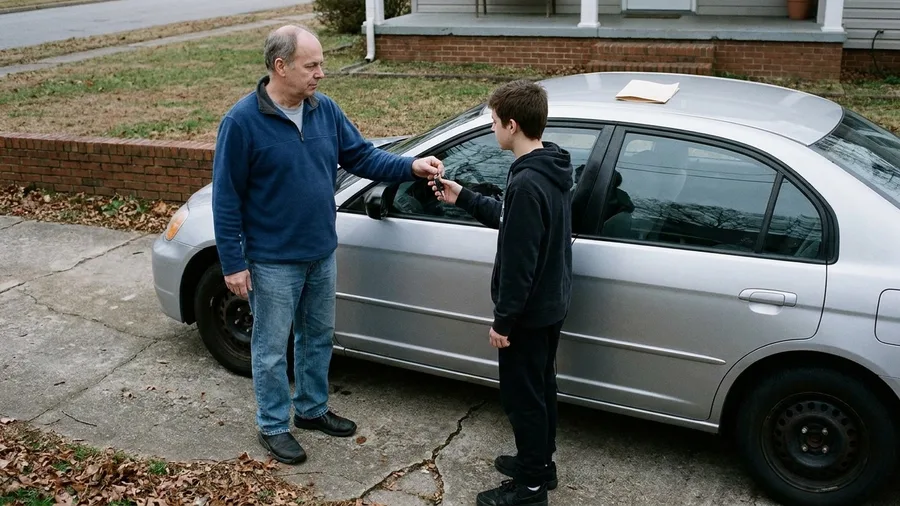
A custodial account works for exactly one kind of gift here: the $9,000 car. An UGMA or UTMA account is money held in the child's name under state law, and the defining rule is that it becomes theirs permanently the moment it's deposited. You can't take it back, redirect it to a sibling, or hold it past the control age. That is the exact opposite of the 529 arrangement, where the grandparent keeps the keys indefinitely.
The control age is the detail that catches people. It's set by state statute, and it varies: in some states a custodial account hands over at 18, in others at 21 or 25. A deposit made for the 7-year-old could be a lump sum in that grandchild's hands before the family has any idea what the next decade will need. Check your state's rule before you fund, not after.
The car is where the math lines up. The oldest turns 18 next year and needs a used car budgeted at $9,000. If a custodial account is funded now and control passes at 18, the gap between deposit and handover is roughly twelve months. One purchase, one year, almost no room for the money to end up somewhere unintended. Compare that to the 7-year-old, where you'd be locking in a decade of spending decisions before the child has made any.
Same account type, two very different questions. With the car, you're pre-paying a purchase you've already decided on. With the 7-year-old, you're handing a teenager a lump sum and hoping. Fund the first. Skip the second, at least until the horizon shortens.
Cash is simple and the easiest to misread
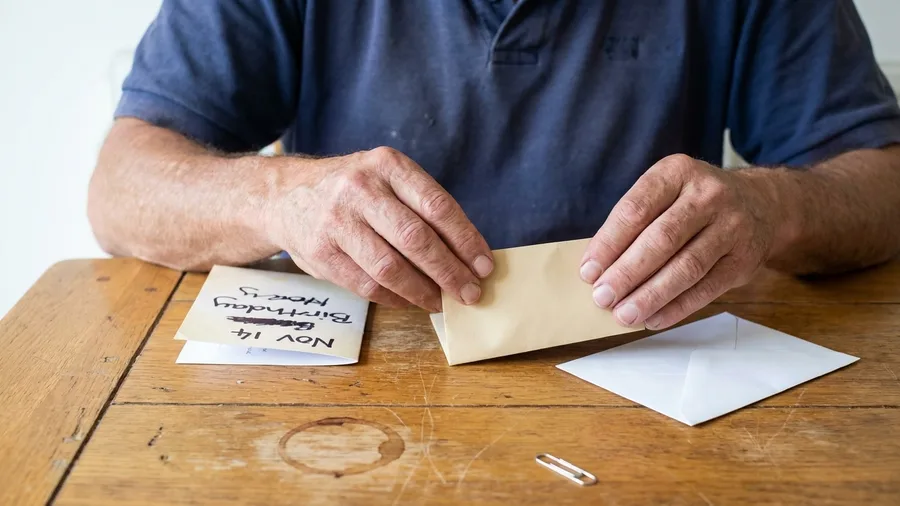
Yes, and for the small stuff cash is the right tool. The $50 folded into a birthday card and the $100 slipped over at the holidays need no explanation and no receipt, because nobody is building a budget on them. Two small deposits a year land in a grandchild's hand, get spent on something forgettable, and the whole exchange is over before anyone starts keeping score.
The trouble arrives when the same envelope is asked to carry $2,500 a year.
At that size, plain cash stops being a token and becomes a line item someone is counting on. Hand over that much with no label attached and by the second January it is not a gift anymore, it's the date the money shows up. The grandchild plans around it, the parent folds it into the household math, and the question of what it was ever for has no answer on record.
There's also the paperwork problem, and it bites later. An unexplained deposit of that size on a bank statement can read as income to whoever is looking at it, whether that's a loan officer or a financial aid reviewer two or three years down the road. Attach one sentence and the reading changes. Write gift from grandparents, not income, with the date and who sent it, and a document that would have raised a question answers it instead.
Cash leaves no trace of what you meant by it. Whoever opens the statement writes that story for you, and the version they write is almost never the generous one.
The gift tax exclusion is per person

Under the current rules, $2,500 per grandchild is under the annual exclusion by a wide margin, and no gift tax return gets filed. The exclusion applies to each person you give to, separately, and each giver gets their own. So the real figure for this household is not $2,500, it is $7,500 across three grandchildren, and a married couple giving together can each count their own exclusion against it.
Pull the current number from the IRS Form 709 instructions rather than from a figure you half-remember.
The threshold moves, and a number from four or five years back is not the one you want to be checking yourself against. Look it up the year you make the gift. Only once a year's giving to a single person crosses that line does a Form 709 come into play, and below it there is nothing to file and nothing to report.
One $350 CPA review will get this priced properly: the exclusion against the multi-year plan, the three grandchildren, and the rest of your return in the same sitting. It is cheap for a question you'll be asking every January for the next decade.
Filing no return does not mean the gift never happened as far as every rule is concerned. The tax answer is finished and clean. Other rules count the same dollars on their own terms, and a long-term-care look-back does not care that you filed nothing.
Sort Each Gift Before You Write the Check
- Travel soccer and camp paid to the club — Named cost, direct payment, ending when the season ends.
- First-year college gap paid to the bursar — One year, one amount, a receipt the family can hold.
- Used car funded through a custodial account at 17 — Fine if control passes after the purchase and the state's age supports it.
- Car money moved to the 7-year-old's account — A decade of control passes before the family knows what is needed.
- A monthly phone bill paid from your account — No end date and no receipt; this is a subscription, not a gift.
- An open check for "whatever they need" — Absorbed into the household budget within a month, with no record of purpose.
Ask the financial aid office before promising college money

It might, and the only people who can tell you for certain are the ones at the school. Aid formulas are not one national rule you can look up. Each school applies its own treatment to the same $6,000, so a general question gets you a general answer that helps nobody.
Go in with the specific number and the specific payment. Ask how a $6,000 direct payment to the college from a grandparent would be treated on this student's aid calculation. Then ask the same about a grandparent-owned 529 and about a check written straight to the student. The three are not always counted the same way, and the difference could be worth more than the gift itself.
Get the answer in writing before the spring deposit is due, because the number on the award letter is the one the family builds its budget on.
The costly sequence goes like this: in December a grandparent promises the gap will be covered, the family relaxes, and in April the award letter lands with a different number on it than anyone expected. Now the family has counted on money that shrank. The fix is asking in the fall, while the promise is still a question, and knowing the treatment before the student starts counting on anything.
Gifts That End vs. Gifts That Renew
Give Here
- Soccer and camp billed to the club ($1,800)
- First-year tuition gap paid to the bursar ($6,000)
- Used car purchased once, at 18 ($9,000)
- 529 contributions that stay education-only
Think Twice
- A monthly phone or insurance bill
- Open checks for "whatever comes up"
- Car money deposited for a 7-year-old
- Routine grocery help that never gets a review date
Your retirement comes before the tuition check

The aid office can tell you how $6,000 to the bursar gets counted, and a gift tax return can tell you whether the IRS wants a form, but neither has any idea whether you can carry the $7,500. That part is yours to figure out, and it starts with four lines on one page: $92,000 coming in, $68,000 going out, a $60,000 reserve left alone, and $510,000 sitting in the IRAs and brokerage account.
Run the subtraction and roughly $24,000 is left over each year. The three $2,500 gifts cost $7,500 of that, which leaves about $16,500 of cushion before anything touches principal. That is the difference between a gift and a withdrawal.
Withdrawals are the thing to avoid. Selling $9,000 out of a brokerage account after a 20% drop locks the loss in, and getting back to even means earning more than you took — if the market hands you that chance in the year you need it. There is no loan you can take against a retirement that ran short. So the gifts live inside the surplus, and the surplus is measured every January, not assumed from last year.
Some grandparents look at the same page and choose differently. They decide to give hard while the grandchildren are young, shrink the reserve to $30,000, and accept that the margin later is thinner and the house may have to carry it. That is a real choice, not a bad one.
The $2,500 Gift — Where It Lands
⚽ 12-year-old's ask
$1,800 soccer + camps
🎓 17-year-old's gap
$6,000 after aid
🚗 Car at 18
$9,000, budgeted
📉 Cushion after gifts
About $16,500
🚫 Skip the gift if
Surplus under $7,500
The failure mode
A $2,500 check that covers a $6,000 gap doesn't close it — it shifts the shortfall to the parents, who may say yes and resent it.
Medicaid's look-back reaches gifts made years ago
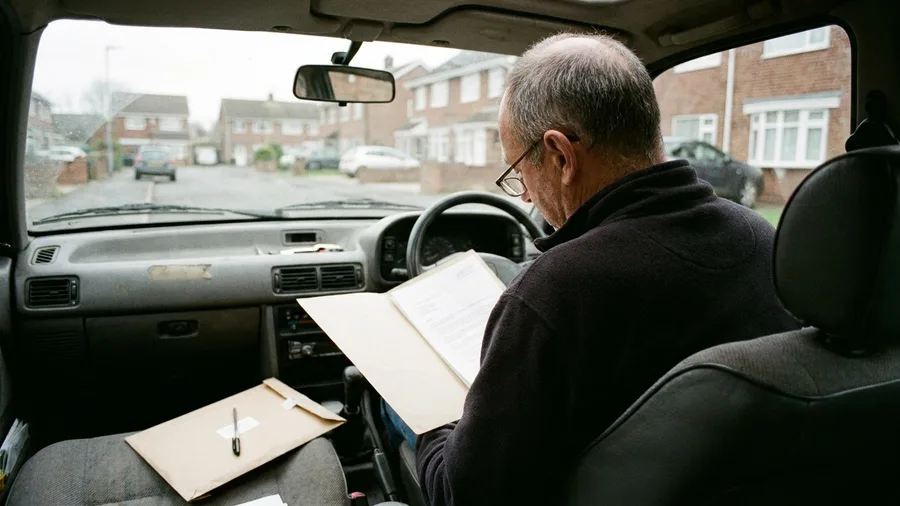
The eligibility look-back runs on a separate clock from the gift tax, so a year with no Form 709 filed tells a nursing home's billing office nothing. What the state sees is transfer history, and in this household it is not one dramatic check. It is $9,000 for a car plus $2,500 in each of three columns, year after year, quietly adding up to a figure somebody will eventually ask about.
The talk is cheap compared to what comes after it. A $450 sit-down with an elder-law attorney, booked before the car money moves, puts the look-back window and the penalty rules in front of you while there is still time to shape the timing. Do the same with the state Medicaid agency; take the period from their published rules and from that attorney, not from what a friend's sister was told at the pharmacy.
Where the number lands matters less than where you got it. One consultation now, at $450, against a penalty period later that could be measured in months of self-paid care — that is the trade, and it is the one place in this whole arrangement where control is bought ahead of time instead of hoped for.
The annual exclusion does not enter into it. Gifts under the federal threshold still count as transfers for this purpose, so no amount of clean paperwork on the tax side protects a check written for the car.
💡 PRO TIP
Put the answer in a one-page note
Write down the annual amount, the payment methods, the review date and the name of the professional who reviewed the plan. One page settles more January arguments than any conversation.
Say the rule out loud before the first check

None of it lands — not the $2,500, not the direct payments to the club and the bursar, not the January review — until the family has heard the terms out loud, in your voice, before anything clears.
Say it in one breath. "We give each grandchild $2,500 a year, it goes to the school or the club, and we look at the number every January." That is the whole speech, and it takes about ten seconds.
The next sentence is the one people dread, and it is worth having ready for the first time a request runs past the line: "That is more than the yearly gift, so let us talk about whether it is a one-time exception." It is not a refusal. It moves the decision into a conversation, which is exactly where you want it.
Deliver all of this to your adult children first, over coffee, with the grandchildren nowhere in earshot. Then the kids hear one set of rules instead of two, and you are not the softer answer after a parent has already said no.
What changes after that conversation is the year. A promise gets decided every January, and the January meeting is the only place the number moves.
📝 The Order of Moves in Year One
Fund the reserve first
Confirm the $60,000 emergency reserve is funded and untouched before any new gift is planned.
Set the annual number
Choose the amount from surplus income against spending — $2,500 per grandchild in this family.
Book the CPA review
Spend the $350 to check the multi-year gift plan against the current annual exclusion.
Book the elder-law consultation
Spend the $450 before any lump sum, especially the $9,000 car, so the look-back is understood in advance.
Name each gift's purpose
Match the $1,800 soccer bill and the $6,000 college gap to direct payments, not household cash.
Call the financial aid office
Ask how the planned college payment is counted and get the answer in writing before the deposit.
Hold the January review
Raise or lower the number once a year and put the terms back in writing for the family.
Frequently Asked Questions
How much should a grandparent give each grandchild per year?
There is no universal figure. Work it out from income rather than savings: $92,000 coming in against $68,000 going out leaves roughly $24,000, and a $7,500 total across three grandchildren fits inside that without touching the $510,000 in retirement accounts. Pick an amount you can repeat next January in a worse year.
Do I owe gift tax on a $2,500 gift?
Almost certainly not. The annual exclusion applies per recipient per giver, and a married couple can each give, so the threshold is more generous than it appears. Get the current figure from the IRS Form 709 instructions and confirm with the $350 CPA review if you plan multiple years of gifts.
Should I pay the college directly or give the money to my grandchild?
Pay the bursar directly unless the aid office tells you otherwise. The treatment can differ between a grandparent-owned 529, a direct payment to the college and a check to the student, so ask specifically how your planned payment will be counted and get the answer in writing before the deposit deadline.
Will gifts affect my grandchild's financial aid?
They can, depending on how the money moves. A grandparent-owned 529, a direct payment to the college and a check written to the student may each be counted differently under the aid formula. Ask the aid office about the exact payment you are planning and get it in writing before the family budgets against the award letter.
Can I open a custodial account for one grandchild and not the others?
You can, but understand what you are agreeing to. UGMA and UTMA money becomes the child's irrevocably at the state's control age, and it cannot be redirected to a sibling later. That makes it a fit for a one-time purchase close to that age and a poor fit for a 7-year-old whose needs are still unknown.
Should I reduce my own savings to help with tuition?
Not from the $510,000 principal. Give from the income surplus so a bad market year does not force you to sell investments at a low to honor a promise. If you choose to give early and spend down deliberately, make that a named decision with the elder-law attorney and CPA in the room, not something you discover later.
The number, the named cost, the January review
The decision rule is four pieces long. Choose the annual number from the surplus left after the $60,000 reserve is funded, tie every gift to a named cost with an end, put the terms in writing at the January review, and book one professional review – the $350 CPA or the $450 elder-law attorney – before any lump sum as large as the $9,000 car.
The $50 birthday card and the $100 holiday check do not disappear. They are the small, occasional cash layer; the $2,500 is a different instrument, with a name on it, a recipient institution and a review date.
Control of the retirement account and control of the relationship turn out to be the same decision, made once a year in January, in a room where the number is chosen before anyone asks. That is what closes the gap between the grandparents who seem to write the check without blinking and the couple who wrote the arithmetic down first.
Write the four numbers down today
Income, spending, reserve, and the annual gift per grandchild. Once those four sit on one page, every future request has somewhere to be measured against.