

I turned down $397,000 because I was tired, and paying $14,500 to prep the house instead is the best money mistake I ever corrected. I'm 68, retired from school administration, and in July 2024 I sold the three-bedroom, two-bath in the Cleveland suburb where I raised two kids for 34 years. Everyone congratulated me on $415,000.
That number never reached my account. Between it and me sat $22,800 in commission, $6,200 in seller closing costs, $14,500 in repairs, a $4,500 inspection credit, $3,650 for staging and photos, then movers, storage, a vacant month, and a $285,000 condo with its own closing table.
The belief I walked in with was that the price is the money, and it survived until the first net-proceeds sheet landed.
By the end you'll have the whole cost sheet from one real sale and the order to check each line, so you can decide what to fix, what to skip, what to negotiate, and the number you won't go under before you sign a listing agreement.
Quick Tips Before You Start
Get a net-proceeds sheet
Ask your agent for a written net-proceeds estimate at the proposed price before you sign anything.
Bid every trade
Get three bids per repair before setting a budget. The number in your head is a guess.
Check the overlap
If you're buying and selling, plan for at least one month of double costs between closings.
Call a CPA early
A $650 review before the listing goes live can catch a five-figure tax surprise.
Declutter before the quote
Every box that leaves before the movers quote cuts both the move and the storage bill.
The sale-side costs
Everything on this side comes out of the sale price before you see a cent. I'm talking commissions, closing fees, repairs, staging, and inspection credits.
This is the money that actually determines what you walk away with. The listing price is just the starting point the rest of the list subtracts from.
1. The sale price is not your net

The net-proceeds sheet arrived by email on a Tuesday, and I read it standing up in my kitchen because I had not thought to sit down. On the top line my house sold for $415,000. Further down: 5.5 percent commission, $22,800, and $6,200 of seller closing costs. That left roughly $386,000 before a painter, a mover, or a credit had been paid a dime.
You do not have to price in everything the week you decide to sell. Ask your agent for one written page at the proposed price, commission and seller closing costs itemized, so the walk-away number exists before the first showing. That $386,000 is what every other bill in this sale gets subtracted from, and the credits come out after it, never before.
The commission is the biggest line on that page and the one most sellers never bring up. Ask about it. The closing costs are mostly fixed fees, so skip the haggling there and save your nerve for the rate.
| Cost item | What I budgeted | What I actually paid | What it changed |
|---|---|---|---|
| Real estate commission | $15,000 | $22,800 (5.5%) | Was the largest line I never questioned |
| Seller closing costs | $3,000 | $6,200 | Title, transfer fees, and prepaids |
| Pre-sale repairs | $8,000 | $14,500 | Electrical and plumbing doubled |
| Staging and photography | $1,500 | $3,650 | Drove showings in the first two weeks |
| Buyer inspection credit | $0 | $4,500 | Roof work and radon fan |
| Movers and storage | $3,000 | $5,340 | Volume pricing, three months storage |
| Vacant house month | $0 | $1,350 | Utilities, insurance, lawn care |
| Senior move manager | $0 | $2,500 | Sorted, scheduled, donation pickup |
| Condo closing costs | $3,000 | $4,100 | Lender and title fees |
| Condo setup | $2,000 | $3,800 | Blinds, smaller furniture, repairs |
| CPA review | $0 | $650 | Tax answer before the listing |
2. Pre-sale repairs cost more than the walk-through

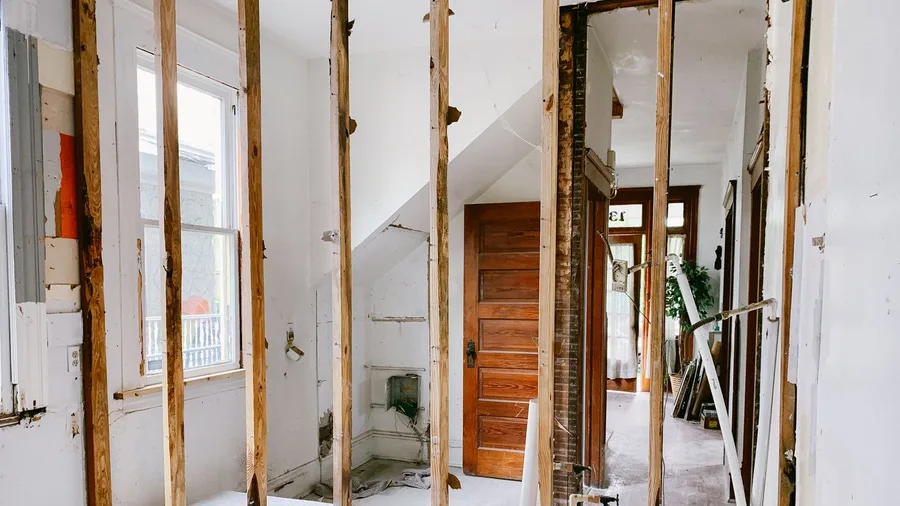
I budgeted $6,000 for repairs and told myself that was generous. The first electrician opened the panel, looked at the wiring for about thirty seconds, and asked how long I had been resetting that breaker. That is when the number stopped being mine.
The bill came to $14,500. Paint was $4,800 and floors $3,900, and those two lines were about what thirty-four years of living looks like – scuffed hallways, carpet worn down to the backing at the top of the stairs. The other $5,800 was HVAC at $1,800 and plumbing and electrical at $4,000, and that half was not cosmetic at all: those were systems any buyer's inspector would flag from the driveway.
The HVAC number was for a repair to the unit already in the basement, not a replacement, which is why it stayed under $2,000 instead of clearing five.
get three quotes on each trade before I set a repair budget. My plumbing figure doubled after a second contractor ran a camera down the line, and I had already committed that money to floors. The trades are negotiable by getting bids. The scope stops being negotiable once the inspection report is in writing.
The floors and paint did something no repair receipt shows: they are what people were reacting to in the photos and at the open houses. That $8,700 is paid out of the $386,000 left after commission and closing costs, not out of the $415,000 the sign said. And what it bought was a house that did not smell like thirty-four years of us.
💡 Tip: Get three bids on every trade before you touch your repair budget. The first number is almost always too low.
The sale-side vocabulary, decoded
3. Staging and photography are real line items
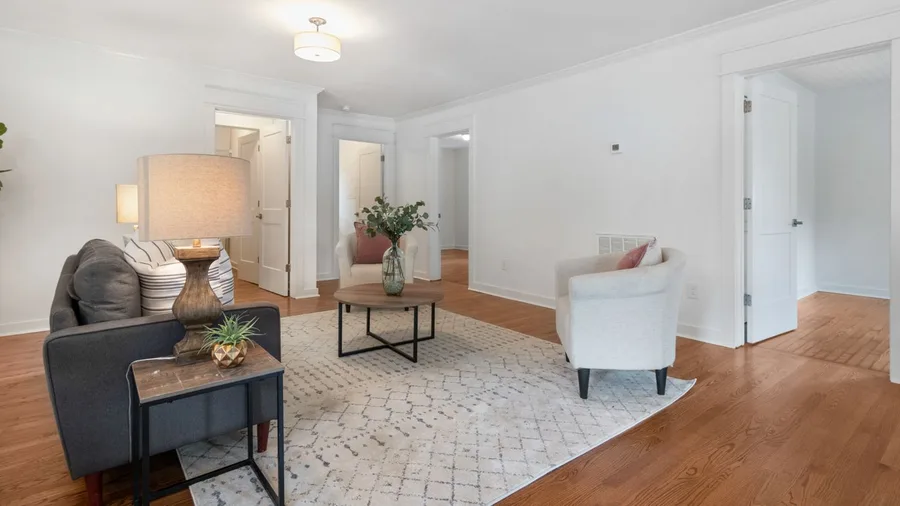
Staging felt like paying someone to clean my own house for me, and I nearly cut it. The number that talked me out of it was $3,650-$3,200 for the stager and $450 for photographs and the listing itself, paid in May before the sign went in the yard.
If that sounds like a lot, here is the small version. A stager will often quote a single consultation for a few hundred dollars, walk the house room by room, and hand you a list you execute yourself. You do the hauling, you keep most of the money, and the rooms still get reset. That is a real first step and it counts.
The repairs had made my house sound and clean. What they had not done was furnish it, and I had emptied the living and dining rooms before the stager saw them. She rented and brought in a sofa and two chairs, walked the house with a clipboard and cut thirty-four years of wall decor down to a per-room list – the hallway clock and family photos came off the walls, and the shelves got three objects instead of nineteen. Then she worked from the photographer's shot list so the rooms were arranged for the camera angles, not for how we actually sat.
The $450 bought the photographs that carried the listing. Those were the images that produced showings in the first two weeks, and showings are what produce offers.
Who can skip the heavy version: an already-empty two-bedroom condo needs a few pieces and a light edit. A family house with a basement, a garage and two adult kids' childhood bedrooms needs the full pass, or the photos will show exactly what they are.
Set the $3,650 against the $18,000 gap between the as-is offer at $397,000 and the $415,000 prepared sale, and it stops looking like a luxury. It is also the line sellers cut first and the one that makes the repair money visible in the first place. Nobody walks through a house and compliments the wiring.
⚠️ COMMON MISTAKE
The overlap month you forgot to budget
One vacant-house month cost me $1,350 in utilities, insurance, and lawn care — because the buyer wanted a July close and the condo closing landed later. Put this in your sale budget, not your moving budget. Filed under movers, it disappears. Filed under the sale, it sits right next to the commission where you can see it.
4. The inspection becomes a second negotiation

The report lands, and the deal reopens. Staging is what gets the offer signed, and the inspector then goes back over every item the staging hid. For a 34-year-old house it isn't a matter of whether things show up. Mine found roof work and a radon reading.
The resolution was a $4,500 credit: they paid for the roof work and a radon fan, and I paid them. I could have fixed it myself before closing and controlled the contractor, but not the calendar, so I gave the credit and the July date held. The number that should exist before the report arrives is a repair walk-away figure, the most you'll credit before reopening the price instead. Write it down first.
The response window is days, not weeks, so that figure can't be negotiated while you're reading the report. The roof itself is not negotiable. The credit amount and who does the work are.
Before and after the sale — my actual numbers
The move and overlap
This is the part I underestimated most — not the sale itself, but the physical act of leaving.
Movers, storage, a vacant month, and the help I hired to keep it all straight. Each one is a line item, and they add up faster than you think.
5. Moving 34 years of stuff costs by volume

Four thousand eight hundred dollars, and I found out why the week the truck pulled in. The quote was built on weight, stairs and pace, and what set all three was the inventory list I handed the company in April: a three-bedroom, a basement, a garage. Every box I added after that list rode free until the bill arrived.
Then $540 for three months of storage, because the house closed in July and the condo wasn't ready until October. That's the window that matters, and it closes sooner than you think: the quote locks to the list, the list locks the price, and anything you sort out after the list is signed gets paid for at the back end. Donation loads picked up in May never took up a cubic foot in that unit.
What the quote left off: packing, the piano, and the long carry from the driveway when the truck couldn't get close. The movers charged for every one of those on delivery day, and none of it was on the sheet I signed in April.
Cubic feet, stair count, and the date carry the bill. A quieter mid-month slot and a shorter haul from fewer stairs moved my second quote by hundreds before I lifted a finger on the price. The house tells you its volume. You get to change it before you sign.
💡 Tip: The inventory list you give the movers is the quote. Add to it after and you pay for every box twice.
📦 The move-out sequence that kept costs down
Declutter first
Sort and donate before the movers quote — every box gone is a box you don't pay to move or store.
Get the mover quote
Give them an exact inventory list, including stairs and garage access, so the quote is real.
Schedule donation pickup
Get the donation haul out before the packing starts, not after.
Book storage for the gap
If the condo isn't ready, reserve a unit for the weeks between closings, not months.
Move on a mid-month weekday
Movers charge less for mid-month, mid-week dates — this alone trimmed my bill.
6. The overlap month is a real bridge cost
Here's the myth: your closing dates line up and the gap month never happens. Mine cost $1,350 in utilities, insurance and lawn care while the condo sat unfinished, and the buyer's July close was not the problem worth arguing about.
One vacant-house month adds up because the insurance alone changes: a house nobody lives in needs a different policy from an occupied one, and that premium has to be covered before the keys change hands. The one line to take to someone who knows your numbers is the overlap – your agent, your lender, a fee-only fiduciary if the timing gets complicated – because a short rent-back from the buyer or a later house closing can close the gap, and only they can see your calendar against theirs.
File it under the sale, not under movers. Beside the commission it gets looked at. Under movers, it vanishes.
7. A senior move manager buys back time

I paid $2,500 for a senior move manager, and it is the line on my sheet I would defend hardest.
The belief I walked into that spring with was simple: this is a bill I can dodge if I just get organized. I am retired from school administration, which means I have run schedules for other people my whole adult life. But nobody local was playing that role for me, and the vacant-house month at $1,350 was the price of the sorting dragging. That month lives on the sale sheet, and so does the labor that caused it.
What the $2,500 actually bought was a sequence. She sorted the basement, the garage and two childhood bedrooms, called the movers with an inventory she had already cut down, and booked the donation pickup for the week before they arrived. The haul went out the door first. When the movers finally walked through and quoted, they were pricing a smaller load, so some of that $2,500 came back to me on the $4,800 bill. On the phone from out of state, one kid heard the inventory list and said it was the first time in months the house sounded manageable.
someone with family nearby and one apartment's worth of furniture. That needs a truck and a date, not a manager.
It is also not all-or-nothing. I asked for sorting plus scheduling as one price and sorting alone as another, because the hours are negotiable even when your belongings are not. Strip it to the basement and the donation calls and you still get most of the value for a fraction of $2,500. The reframe is this: hiring out the sorting is not a luxury, it is a way of buying back the weeks the vacant house was charging me.
As-is versus prepared: which one is worth it
Sell as-is
- Offer came in at $397,000 — $18,000 below the prepared sale
- No repair bills, no staging, no contractor scheduling
- Buyer's inspector still finds the same roof and radon
- Renegotiation arrives later, under contract, with less room to walk
- Best for sellers who cannot front $14,500 or need out in weeks
Sell prepared
- Sold at $415,000 after $14,500 in repairs and $3,650 in staging
- Inspection credit was $4,500, negotiated before closing
- Showings and photos drove the higher sale price
- Took about 10 weeks from listing to closing
- Best for sellers with time to manage three bids per trade
8. Skipping prep can cost more in offers
Get one as-is number in writing before you commit to a single repair, so the prepared version has something to beat.
That is the move, and I almost skipped it. Before paint, before floors, before anything, an investor offered $397,000. Set that against the $415,000 my finished listing brought in and the gap is $18,000. Now set the $18,000 against what the prep cost: $14,500 in repairs plus the $4,500 credit I gave the buyer. On those two lines alone it is close to a wash. Add staging at $3,650 and the prepared side is behind. Add the $4,500 in months of vacant overhead and storage and the as-is path starts to look cheaper.
The price does not tell the whole story, though. The $397,000 came with a contract that put the buyer's inspector in my crawlspace anyway. The roof failing and the radon reading would have surfaced under signature, when walking away was expensive and the schedule belonged to someone else. I had ten weeks of listing to spend; a seller with a deadline does not. The as-is offer was pricing the same defects I later paid for, and taking them off my hands for the trouble.
take it, skip the contractor calls, and keep the calendar. If both sit well below, you know what the prep is worth to you in cash.
That is the concrete version. Take the number, subtract the repairs you know about from the inspection you had done before listing (yes, do that too), and see whether the gap clears the friction. If it does, list and prep. If it does not, sell as-is.
And give yourself permission to choose as-is without shame. I had the time to trade for a better price. Plenty of sellers do not, and that is a reason, not a failure.
The as-is path also bought speed and no contractor scheduling, and that has a dollar value. Call it what it is: a real option, priced in writing, before the paint.
The next place and the exit
The sale closes, the movers leave, and you think it's over. Then you buy the next place.
The buy side has its own costs — and its own tax question that most sellers don't think about until April.
9. The new place has its own closing costs
It is easy to look at the proceeds landing in your account and think of the next place as something you can pay for later. Whatever path the sale takes, that money lands in a purchase with its own closing table, and each line is already spent before you can call it spare cash.
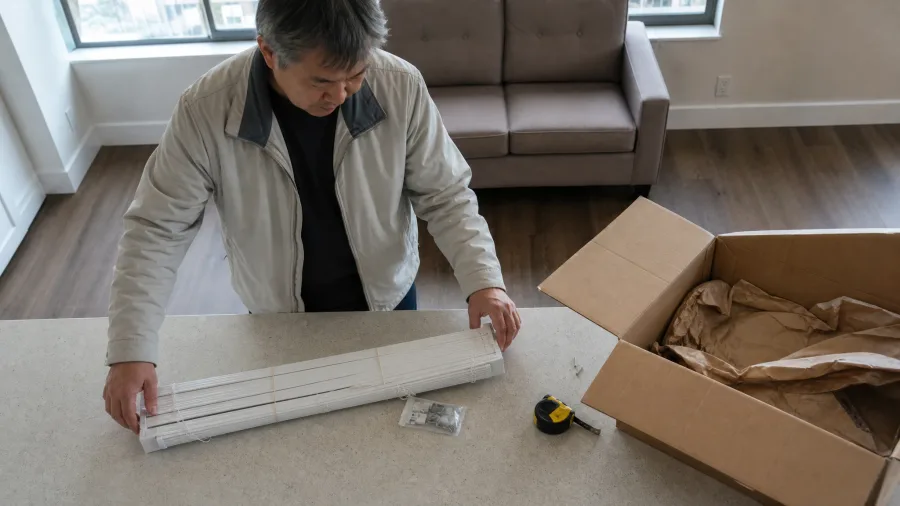
My two-bedroom condo cost $285,000, with buyer closing costs of $4,100 and setup of $3,800, all paid the week the sale closed. Setup was blinds for every window in a place that came without them, furniture sized for smaller rooms, and small fixes the condo inspection turned up. The house pieces simply did not fit. Few of these are negotiable the way the sale side was – the closing costs belong to the lender and the title company, and the furniture is retail.
The fix is unglamorous. Budget the buy side before you count the proceeds, and the $15-minute downsizing stays a decision instead of a surprise.
What the buy side actually takes off the top
💸 Paid the week of closing
$7,900
📄 Of that, non-negotiable
$4,100 to lender and title
🪑 Of that, retail and flexible
$3,800 setup
🧮 The order that works
Price the buy side, then subtract it
⏸️ Skip this if
You rent first and keep the cash invested
The trap: proceeds feel like spare cash before the second closing table
Call the lender and title company for a written estimate before you sign a listing agreement, and set the setup budget from that number, not from the sale.
10. Do not guess at capital gains taxes

The belief that the sale price decides the tax is the one I carried into the spring, and it is wrong in a way that costs real money. What you owe turns on facts only you have: how many of the last years the house was your main home, your filing status, any home sale you claimed an exclusion on before, and the receipts for what you put into the place.
So I set it up so I would never have to guess at it. I paid a CPA $650 to review the whole thing before the listing went live in May, which meant the tax answer existed before the first offer rather than the following April. What the CPA asked me for was documents, not estimates: the years I lived there, my filing status, my prior sales, and the file of improvements and the $14,500 of repairs. My job was to hand over a folder and then leave it alone.
That is the part I got right, and the part I would tell anyone to copy exactly: put the paperwork in one place early, hand it to someone who does this for a living, and stop running your own numbers at the kitchen table. IRS Publication 523 is the official source, but read it with the actual figures in front of a CPA, not alone at midnight.
I am not printing an exclusion amount or a rate here, and that is deliberate. Those numbers move with your facts, and a wrong guess sits quietly until the next April, after the money is already spent.
At $650, it was the cheapest line on the entire sheet. It was also the only one that could have changed the size of a five-figure obligation.
💡 Tip: Bring your CPA the receipts for every improvement, not just the repairs. They change the basis.
11. Fatigue can make a low offer look fair

The good news is that the exhausted seller is the most fixable problem on the whole sheet, because the fix is a piece of paper you write before you are tired. Mine was a single index card taped inside a kitchen cabinet: my minimum net figure, my agent's cell, and my CPA's number, all written in pen while I was still calm.
If you remember the quiet fortnight, you know the shape of it. Listed in May, accepted in June, closed in July – about ten weeks, and the first two of them were silent, no showing, no call, nothing, while the days got longer and my arithmetic got looser.
That is when the mind starts shopping for an ending. A number that makes the uncertainty stop wears the costume of a fair number. I came within a signature of taking $10,000 less, mostly because the silence had started to feel like a verdict.
So the check-in. Before offers land, write your walk-away net in ink and tape it where you do your paperwork. When anything arrives, read it there, then call the agent's broker or the CPA already on your file – the ones holding your actual numbers – instead of deciding alone at the kitchen table with a cup going cold.
Then look at what waiting actually costs. One vacant month ran me $1,350 in utilities, insurance and lawn care. Held against the $10,000 I nearly handed back, patience was the cheaper purchase by a wide margin – and the prepared listing went on to produce the $415,000 sale, which only ever existed because week two ended with my name unsigned.
Frequently Asked Questions
How much should I set aside for repairs before listing?
Get three bids per trade before you set a number. I budgeted $8,000 and spent $14,500 because the electrical and plumbing lines doubled once the panel was open. For a house with 30-plus years of wear, plan for $10,000 to $15,000 if you are doing paint, floors, and one or two systems.
Do I really need staging and professional photos?
For a family house with decades of belongings, yes. Staging and photos cost me $3,650 and drove the showings that produced the $415,000 sale. An already-empty condo needs less — the furniture and decluttering matter more than the photographs in that case.
What if I can't afford the repairs?
Sell as-is, but know what it costs. My as-is offer was $397,000 — $18,000 below the prepared sale. You may also ask the buyer to handle the repairs in exchange for a credit at closing, which is what I did with the $4,500 roof and radon item. Talk to your agent about which path fits your timeline and cash on hand.
Will I owe capital gains tax on the sale?
It depends on your filing status, how long the house was your main home, and whether you have used the exclusion before. I paid $650 for a CPA review before the listing went live, and it was the best money I spent. The official source is IRS Publication 523 — read it with a CPA who has your numbers.
How long does it take to sell and move?
My listing went live in May, I accepted an offer in June, and we closed in July — about 10 weeks. The first two weeks were quiet, which is normal. Plan for at least one month of overlap between closings if you are buying and selling at the same time.
The one number to calculate before you list
Calculate net proceeds before you sign the listing agreement: price minus commission, repairs, inspection credits, movers, storage, overlap month, buy-side closing and setup. That total, not the listing price, funds the next 20 years.
Get the CPA review and check the capital gains tax threshold for your year of sale before the listing goes live. Mine cost $650 and a few hours.
The $415,000 was never mine. The sheet was. What survived came from pricing the $1,350 vacant month and the $450 photographs as carefully as the price itself. Eighteen thousand dollars sat between that as-is offer and the prepared sale, and a list made in the right order is what closed the gap. Make the list, then turn down the tired number.
Get your net-proceeds sheet before you sign
Ask your agent for a written net-proceeds estimate at the proposed price, itemized on one page. That is the number you actually walk away with.