

Sell the big house, buy the small one, pocket the $200,000. That is the whole plan, and it is wrong by roughly $90,500.
The house sells at $650,000 and the next one costs $450,000, so the gap looks like $200,000 of pure savings. Then the costs arrive. In this example the one-time bills alone run about $90,500 before a single monthly payment shows up: $47,000 to sell, $11,000 to buy, and the rest spread across the move, the purge, the renovation, and the furniture that will not fit through the new front door.
The number that decides this move is net proceeds after seven costs, not the difference between two listing prices.
Run those seven lines against your own house and the exact address you are considering, and you will know before you list whether the move wins or washes out.
Quick Tips Before You Start
Get the net number first
Add up both closing statements before you list anything, not after the offers come in.
Measure the new place
Closets, garage, and window widths decide what travels and what gets sold.
Purge before you pack
Fewer cubic feet means a smaller truck, a smaller dumpster, and fewer mover hours.
Put an end date on storage
Write the month the unit closes before you sign the rental agreement.
Bid the work before you waive
Contractor quotes obtained before inspection remove the post-closing surprise.
The Transaction Bill
Two closings sit between you and the smaller house, and neither one is optional. The first takes its cut before you see a dollar of equity, and the second arrives before you get the keys.
This is why the $200,000 gap starts shrinking on day one, not after the paint dries in the new place.
1. Selling costs hit before you move

The seller's side of the move is a single line on the closing statement, and it comes due before any of the $650,000 is actually yours to spend. Six percent commission on that sale is about $39,000. Add roughly $8,000 in closing costs, pre-listing repairs and buyer concessions and the seller's total lands near $47,000. The gap that looked like $200,000 is down to about $153,000 at the same table where you hand over the keys.
That number is the one to work from, not the two listing prices. Until the house closes, the $200,000 is a hope between two signs on two lawns.
Three levers move the $47,000, and all three work best before the listing goes live. Commission is negotiable, so ask what the rate covers and what it doesn't. Repairs done on your schedule cost less than a price cut negotiated under a deadline, because a buyer who spots a bad roof prices in fear, not the shingle. And set your concession limit in writing before the first showing, so a $1,500 repair request doesn't quietly become $6,000 at the table.
What this reader needs is a real number, not a range. Call two or three agents who have sold in your zip code this year, ask each for a net-proceeds estimate on your actual address, and put the three side by side. That is an afternoon's work, and it tells you whether the gap you are counting on is $153,000 or something smaller.
💡 Tip: Get the commission agreement in writing and read the fine print on what it covers, including marketing photos and signage.
| Cost | Amount in this example | When it hits | How to reduce it |
|---|---|---|---|
| Seller commission and closing costs | About $47,000 | At the sale closing | Negotiate commission, prep before listing, set a concession limit |
| Buyer closing, loan, title, and inspection fees | About $11,000 | At the purchase closing | Three side-by-side lender and title quotes |
| Movers, packing, dumpster | About $4,500 | Moving week | Purge first, get a binding estimate |
| Storage, estate sale, donation hauling | About $2,500 in year one | First 12 months after the move | Measure the new place, set a storage end date |
| Accessible bath, flooring, paint, lighting | About $18,000 | First months after closing | Bid the work before waiving inspection |
| Furniture, bed, window treatments, delivery | About $7,500 | Move-in and first weeks | Measure doorways and windows before moving day |
| HOA or condo fee | $4,200 per year | Every month | Read the budget and reserve study before offering |
2. Buying costs add a second closing bill

I watched a buyer celebrate a $450,000 purchase price and then flinch at the closing disclosure, because nobody had told her the loan, title, appraisal and inspection fees all bill separately from the down payment and come due in cash on the same day. Budget about 2.5% of the purchase price for those fees, or roughly $11,000 on the smaller home.
The mistake is treating the down payment as the whole cost of buying. It isn't. Two closing statements ride on one move, and $47,000 on the sale plus $11,000 on the purchase is about $58,000 of the gap gone before a box is packed.
The fix costs one hour. Get two or three lender and title quotes on the identical loan and read the fee lines, not just the rate, since the same loan can carry different charges from different offices, and the cheapest hour of this whole transaction is the one you spend comparing them.
💡 PRO TIP
Ask for the reserve study, not just the fee
The monthly HOA number is the small print. The reserve study tells you whether a special assessment is already on the way, and that number can exceed a year of fees.
The Move and the Reset
Once the paperwork clears, three costs hit in quick succession: the truck, the stuff, and the work the new place needs before it works for you.
Each one is smaller than a commission check and each one still comes straight out of what is left of the gap.
3. Moving day costs more than the truck
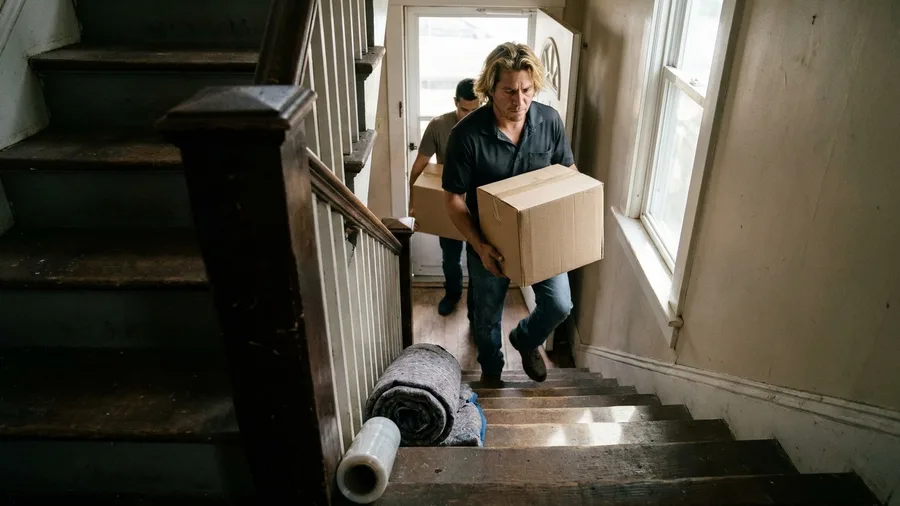
the truck shows up, two guys carry the boxes, and a few hundred dollars settles it. Not close. Three thousand two hundred dollars gets the movers, eight hundred more covers the packing materials and labor, and five hundred rents the dumpster you fill before they arrive – about $4,500, and that is the clean version, the one with no piano and no stairs.
A piano, a third-floor walk-up, an elevator that has to be reserved, or a carry so long the crew starts the clock before anything leaves the door – each one lands on top of the quoted hourly or flat rate, which is why a binding estimate matters: it fixes the price before the truck rolls. A non-binding one leaves the final invoice open. Declutter before packing and the volume the movers charge by shrinks along with the dumpster. Which is why this is the bill to lock down now, not the week of the move.
Against the $200,000, roughly $62,500 is gone and about $137,500 remains.
4. Purging and storage eat the space savings

Twelve months at $180 a month is $2,160, and that is the cheapest version of keeping what will not fit.
Add the estate-sale crew who price and run the weekend, the truck that hauls the leftovers to donation, and the dumpster already sitting in the driveway, and the first year lands near $2,500. Storage is the line that keeps going after the truck pulls away, because the unit bills whether or not anyone opens it. Write an end date on the rental agreement the day you sign it, alongside the monthly rate, so the $180 has a hard stop instead of a habit.
Before that unit is rented, walk the smaller house with a tape measure and check the closet rods, the garage depth, the attic hatch. If the sectional is eleven feet and the new living room is nine, the $180 a month buys a storage bay for furniture that will never come inside.
Set the storage autopay, calendar the end date, and leave it alone after that. Then run the subtraction: about $65,000 of the $200,000 gap is gone, and roughly $135,000 is left.
💡 Tip: Walk through the new closets with a tape measure before the first load leaves the old house.
Downsizing Readiness Check
Amounts in this example: sale $650,000, purchase $450,000.
5. The smaller home often needs costly updates
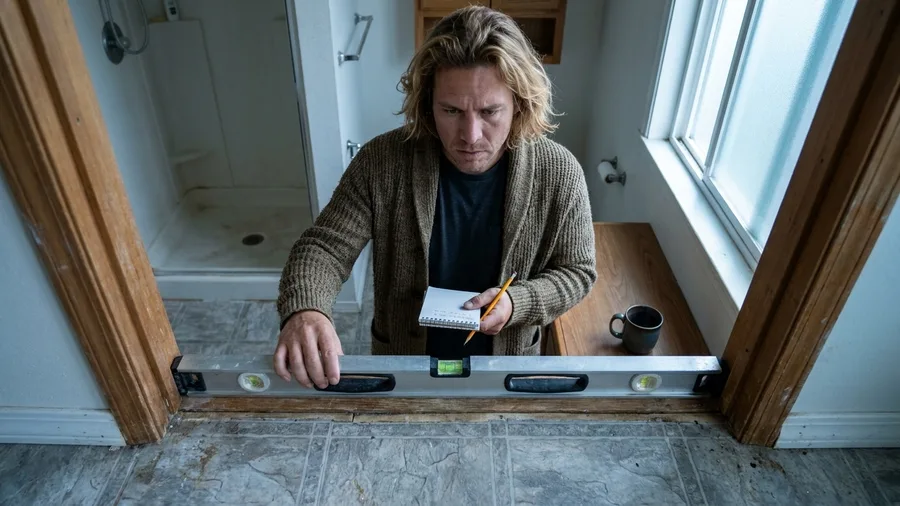
There is a quiet hope that a smaller house means less to fix, and it is the assumption that costs the most.
Smaller often means older, and older means the bathroom door is too narrow for a walker and the step into the shower is four inches too high. Nothing is broken. It simply was not built for the years the buyer is walking into.
Price the changes and the number stops being abstract. A curbless shower with grab bars and a wider doorway runs about $12,000. Flooring and paint in the main rooms add $4,000, and new lighting with grounded outlets in the rooms that need them adds $2,000. That is $18,000, the biggest one-time line in the move, and it lands after closing, when the cash is thinnest.
The reframe is this: not renovation, access. The work is not chosen for looks, it is ordered by what gets used every day. Grab bars and a step-free shower before new paint, lights over the stairs before the outlet upgrades, because a fall costs more than any of it.
Get contractor bids before the inspection window closes, not after the keys change hands. A written bid in hand is what keeps the $18,000 from arriving as a shock in the first month of ownership.
Run the subtraction and another $18,000 comes off the gap. About $83,000 is spent, and roughly $117,000 remains.
⚠️ COMMON MISTAKE
Never waive inspection to win a bidding war
Waiving inspection on a smaller, older home is the single most expensive shortcut in this move. A $600 inspection protects an $18,000 renovation budget.
6. Old furniture rarely fits the smaller rooms
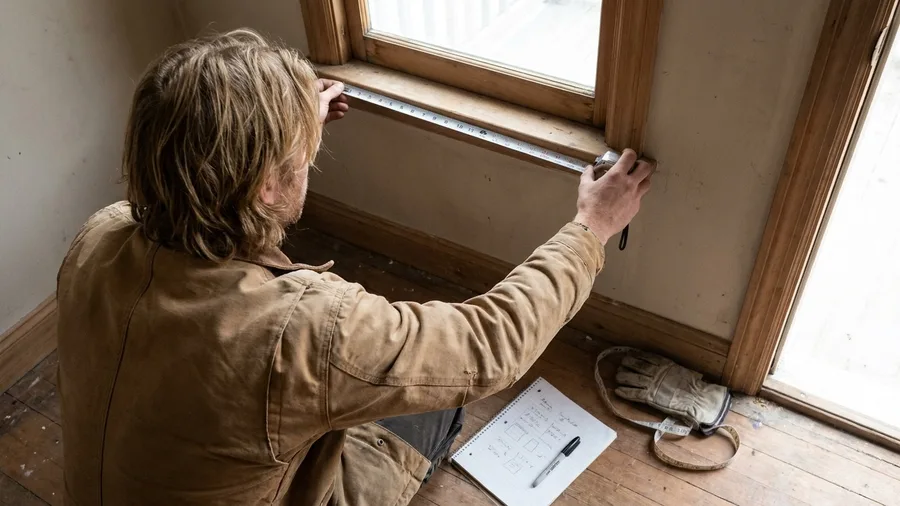
The sofa does not have to be replaced on day one, and the fear that everything must be bought at once is what makes this line feel bigger than it is.
What does not fit gets measured, labeled and sorted into a simple three-bucket system. Bucket one travels: pieces whose width clears the new doorways and whose length clears the new walls. Bucket two sells or donates. Bucket three is buy new, and it is the shortest list.
Window coverings are the tell. Window widths almost never match between two houses, so the blinds and curtains bought for the old place come down and stay down. Budget the replacements at about $2,200 across the rooms, a $2,800 sofa and a $1,500 bed for the pieces that truly will not fit, and $1,000 for delivery. That is roughly $7,500, spent only after the measurements.
Write the buckets on one page and tape it to the fridge before moving day. A piece that misses the tape measure is cheaper to sell than to store at $180 a month while waiting for a room that does not exist.
About $90,500 of the $200,000 gap is now spent, and roughly $109,500 is left.
💡 Tip: Photograph each window frame with a tape measure held across it before you shop for blinds.
The Bill That Keeps Coming
The one-time costs end. The monthly ones do not, and they are the line most downsizing plans leave out entirely.
A fee that arrives every month does more damage to a five-year plan than a single large invoice you only see once.
7. Monthly costs may not fall with square footage

Not automatically, and that is the bill nobody puts on the closing sheet. Every cost so far has been a one-time hit taken out of the gap at the closing table or in the first year. This one arrives every month, for as long as the place is owned, and it keeps drawing on a balance the other costs already cut down.
Start with a fee that has nothing to do with how the home is used. A $350 monthly HOA or condo fee is $4,200 a year, and it is owed whether or not the pool gets used, whether or not the clubhouse is ever walked into, whether or not the buyer wanted any of it. Divide $4,200 into the roughly $109,500 still standing after the one-time costs and it is about four percent of what is left, gone every year. The HOA does not pause when the budget gets tight.
Utilities are the next place the assumption breaks. A smaller, older or shared-wall home can cost more per square foot to run, not less. Fewer rooms to heat, but windows that were installed when the house was built, a furnace with another decade on it, and a monthly bill that does not scale down with the floor plan. The square footage falls; the cost of keeping it warm does not fall with it.
So how does a reader actually check this before signing? Twelve months of the utility company's real bills for that exact address, not an estimate from the listing agent and not a guess from the old house's history. The full condo budget, line by line, to see what the fee actually covers. The reserve study, which shows whether the association has been putting enough aside for the roof and the parking lot, or whether a special assessment is waiting a few years out.
Insurance and property taxes need the same treatment. The number on the current house tells nothing about the house being bought. Both come from local sources for the exact address, the county assessor's office and a real quote from the insurance carrier, not from the seller's word or a national average. A smaller house in a different town can carry a higher tax bill than the bigger one left behind.
Against a gap that has already shrunk from $200,000 to roughly $109,500, $4,200 a year is not a rounding error. Hold that fee for five years and it comes to $21,000, close to what the renovation line took. Ten years is $42,000. None of it is equity; it is rent paid on the privilege of owning.
The review is three columns on one sheet: the HOA or condo fee, twelve months of utilities at that address, and the insurance and tax estimates. Add them and compare the total to what the current house costs to run each month. If the monthly number goes up, the gap has to be large enough to absorb it before the move is worth making.
When Downsizing Wins, and When It Does Not
It works when
- The equity gap is large after both closings clear
- The smaller home needs little or no renovation work
- Monthly HOA and utility costs are modest
- The new address fits how you actually live now
It loses when
- The gap is thin once $58,000 of closing costs come out
- An $18,000 renovation lands right after closing
- A $4,200 annual fee outlasts every one-time saving
- You refurnish a whole house you have not measured
Frequently Asked Questions
How much of the price gap do I actually keep?
In this example, about $90,500 of one-time costs come out of a $200,000 gap before the first monthly fee is paid, leaving roughly $109,500. Your own numbers will differ with your commission rate, your local fees, and the condition of both homes. Add up both closing statements and the move before you list.
Is it worth downsizing if I only gain $100,000?
Sometimes, and it depends on what the smaller home costs to run. A thin gap plus a high monthly fee plus an $18,000 renovation is a move that can lose money over five years. A thin gap with a modest fee and a house that already works can still be a good trade. Run the 12-month cost sheet for the exact address before deciding.
Should I renovate the old house before selling?
Small prep, yes: paint touch-ups, a deep clean, and fixing the obvious. Large renovations rarely return their cost at closing, and a price cut after three weeks on market usually costs more than the prep would have. Decide your concession limit in advance and hold to it.
Do I have to pay for storage during the move?
You do not have to, and most people should not for long. If you do rent a unit, write the closing month on the agreement before you sign. Every extra month at $180 is money that does not come back, and furniture that will never fit the new place is the usual reason units run long.
Will my monthly bills really go down in a smaller place?
Not automatically. Square footage falls, but HOA fees, older windows, older heating, and reassessed property taxes can push the monthly total up. Get 12 months of actual bills from the seller, read the condo budget and reserve study, and price insurance and taxes for the exact address with local officials and an agent.
When should I talk to a professional about this?
Before you list, if the gap is thin or the renovations are large. A fee-only fiduciary can run the whole picture against your retirement plan, and a CPA can tell you what the sale does to your taxes. That conversation is cheaper than discovering the number was wrong after closing.
Add the $90,500 before you list the house
Add it up plainly. About $90,500 in one-time costs plus the first year of monthly additions, and the $200,000 gap lands near $105,000 before the recurring bill starts drawing on it every year after.
Downsizing still wins when the equity gap is wide, the smaller home needs little work, and the monthly fee is modest. It loses when that gap is thin, the renovation is large, and the new monthly bill runs higher than the old one. The 6% commission and the $90,500 do not shrink just because the house does.
That $200,000 was never a saving. It was the gross, and in this example most of a year's worth of it is already spoken for.
Before the listing photos go up, get binding quotes from movers, contractors, lenders and title companies, then build a 12-month cost sheet for the exact address you are buying, filled in with that address's own tax, insurance and utility figures. If you are making this move with a partner, a structured money conversation about risk can align your assumptions before you commit. If the net still clears your number, list with confidence. If it does not, you just found out for the price of a few phone calls.