

You have probably told yourself the big weekly shop is fine and it is only the little extras that get you. That sentence stops one step too early, because it never puts a number on the extras.
So here is the week: one full grocery run, then three or four short in-and-out trips, no single dramatic purchase, just a nagging feeling that the total has quietly climbed.
The leak is not the big shop. Four $32 top-up trips a week move about $550 a month, roughly $6,600 a year, nearly half the grocery bill.
A retired couple in suburban Ohio, both 68 and living on $62,000 from Social Security and a pension, found exactly that. They were spending $1,150 a month, made up of one weekly shop plus four $32 top-up trips. After switching stores and adding a Sunday list, they were at $833 a month, or $10,000 a year — a $3,804 saving.
By the end, you will know whether this is your habit, what your own version costs, and whether to start with the store switch and the Sunday list, which together carry $208 of the $317 monthly saving. Or whether your grocery total already behaves like their $833 month and you can stop.
Quick Tips Before You Start
Start with receipts, not rules
Pull three months of statements and total every grocery line before you change a single habit.
Count the small baskets
Any grocery transaction under $40 is a top-up trip. Add them up and you have your leak.
Try the store switch first
The same list at a mid-priced supermarket 10 minutes further away saved this couple $120 a month.
One Sunday list, one trip
Plan seven dinners around what is already in the pantry and freezer, then shop once.
Keep the things you taste
Cut bags, boxes and pre-cut items. Keep the coffee and the Friday steak.
The habit and the bill
Before you can fix a grocery bill, you have to see what is actually generating it. This first stretch is about recognition and arithmetic. Four short trips a week, a basket of prepared food, and a bag of produce that quietly rots in the drawer each add to the yearly total in different ways.
Work through these four entries with your own statements open. The numbers here are from one household, but the pattern is common enough that you will likely find some version of it in your own account.
1. Four short trips a week, not one
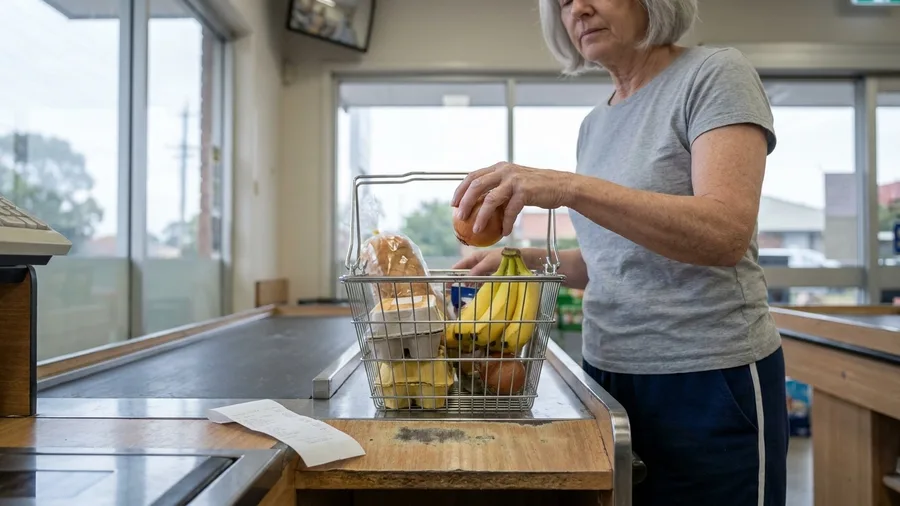
Start by giving yourself permission to keep the short trips. Nobody is asking you to give up the store on the corner on a Tuesday afternoon, and this article never will – what it asks is that you see the trips clearly before you decide what to do about them.
you are in the door and back out in about fifteen minutes, the basket holds fewer than ten things, and you went because tonight's dinner was missing an onion or because nobody planned anything and it got late. The couple in the example made roughly four of these a week, at an average basket of $32, which is about $550 moving through the small trips every month, $6,600 over a year.
The part that makes it a leak rather than a habit is that the big weekly shop did not shrink to make room. It carried on exactly as before, so every short trip sat on top of it – pure addition, not a swap. The trips were rarely about a real shortage of food; they were an empty evening or one forgotten ingredient, and the fridge was already full.
You do not have to fix this today. If the description fits your week – a full shop plus short runs for tonight's dinner layered on top – sit with that for a month and just notice the trips when they happen. The pricing and the swaps can wait until you are ready.
And if your week is already one planned shop with nothing layered on top, you can put this down now. The habit is not yours to correct.
💡 Tip: Look for the trips you did not plan. Those are the top-up signature.
2. Small baskets cost more per item

It is easy to feel like a $32 basket can't hurt you, and that feeling is exactly why this leak survives – it never looks big enough to be worth a second thought.
But the same food costs more the smaller the basket. Convenience packs, thinner store-brand choices, and no real chance to compare price per ounce while you're standing at the register all push the cost per item up. The cost isn't in what you bought, it's in how the store prices a quick grab. The math is simple once you see it: $550 a month through small trips is $6,600 a year, nearly half the couple's $13,800 annual grocery bill, the same nine budget line items that sink other retirees. This is the main event, not a rounding error.
So take the willpower out of it. Pull a receipt and compare price per ounce or pound on anything you bought both in a short trip and in the big shop – the unit price, not the pack price. Set the big weekly shop to cover the staples, and treat short trips as the exception that has to be named before you leave the house.
| Change | Before, per month | After, per month | Saved per month |
|---|---|---|---|
| Store switch, same list | $1,150 total | $1,030 total | $120 |
| Fewer impulse extras | Unplanned | Planned list | $88 |
| Prepared and pre-cut items | $190 | $119 | $71 |
| Produce thrown out | $60 | $22 | $38 |
3. Prepared food carried $190 of the bill
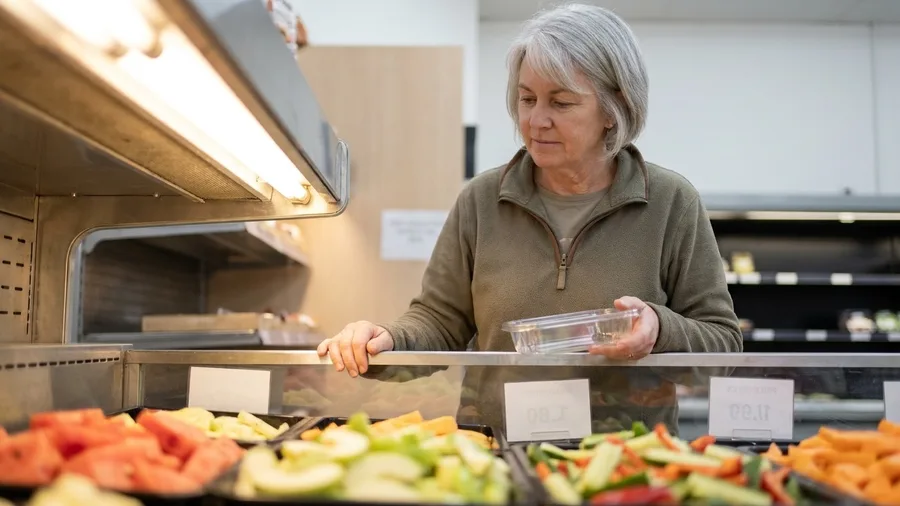
Nobody is going to tell you that you were fooled by the packaging. A bag of pre-cut melon is a fair trade for a tired afternoon, and buying one does not mean you are bad with money – it means you were buying time, and time is a real thing to buy.
The point worth re-examining is simply which convenience items you are paying for. When small baskets carry a premium, the biggest recoverable part of that premium sits in the cart lines that buy handling rather than food – it is not the melon's fault, it is just where the money is densest.
For the couple in this article, prepared and pre-cut items came to $190 a month. That is roughly $2,280 a year on food someone else already washed, sliced, cooked or boxed, and the food value underneath is only a fraction of it. Trimming the haul down to about $119 saved $71 a month, close to $852 a year, without changing a single dinner.
The mistake is throwing all of it out at once, which is how a sensible cut becomes a week of takeout. Sort the cart instead: keep what genuinely saves you a step on a hard night, and let go of what you could do yourself in five minutes.
Worth keeping for a household of two: a bag of pre-washed greens and a rotisserie chicken, both of which turn into a fast meal with nothing else in the fridge. Not worth it: pre-cut fruit, pre-diced vegetables and pre-cooked rice, which cost several times the plain version for a job your own hands finish while the kettle boils.
Run the same test over your own receipts. Find the three or four prepared items you buy every single month, price them against the whole version, and keep the one you would miss. Nothing else needs to change this week.
One honest caveat: if your cart is already whole ingredients and you cook from scratch most nights, there is nothing to reclaim here. The $71 was never in your basket, and the cart is not where your money left.
💡 Tip: Pre-washed greens and a rotisserie chicken earn their price. Pre-diced onions do not.
Prepared Food: What to Keep, What to Cut
A keep-or-cut order from the cart, with the price gap that decides it
Skip the block entirely if your cart is already whole ingredients. Couples who cook from scratch see no recovery here.
4. Thrown-out produce added $60 a month
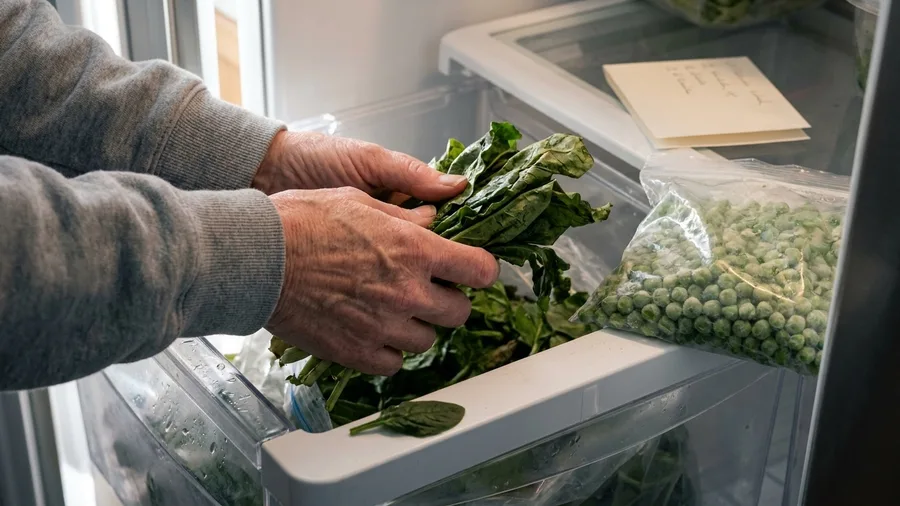
In the bin, and on the receipt, twice over. Trimming the prepared items is one recovery; the produce you buy and then watch go soft is a second, quieter line. Before the change, about $60 a month left that household uneaten, and almost none of it was a decision anyone remembered making.
The cart told the story. The store sold peppers and greens in family-size packs priced per pound, and the couple filled the fridge for four the way they had for decades, then ate like two. The fix took no willpower: buy only what two people eat in five days, keep frozen vegetables for anything that goes soft, and give the crisper a use-it-first shelf at eye level.
The recovery was $38 a month, not the whole $60. Some waste tags along no matter how carefully the list is written, and pretending otherwise would just set the reader up to feel like a failure by week three.
⚠️ COMMON MISTAKE
Do not throw out the whole plan over $38
Most people expect to recover the full $60 in wasted produce and give up when the fix only gets $38. Partial recovery is still recovery. Bank the $38 and move on.
Why it takes hold in retirement
The four-trip pattern did not start during a busy working decade. It started after the couple stopped working, which is the part most advice gets wrong. The grocery habit was not really a grocery decision at all.
These next three entries explain why a fixed income in particular hides a leak of this size, and why the nearest store is often the worst one for the habit.
5. Retirement turned errands into a pastime

The honest cost of ending the top-up habit is not money. It is the reason the trips started.
The four short runs a week did not exist before retirement. Ten in the morning, a reason to get out of the house, a stop that had nothing to do with being hungry and everything to do with the day having a shape to it. You can build a Sunday list and switch to the cheaper store, but the errand still has to go somewhere, and if nothing replaces it the cart comes back.
What replaced it for this couple: a library morning and a walking group. Neither costs a dollar, which is the point and also the catch. They cost a morning on the calendar and the small awkwardness of showing up somewhere new alone the first few times, and that is real effort even when it is free.
This does not describe everyone, and it is worth saying plainly. If you never liked shopping, or retired busier than you were at work, you probably never built the habit in the first place. Skip this one.
6. A fixed income hides small, frequent leaks

I once went three months before I totaled my grocery spending, and the number surprised me in the way a bill you never opened surprises you.
Frequency is the whole problem. Twelve small swipes a week never trip anything in your head, and because Social Security and the pension land once a month in one lump, the daily drip never meets a moment where you actually choose it. The correction is small: total one month of grocery charges as a single figure. If you already reconcile spending every month you would have caught this the first month. This one belongs to households that don't.
Start with $25. Even $25 that you actually account for teaches the habit; the amount can stay small while you learn where the money goes.
💡 Tip: Add up last month's grocery lines. A single number is harder to ignore than a week of small ones.
Shopping for the Same Week
Top-up habit
- Four unplanned trips a week
- Average basket $32
- Nearest premium store
- Prepared and pre-cut items
- No list, no plan
Planned week
- One planned trip
- List by aisle
- Mid-priced supermarket
- Whole ingredients, a few shortcuts
- Pantry and freezer inventory first
7. The store nearest home was the priciest

The belief is that groceries are about what you put in the cart, and the store is just where you happen to be standing. The couple's own numbers say otherwise. Same list, same meals, same brands, and $120 a month of their saving came from nothing but changing where they shopped.
Their nearest store was a premium-format grocer, the kind with a bakery at the entrance and a hot bar by the door. The replacement is a mid-priced supermarket about 10 minutes further down the road. That is 20 extra minutes of driving a week and roughly the price of a gallon of gas, against $120 a month, $1,440 a year. The premium store did not just charge more; it rewarded the short, frequent trip, because a store built for a quick dinner run is a store you pop into four times a week.
Here is where this stops being something to take from a newsletter and becomes something to run against your own receipts. Pull 20 items you bought both at your usual store and anywhere else you shop in a month, and compare price per ounce, not pack price. If the gap is under 10%, you are not sitting on $120 and the extra drive buys you nothing. Run it before you move your shopping, not after.
If the numbers are close or the drive is long or you do not have a second store within a reasonable distance, you do not have this $120 to take, and that is fine. The rest of the plan does not depend on it. A household already shopping a cheap store keeps every dollar of the list saving and skips the gas.
The change and what it kept
None of the changes below require eating worse, giving up coffee, or clipping a single coupon. They require a store switch and about ninety minutes on a Sunday for the first month, and then the routine carries itself.
These four entries also cover the parts people get wrong: delivery is not automatically cheaper, the relapse usually arrives in the first busy week, and the whole thing needs a rule rather than a resolution.
8. One planned trip replaced four unplanned

Ninety minutes. That is the whole first cost of moving from four unplanned stops a week to a single planned trip, and it is the larger half of the change once the store switch has already recovered its $120.
The Sunday sitting goes like this: you sit down with the pantry door open and the freezer pulled apart, decide which seven dinners the household is actually going to eat, and build the shopping list from what is already sitting on the shelves before you build it from any recipe. You write it in the order you walk the aisles, so nothing sends you back across the store, and then you make the one trip and you are done for the week.
Some Sunday the list will not get written. That week you eat down the pantry and the freezer against a short reserve list of staples, and you do not wander the aisles to fill the gap. The list by itself is the $88 of extras that never make it into the cart, and with the store switch it carries $208 of the $317 a month. The 90 minutes runs shorter once the Sunday sitting becomes routine.
📅 The Sunday Routine, Step by Step
Plan seven dinners
Choose the week's meals before you look at a single recipe or store app.
Inventory pantry and freezer
Write down what is already on hand and build the meals around it.
Write the list by aisle
Group items the way the store is laid out so you shop in one pass.
Shop once, mid-priced store
Take the list to the mid-priced supermarket, not the nearest premium one.
Log the total
Write the weekly total down so the monthly number stays visible.
Use the pantry first
On a disrupted week, eat from the pantry and freezer before adding a trip.
9. What they refused to give up

Guard the items the household actually tastes, because a list that quietly turns into cheaper substitutes is a list that fails by March.
Start there this week, before the next shop: put the $40-a-month coffee and the Friday steak on the list at full price and build the rest of the week around them. Leave them alone. The rule underneath it is that you protect what you taste and cut what you only handle, and it is usually the bags, boxes and pre-cut tubs that fall into the second column.
That distinction matters because the money can be recovered without downgrading the ingredients. The trade made instead is fewer prepared items, not cheaper protein. You still cook the same meals, because the meat and produce are the ones you already bought. What leaves the cart is the pre-washed greens at twice the price and the tray of cut fruit you paid a premium for someone to slice.
Wait too long and the pattern sets in the other direction: once a few good items get swapped for cheaper versions, the meals taste worse and the first busy Sunday the whole plan gets dropped. Make the decision now, while the taste for the good coffee is still the reason you are doing any of this.
The prepared side is where the $71 a month lives, down from $190 of prepared and pre-cut to roughly $119, and it is only recoverable if the meals themselves stay the ones you actually want to eat on a Friday night.
There is one shape of household this plan does not fit. When the splurge items are not a coffee and a steak but most of the bill, protecting them is the wrong move and the cut has to come from somewhere else entirely, because the tally is already sitting in those items. Keep what you genuinely taste, and if the cart is already mostly the things you taste, the cut needs to come from another part of the budget.
💡 Tip: If the treats are most of the bill, the plan needs a different cut, not a smaller one.
The Change — At a Glance
💰 Start-up cost
$0
⏱️ Sunday time
90 min, first month
🏪 Store switch
10 min further, same list
📉 Monthly saving
$317
📅 Yearly saving
$3,804
💳 Delivery trial
+$46 a month in fees
The number to hold onto
Store switch plus Sunday list carry $208 of the $317 monthly saving.
10. Delivery is not automatically the cheaper fix

The fees answer that, and the fees per order are the part that never makes it into the pitch.
Delivery ran $9.95 per order plus a tip, and over a two-month trial the impulse buys did drop, which is the whole argument for it. Then the fees added $46 a month, and the monthly total came out level with the same money spent through a planned list, because saved impulse and added fee cancelled each other out almost exactly.
What delivery genuinely does is remove the two places a small trip gets expensive: the browsing that turns one missing ingredient into six items, and the extras stacked by the register while you wait to pay. What it adds back is the minimum basket, the number that has to be met before the order ships, which is a small top-up trip rebuilt by a different route.
So make it a test rather than a swap, and give the test its own bucket. Write down what the list alone saved in a month, $88 in the couple's case, then compare the coming month's fees and tips plus whatever the impulse total actually came to. If impulse was running higher than the fees, delivery earns its place. If it was not, the fees are a new leak in the same shape as the old one.
The people who come out ahead here already knew their impulse number before they signed up. Everyone else is paying to guess.
11. The relapse comes in the first busy week
There is a week coming, probably within the first month, when the plan will feel like one more thing demanding attention, and that week, not the first good one, decides whether the saving holds.
For this couple it arrived as a stretch of doctors' appointments and afternoons with the grandchildren. Nobody planned a grocery run. It just happened twice, $64 through two small baskets, and the reason it matters is that two trips has a way of becoming four inside a month, quietly, without a single decision to go back to the old way.
The rule that survived that week is worth copying because it does not forbid the trip. A top-up trip is allowed. It goes on the list, and it comes out of the same week's grocery budget, so the weekly trip gets smaller rather than the month getting bigger.
the total grocery spend for the month, the number of transactions under $40, and what those came to. That is about ten minutes on a Sunday, and it is the whole review.
Two trips in a heavy month is fine if the monthly total is still sitting near the after figure. Four trips a week, back to $550 moving through small baskets, means the habit is running the budget again.
If the weeks are genuinely unpredictable, and for a lot of retired readers they are, a small cash allowance works better than a strict one-trip rule. Fifty dollars a week in cash for top-ups, spent without guilt, and a note of what it covered.
The point of the check-in is not to catch yourself failing. It is to notice the busy week early enough that it stays a week.
💡 Tip: Put the top-up trip on the list and take it out of the weekly budget.
Find your own number
The $3,800 belongs to one household and one set of receipts. Your version will be a different number, and until you pull it from your own three months of statements, none of the savings above are actionable for you.
The last entry shows you exactly how to get that number in about an hour, and what the result tells you about whether this is even your habit.
12. Pull your own number from three months

The moment I finally sat down with the statements, I had a spreadsheet open and a coffee going cold and a knot in my stomach, because I was half-afraid the number would tell me I had been careless. Three months of bank and card lines, every grocery and grocery-delivery charge, added up and divided by three. It took about an hour, once, with the statements in front of me.
The feeling that keeps people from doing this is the fear of the verdict: that the total will prove they are bad with money. It won't. It is a measurement, not a judgment, and you can't change a number you haven't looked at. The reframe is that the audit belongs to you, not to a bank or a budget app, and an hour of looking replaces a year of a nagging sense.
The second pass is the one that wakes you up. Pull every grocery transaction under $40 and add those up separately. Under $40 is roughly the size of a short in-and-out trip, so a large total here is the top-up signature: a lot of small swipes layered on a full weekly shop. A low one points away from this habit entirely, and that is useful to learn too.
Frequently Asked Questions
How do I know if I have this grocery habit?
Do a full weekly shop and then make short trips for tonight's dinner on top of it. If those extra trips happen three or more times a week at under $40 a basket, you have the habit this article prices.
Is switching stores really worth $120 a month?
It was for this couple, with the same list in the basket. The saving depends on the price gap between your nearest store and a mid-priced supermarket within a reasonable drive. If you already shop at a cheap store, there is nothing to recover here.
Will a Sunday list work if my weeks are unpredictable?
A strict one-trip rule often breaks in the first busy week and gets abandoned. A small cash allowance for top-ups, spent on purpose and logged against the weekly budget, holds up better than a rule you cannot keep.
Does grocery delivery solve this instead?
It removes browsing and the items by the register, but the minimum basket and the fees can cancel the gain. The two-month trial here added $46 a month in fees and did no better than the list. Check whether your impulse buys exceed the fees before you commit.
Do I have to give up the food I actually enjoy?
No. Keep what you taste and cut what you only handle. The coffee and the Friday steak stayed at full price. The cut came from prepared and pre-cut items, not from cheaper ingredients.
How much should I expect to save per month?
This household saved $317 a month, but your number depends on your own statements. Pull three months of grocery and grocery-delivery lines, divide by three, and multiply any overspend by 12. That is your figure to work from.
Total the grocery lines before you change a thing
Before you switch stores or write a list, total three months of grocery and grocery-delivery lines from your bank and card statements. That is the one thing to do first, and it takes about an hour. Then make the store switch and the Sunday list your first two moves, because together they carry $208 of the couple's $317 monthly saving and cost nothing to start.
If your household already runs one planned weekly shop and your grocery total behaves like their $833 month, do not bother with this. Your leak, if there is one, is on a different line.
The nagging sense you started with now has a name and a price: four $32 top-up trips a week, not one bad weekly shop. That $3,804 a year was frequency, not a single decision. Ten extra minutes to the store and 90 minutes on Sunday recover most of it, and the coffee and the Friday steak stay right where they are.
Start with three months of statements
Total every grocery line, divide by three, and multiply any overspend by 12. That is your version of the $3,800, and it tells you whether the top-up habit is even yours.