

Everyone my age seems to own a rental and swear it saved them. I was 55 with $230,000 in a retirement account and a projection telling me it would not be enough.
So I did not build a portfolio. I put $64,500 down on a $215,000 three-bedroom ranch in Greensboro and told myself that was the careful version of the idea.
The paper looked calm: $1,850 rent against an $895 mortgage, about $1,730 in monthly costs, roughly $120 left over. Nobody prices the empty month or your own hours, and both were already coming.
That down payment was 28% of everything I had saved. Then year one quietly turned into a part-time job, and three bills followed that I never modeled.
a single rental bought in your fifties can build equity over a decade, but it cannot replace a paycheck. The $166,340 I netted at sale was the point. The $140 a month never was.
| Item | Amount | What it meant |
|---|---|---|
| Purchase price | $215,000 | 3-bed, 2-bath ranch, 1,450 sq ft, built 1978 |
| Down payment | $64,500 | 30% down; 28% of my retirement savings |
| Loan amount | $150,500 | $895/month principal and interest |
| Rent range | $1,850 to $2,250/mo | Started below my target, rose slowly |
| Average cash flow | ~$140/mo | $1,680 a year after reserves |
| HVAC replacement (yr 2) | $6,800 | Exceeded my $4,500 repair reserve |
| Eviction + turnover (yr 4) | $12,050 | More than a year of cash flow |
| Sewer line (yr 6) | $9,800 | Paid from savings; reserve was gone |
| Sale price (yr 9) | $318,000 | Net proceeds $166,340 before taxes |
I Bought It to Patch a Retirement Gap

I bought it because the arithmetic of staying put scared me more than the arithmetic of a mortgage. At 55 my retirement savings sat at about $230,000, and every projection I ran came back with the same flat line: a gap between what I'd have coming in and what I'd need to live on. I had no inheritance waiting, no pension bump, no windfall. The $64,500 down payment came straight out of that $230,000.
The plan was modest by design. I wanted $300 a month in extra income and I wanted the $150,500 loan paid down over time, and that was the whole ambition. One house, one tenant, no empire.
In the spring of that year I closed on a 1,450-square-foot three-bedroom, two-bath ranch in Greensboro, North Carolina, built in 1978, for $215,000. I put 30% down. The seller's disclosure was clean, the roof was eight years old, and the HVAC had a service sticker from that January. It felt like a careful purchase.
Then the number I hadn't sat with: that $64,500 was 28% of everything I had for retirement, and it went into one address before the first rent check cleared. The question I should have asked first was not whether the house would rent. It was whether I could afford to be wrong about a single building.
The Purchase Numbers Looked Safe on Paper

A $895 mortgage against $1,850 rent is the kind of spread that makes a deal look safe before you have priced anything else. I ran the whole thing on one page in a spiral notebook, and on that page it worked.
The loan was $150,500 after the $64,500 down, principal and interest $895 a month. Rent started at $1,850. Property-tax and insurance escrow ran $350 a month, and the 8% management fee took about $148 off the top. With maintenance reserves folded in, monthly costs came to roughly $1,730.
That left about $120 a month. Call it $1,440 a year.
I want you to sit with that figure for a second, because I didn't. The turnover before my first tenant — cleaning, paint, new locks — cost $1,450. The cushion for a full year was smaller than the cost of getting one tenant in the door. A single vacant month, at $1,850, would have erased fifteen months of that cushion in one stroke, and the notebook had no line for vacancy at all.
The deal worked on paper. Paper doesn't send a rent check, and paper doesn't schedule the plumber. What I had was a spreadsheet that had quietly priced neither an empty month nor my own hours — and both were already on their way.
What the Notebook Never Costed
🚪 Vacancy, per empty month
$1,850 out, $895 still due
🏗️ Sinking fund needed
$2,000/yr = $167/mo, vs $120 left over
🧾 8% management fee
~$148/mo at year one, ~$180 at year nine
📊 Reserve target
1% of price a year: $2,150
⏳ Break-even month
The 13th month of a lease, not the 1st
🛑 Skip it if
Down payment >25% of savings, or you can't fund $167/mo
The honest way to redo the page
Vacancy and reserves come off first: $1,850 – $1,730 – $167 = -$47. A deal is safe when the spread clears the reserve line before the first tenant signs.
The First Year Was a Part-Time Job
Owning one rental is a part-time job, and the manager's 8% does not make it stop being one. I paid about $148 a month on $1,850 rent for someone else to handle the day-to-day, and I still spent roughly six hours a month on it — statements, repair approvals, decisions about the water heater, the fence, the tenant's request to keep a dog. Six hours, every month, for nine years.
Before the first tenant, $1,450 went out to clean, paint, and re-key the place. Then the phone started. A call about lawn care and who was responsible for the side yard. A call about the water heater leaking in the garage. A call that a payment would be a few days late, then a few more days.
None of these were emergencies. That is the part I had missed. The $120 cushion did not stay a cushion because the ordinary, unremarkable running of a house keeps reaching into it — and none of the calls arrived during business hours when they were convenient.
My $300-a-month income target had no line for owner labor. It never occurred to me that I had assigned myself a second job and then budgeted as if I hadn't — and the six hours a month were the one cost no reserve account was ever going to buy back.
🏠 The Nine-Year Timeline of One Rental
Year 1
Bought the ranch, rented it for $1,850, and spent $1,450 on the first turnover.
Year 2
HVAC system failed; $6,800 replacement exceeded my $4,500 reserve.
Year 4
Tenant stopped paying; eleven weeks to possession, $12,050 in total costs.
Year 6
Collapsed sewer line under the slab cost $9,800 and twelve days of lost use.
Year 9
Sold for $318,000, netting about $166,340 before taxes.
The HVAC Died in Year Two

One system replacement blew past my entire repair reserve, and the $2,300 overage came straight out of my retirement account. The HVAC died in the second year, in July, on a Wednesday, with a tenant inside who had a newborn. The number was $6,800 for a new heating and air system for a 1978 ranch, and I have never written a check that fast in my life.
My reserve was $4,500. I had set that number by thinking about gutters, paint, a water heater now and then. It was not sized for a capital item, and an HVAC is a capital item.
I asked the manager whether we could raise the rent to absorb some of it. The lease had eight months left on it. No.
So $6,800 went out, rent stayed at $1,850, and the only place the difference could come from was the same $230,000 account I bought the house to protect. That is the whole lesson of a single big repair at 50-something: it hits cash and savings at the same time, with no matching increase on the income side, because you cannot reprice a lease the day the compressor quits. For anyone counting rent toward retirement income, one HVAC can wipe a year of it.
A reserve sized for maintenance is not a reserve. Mine was $4,500 against a house that could hand me a $6,800 bill in a single week.
A Tenant Stopped Paying in Year Four

A tenant failure is a cash-flow shock, not a repair, and mine cost $12,050 with no system to show for it. In year four the rent was $1,950 when the payment stopped coming in. Eleven weeks passed between the first missed payment and the day I had possession again, and I counted every one of them.
Attorney and court costs came to $4,200. Lost rent was $5,550. Cleaning, paint, and re-key ran $2,300. Add it up and the hit lands at $12,050, more than a year of everything the property paid me. Against the nine-year average of about $140 a month after reserves, that single event took roughly seven years of cash flow.
Seven years to earn back eleven weeks. Nobody put that on the paper I looked at before I bought.
My $4,500 reserve was built for a broken water heater, and the HVAC had already eaten most of it, so this one went on the retirement account too. The distinction I missed is plain now: a building failure can be scheduled around. A tenant failure cannot. The court sets the pace, the unit sits empty by law, and the rent that financed the loan disappears while the loan keeps right on billing you. If you are counting on rent for essentials, this is the line item that turns one bad tenant into a hole in your plan.
⚠️ COMMON MISTAKE
A repair reserve is not an eviction reserve
I saved $4,500 for maintenance, but eviction costs, vacancy, and legal fees come from a different pile. Set aside at least three months of rent for that separately, or you are funding your tenant problem from your retirement.
The Sewer Line Cost $9,800
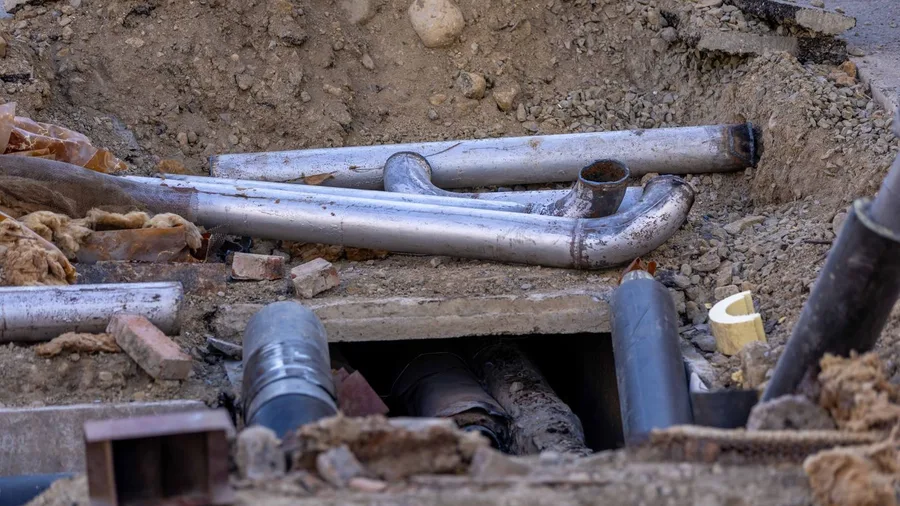
The worst repair I faced was a collapsed sewer line under the slab, and by then I had nothing left to pay for it with. The year was six. The line failed under the concrete floor, which meant excavation, not patching, and the estimate came back at $9,800. The tenant went without a working bathroom for twelve days, and I gave a $1,850 rent credit because honestly what else was I going to do.
I paid that $9,800 out of retirement savings, because the reserve was gone by year six and there was no coverage sitting under it. No policy, no outside fund, nothing but the account.
The plainest thing I learned is that I had been pricing surprises one at a time. One this year, then some quiet years to rebuild, then the next. What actually happened was three major hits inside six years: the $6,800 HVAC, the $12,050 eviction, and this $9,800, each landing while the cash from the last one had not yet come back. The $140 a month average does not refill a $9,800 hole. Nothing in that house did but my job, my savings, and eventually the sale. For a reader with a thin account, that is the repair to budget for first: the one that arrives after the first two have emptied the drawer.
What a $120 Cushion Covers vs. What It Does Not
Covered by cash flow
- Monthly mortgage principal and interest
- Property tax and insurance escrow
- Management fee
- Minor maintenance like paint and lawn care
Not covered at all
- HVAC replacement ($6,800)
- Eviction and lost rent ($12,050)
- Sewer line under the slab ($9,800)
- Vacant months and rent credits
The Stress Was the Real Cost

The stress cost more than either repair did. That $64,500 down payment was 28% of everything I had saved for retirement, and after the sewer line I understood that I had one house holding almost a third of my future.
I checked the bank account every single morning for nine years. Not weekly, not when a bill came due. Every morning, coffee in one hand, phone in the other, waiting for a number to tell me the plan was still intact. A vacancy was never an abstract line in the spreadsheet. One empty month cost more than my own household spent in a month, so every time the unit sat dark I was losing money faster than I had ever spent it.
I skipped two planned trips in those years to keep the reserve from shrinking further, and I did not regret the trips as much as I resented having to choose.
The thing that caught me off guard was what a late payment felt like. A late rent notice read like a verdict on my retirement rather than a bill to chase, because the house and my future were the same account, and I could not separate them no matter how calmly I told myself to.
The $120 monthly cushion had covered the mortgage and the taxes and the management fee. It never covered the attention the property demanded, the mornings of checking, the trips I skipped, the sleep. Once I added my time and my nerves to the ledger, the retirement-gap question got a lot harder to answer honestly.
The Sale Added About $166,000

I sold in year nine for $318,000, and after the costs and the loan were cleared I walked away with about $166,340 before taxes.
The sale closed the spring I retired. The buyer paid $318,000 for a 1978 ranch I had bought for $215,000. Selling costs at 7% ran $22,260, and the loan payoff was about $129,400, so the check that reached me came to roughly $166,340. Set the deposit next to it and the shape of the whole thing appears: $64,500 in, $166,340 out, and nine years of my attention in between.
I had a CPA review it before I filed, which I would do again. What you keep after depreciation recapture and capital gains depends on your bracket and your basis, and those were my numbers, not yours. Treat $166,340 as before-tax.
That $166,340 was the return that mattered. It did not come from the monthly cash flow – that averaged around $140 a month. It came from the sale, and from rent paying down a loan year after year whether or not the month was smooth.
the equity was real, but it was not spendable for nine years. Each month that the house had value, that value sat locked in a property I could not draw on without selling or borrowing against it, and borrowing against it would have put me further into the same single asset.
The gap test was answered only when I sold. That is the honest timing of a deal like this one. If your retirement gap needs closing next year, the sale price nine years out will not help you.
The Income Never Replaced a Paycheck
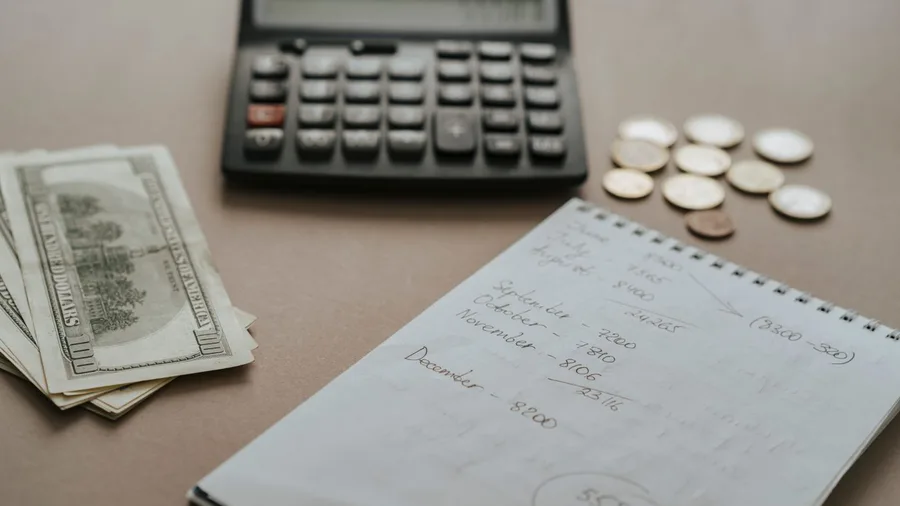
Rent did rise – from $1,850 to $2,250 over nine years – and the average cash left over after reserves was still about $140 a month, which is $1,680 a year.
Put that against what fell on the house. The HVAC was $6,800, the eviction and turnover $12,050, the sewer line $9,800 – $28,650 in all. The repairs and eviction alone were nearly double everything the property paid me. Most of my gain was the sale proceeds; the cash flow, the part that looks like income while you own it, never carried the deal.
I want to be precise about what that means, because a mailbox number can mislead. In the good years I saw a few hundred dollars arrive and told myself the house was working. The average told a different story once I added reserves, management, vacancy and the ordinary calendar of a 1978 house. $140 a month is not a retirement income. It is a hobby with a mortgage.
So the gap test gets split right down the middle.
The Nine-Year Money Ladder
I Would Do It Again, But Differently

Whether one rental at 55 works comes down to two things you can check before you ever tour a house: a cash reserve separate from the deal, and enough years to hold through a bad stretch. Here is the version I would buy.
That buyer keeps $25,000 outside the property, in a plain savings account, untouched by the down payment. Mine was $4,500, and the year-two HVAC alone was $6,800, which is why $2,300 of a new furnace came out of my retirement money. Twenty-five thousand covers a vacant season, a $10,000 repair, and the lawyer's bill for a tenant who stops paying, without the house reaching into your future income.
The horizon has to be ten years. Equity in a single house builds slowly and unevenly, and mine only showed up after nine years and a sale. If you might need that money in five, a house is the wrong shape for it.
If rent is meant to cover groceries or a car payment in the first five years, stay out. My rent rose from $1,850 to $2,250 across nine years, but the average check that reached my account after reserves was about $140 a month. That does not carry anyone.
Before an offer, I would rerun every number with two vacant months and a $10,000 repair built in, and see whether the deal still breathes. Mine would not have. If it still does, and you have the reserve and the decade, the equity was worth it to me. The income never was.
Frequently Asked Questions
Is buying a rental property at 55 a good idea?
It can be, but only if you have cash outside the deal for repairs and vacancy and a ten-year horizon. The income is unlikely to replace a paycheck, and one property will concentrate a large share of your savings. Run the numbers with two vacant months and a $10,000 repair before you make an offer.
How much should I set aside for repairs on a single rental?
A repair reserve of $4,500 was not enough for a 1,450-square-foot ranch. A full HVAC replacement cost $6,800, and a sewer line cost $9,800. Set aside at least $10,000 for capital repairs, and keep a separate fund of three months' rent for eviction and vacancy.
What happens if a tenant stops paying rent?
You lose the rent and pay legal costs. In my case, it took eleven weeks to get possession, and the total hit was $12,050. That included $4,200 in attorney and court costs, $5,550 in lost rent, and $2,300 in turnover. Eviction is a cash-flow shock, not a repair.
Should I pay off the rental mortgage before retirement?
That depends on your cash flow and tax situation. The loan paydown added to my equity, but it did not help my monthly cash flow. A fee-only financial advisor or CPA can run the numbers against your own budget and tax bracket before you decide.
How much cash flow should I expect from one rental?
After reserves, I averaged about $140 a month on a property that rented for $1,850 to $2,250. That is not a paycheck; it is a small cushion. Plan on most of your return coming from equity at sale, not from monthly income.
Does the stress of owning a rental get easier?
It did not for me. I checked the bank account daily for nine years. The concentration of 28% of my retirement savings in one house meant every problem felt like a retirement problem. If you are not comfortable with that, a rental may not be the right tool.
The One Calculation That Decides Whether One Rental at 55 Is a Tool or a Second Job
Here is the verdict, plainly. For one house bought at 55 to be an equity tool, you need about ten years and roughly $25,000 parked outside the deal for repairs and vacancy. If rent has to cover essentials in the first five years, you have not bought a retirement plan. You have bought a second job.
Mine worked because $64,500 was 28% of the account, the ten years were there, and $318,000 arrived at the end. The $166,340 made the risk pay. The $140 a month did not.
So run one calculation before you make an offer. Take a year of rent, drop two vacant months, subtract $10,000 for a repair, then subtract mortgage, taxes, insurance and management. If that number is still positive, you have margin. If it is negative, walk.
We were the ones with the story, and it nearly went the other way. The house closed my gap on the day I sold it. It never closed it at the mailbox.
Run the two-month-vacancy test before you sign
Take the rent you expect, subtract two vacant months and a $10,000 repair, then see if the deal still works. If it does, you have a real margin; if not, you have a second job.