

Can house hacking still work at 58, or is it too late to tie up this much money? That is the question you are typing into a search bar at eleven at night, and it is the one this piece settles.
At 58, a $1,450 rent check on a $385,000 Columbus duplex looks like the answer to making housing affordable in the eight years before retirement. Then you add it up. Monthly carrying costs come to roughly $2,870, so the rent covers less than half, and the buyer still pays about $1,420 out of pocket while putting $92,000 into the deal.
House hacking can still work at this age, but only if five tests pass together: the cash, the lender, the eight-year window, the daily reality of shared walls, and the exit. Fail one and the duplex turns from a housing plan into a retirement liability.
So the work is deciding whether it actually fits you, getting a lender's written answer on counting that rent, and inspecting the property before any offer goes in.
Rent Can Still Offset Most of the Mortgage
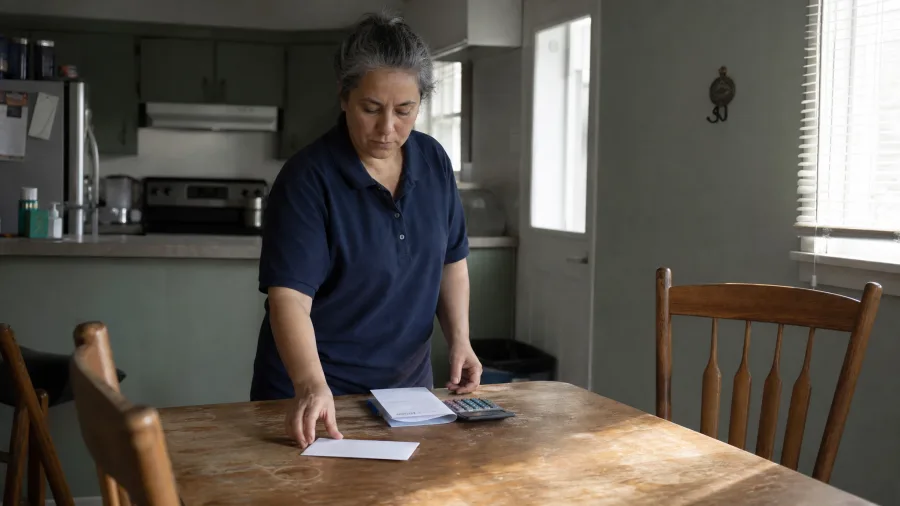
The rent does real work on the mortgage, but it does not make the duplex pay for itself. On this Columbus two-unit, the rent check is $1,450 a month, and the principal-and-interest payment is $2,040. That rent covers 71% of the loan payment, which sounds close to solved until you add up everything the owner actually pays each month: $2,040 for the loan, $300 for property tax, $150 for insurance, $80 for water and sewer, and $300 set aside for maintenance. The carrying cost is $2,870.
So the rent offsets about half the total. The owner still funds $1,420 a month.
That $1,420 is housing cost after rent, not profit. The full $80 water and sewer bill lands on the owner, and so does the entire $300 maintenance reserve, because a tenant occupying one unit does not reimburse either one. Principal paydown does build equity over time, but equity is not cash in your checking account, and it will not cover a water heater in March.
The number that should stick is the one that depends on the unit being full. One vacant month removes the $1,450 and leaves the owner facing the whole $2,870 carrying cost for those weeks. Repaint, carpet, and a new tenant and you may be looking at two.
At 58 the honest test is simple: can your stable income carry $1,420 every month for eight years without reaching into reserves? If it can, the rent has done what it can do. If it cannot, the rent is not the problem, and neither is the deal.
The Monthly Carrying Cost, Line by Line
One vacant month removes the $1,450 and leaves the full $2,870 on you.
Cash to Close Is the Real Gate

The cash you need on the day you close is not $1,450 a month. It is $92,000, all at once, before the first tenant pays a dime.
two kitchens, two baths, and a shared roof and water line all age together, so the first plumbing bill can land in month two. The $6,000 is not a slush fund. It is the first buffer, and the repairs in an older two-unit tend to be bigger than a one-family house because there are simply more systems to fail.
This is the line where the plan can quietly break. If the $92,000 comes out of a retirement account, you are not just buying a house. You are removing the cushion that would otherwise absorb a vacancy, a furnace, or a health event, and at 58 a forced sale to cover any of those turns a housing decision into a retirement-income problem you can't undo.
The $1,450 rent is not the gate. The $92,000 in cash, genuinely separate from your emergency fund and your next few years of living expenses, is the real test. Pull your actual liquid balances and subtract the $92,000. Whatever is left is what you're really risking.
⚠️ COMMON MISTAKE
Don't raid retirement to close
Cashing out an IRA or borrowing from a 401(k) to reach $92,000 turns a housing decision into a tax and penalty problem. The reserve you drain is exactly the money that covers the first vacancy or the first roof repair.
Lenders Scrutinize Retirement Income, Not Age

Age rule blocks a 58-year-old from a mortgage. The lender's test is documented income, credit score and reserves, not a birthday on the application.
What a lender wants to see is that the income shows up reliably and can be proven on paper. Pay stubs if you are still working. A Social Security statement showing your monthly benefit. Pension or annuity documents if you have them. Several months of bank statements. And enough cash left after closing to cover a few months of payments on the new $308,000 loan, because reserves count toward approval as much as income does.
This is where late starters can hit a snag that has nothing to do with age: withdrawals from a retirement account are weaker proof than a regular Social Security or pension deposit. A steady $2,000 a month arriving from Social Security looks reliable to an underwriter. The same money pulled irregularly from an IRA looks like a guess. If most of your income comes from the second source, line your documents up early and expect the approval to take longer.
Before you make an offer, call the lender and ask two clear questions. How will the $1,450 lease on the occupied unit be counted toward qualifying income, and does living in the property yourself change that treatment? Underwriting standards vary from lender to lender, so the answer you want is in writing, addressed to you and this property. That document is the figure that actually decides whether this purchase clears.
A Shorter Payoff Window Changes the Math

Eight years is the number that reshapes everything. At 58, planning to stop at 66, a buyer has 1,450 times 12 times 8 in front of them — $139,200 in gross rent before a single mortgage payment, tax bill, insurance premium, water charge, repair, or empty month comes out of it.
Compare that $139,200 against the $92,000 in cash the deal consumes at closing. The comparison is not the windfall it looks like. Gross rent is revenue, not profit, and the $308,000 loan sits there the whole time unless the property is sold or refinanced down the road.
A 30-year-old buyer can afford to wait out a soft market, a slow year, a decade of mediocre appreciation. Eight years does not allow that wait. If the Columbus duplex loses value in year three, there is no long runway to recover before the retirement date arrives.
At 66, the owner may simply want to stop screening tenants and fixing water heaters. Any loan balance left then, plus any repairs put off along the way — a roof, a furnace, a bathroom — stop being future rental income and start being exit costs deducted from the sale. The shorter window does not make the deal impossible. It makes the margin for error smaller, and that is the math this buyer has to run before signing.
The Eight-Year Path From Purchase to Retirement
Eight years of rent grosses $139,200 — before costs, vacancy, and the $308,000 loan.
Sharing Walls Is a Daily Lifestyle Trade
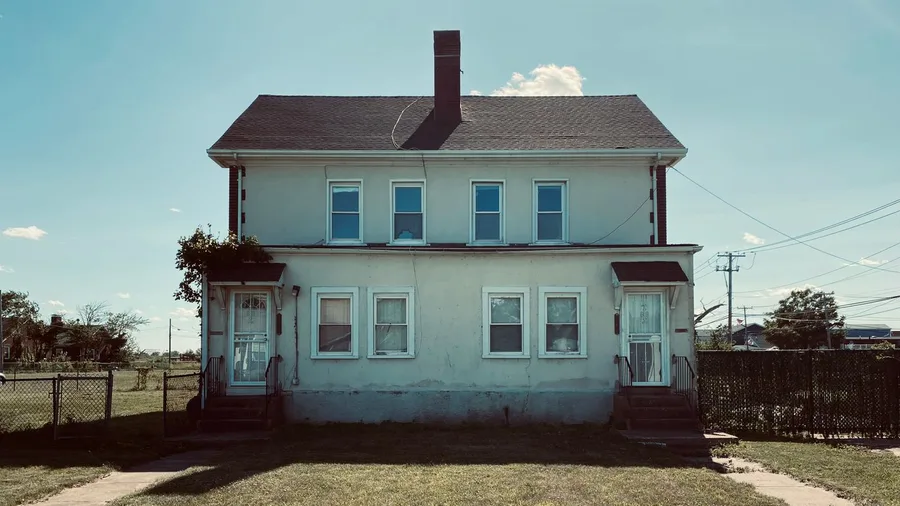
In a 1,600-square-foot two-unit, the tenant on the other side of the wall is not an abstraction. You hear the bass line of a Tuesday night playlist through the studs, you sort out whose car is blocking the shared drive before coffee, and a small yard becomes a negotiation over where the grill goes. None of that shows up on the loan estimate, and none of it is optional when you live in the building.
The $1,420 monthly out-of-pocket buys help with the mortgage. It does not buy quiet, and it does not buy the feeling of coming home to a place that is entirely yours.
Separate electric meters handle one bill cleanly – each unit pays its own usage, which removes a common fight. Water and sewer stay with the owner at $80 a month, so a running toilet in the tenant's bath, a shared laundry load, or a slow leak behind the shared wall lands on you to chase, pay for, and repair.
The honest read is that this part is a personality test, not a cash test. It fits the 58-year-old who genuinely likes having people nearby, who can knock on a door and say the music was loud last night without letting it fester into a feud. It does not fit anyone who needs solitude to recharge, or whose health gets worse with noise – a sleepless renter next door has a way of turning a $1,450 rent check into a nightly tax on blood pressure and patience.
Daily comfort sits inside the financial test, not outside it. A duplex that wears down your health or your temper is not saving you $1,420 a month – it is charging you in the currency you have the least of at 58: energy, sleep, and years. Before making an offer, walk the property with the tenant home, stand in your unit and listen. If what you hear already bothers you, that is your answer, and no rent offset on the spreadsheet changes it.
The Duplex Lifestyle: Fit or Friction
This fits you if
- You would knock on the door the same night, not in week three
- You can hear a TV through the wall and shrug it off
- One $80 water bill you control does not feel like a loss
- You would still take this unit if the rent were $1,000
This grinds you down if
- A single bad night of sleep costs you two days
- You would rather absorb a grievance than say it out loud
- You need the whole building to feel like yours
- A $300 repair month would make you resent the tenant
Repairs and Turnover Become a Second Job

Beyond the predictable friction of shared walls, the variable job is the work itself. The $300 a month maintenance reserve equals $3,600 a year for a two-unit building, and it is a budget line, not a promise — a roof or a furnace can swallow a year of it in one invoice.
One vacant month costs $1,450, which is roughly five months of $300 reserve contributions gone before cleaning, repairs, or leasing costs are even counted. That is the gap a single tenant turnover opens.
In this example the owner is the property manager. That means screening tenants, taking repair calls, handling lease renewals, and doing the turnover work between renters. A property manager has no line in the $2,870 carrying costs — hiring one adds expense on top of the $1,420 already out of pocket, so it only fits if income or rent margin can absorb it.
At 58, this second job can collide with health problems, planned travel, or caregiving for a parent or spouse. The $6,000 repair reserve is there for repairs, not to pay a manager's salary. Before the offer, ask honestly how many weekends the work will take — and whether those weekends are ones this buyer wants back. Anyone picturing paid work past retirement age should read going back to work later before counting on it.
💡 PRO TIP
Price the manager before you buy
Call two local property managers and ask what they would charge on a two-unit. If that number does not fit inside the rent margin, you are buying a job as well as a house.
Privacy and Safety Need Written House Rules
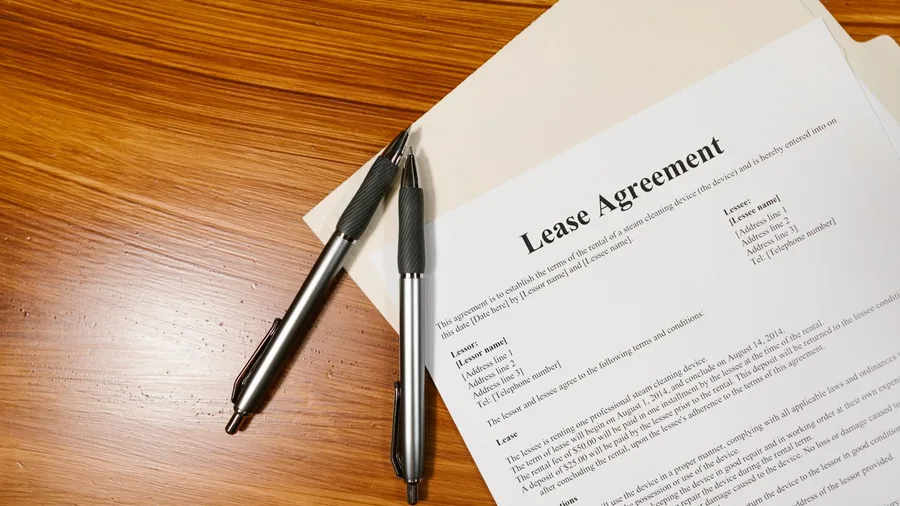
House rules written into the lease, not agreed over the fence, are how a duplex stays a home instead of a running negotiation. Put the specific things in writing: who parks where, whether pets are allowed and how many, when the shared laundry is off-limits, quiet hours on weeknights, and whose guests can stay how long.
That document is also your only real enforcement tool. When a tenant's friend's car is in your spot, or a TV runs past midnight on a Tuesday, you point at the clause instead of knocking on the door with your jaw tight. An owner enforcing rules from memory ends up in a feud; the $1,420 you save each month starts to feel like something you're paying for with your patience.
The water bill needs its own paragraph, because you pay that $80 a month no matter what the reading says. So the lease should name who fixes a dripping fixture, who reports a leak fast, and how shared laundry water gets used. Separate electric meters are the easy half; everyone pays their own kilowatts and the argument about the dryer disappears.
Before any offer, call the city about permits, occupancy limits, inspections and rental registration. A duplex that can't legally be rented the way you're counting on isn't worth the $92,000 to close.
Written House Rules — The Spec Sheet
✍️ Enforcement
Cure notice in writing, then a set late fee — not a knock
👥 Guest cap
The number and the max nights per stay you can actually live with
💧 Water clause
Who reports a leak, who calls the plumber, who pays the $80
🌙 Quiet hours
The exact window you named before signing — 10pm to 7am weekdays
⚠️ Cost of skipping
$92,000 in, and a city permit check is the only thing that can sink it later
📄 First draft
One page, plain language, read aloud to the tenant before signing
Written > verbal
A clause you can point to is worth more than the $1,420 a month it protects.
Health and Mobility Can Force an Early Sale

The stairs and the bathrooms in an older duplex will decide your exit long before any financial plan does. This Columbus property has stairs to the second-floor unit, and the owner's smaller unit still means steps at the entry, steps to the laundry, steps whenever you turn over a tenant. At 58, count those trips now and picture doing them at 72.
A stair lift isn't a rescue in a 1,600-square-foot two-unit built before wide hallways were common. Narrow doors, a shared entry, a bathroom too small for a retrofit can each block the fix you're imagining. Walk the unit with that eye before you fall for the kitchen.
If health forces a sale, you sell from weakness. That means accepting a lower price, covering closing costs again, eating a vacant month at $1,450, and fixing whatever the inspection finds, all at once. The $6,000 repair reserve is the buffer that makes a forced sale survivable, so keep it liquid and untouched. Spend it on closing costs and you'll have nothing between you and a rushed deal.
🚪 The Exit Check, Start to Finish
Count the trips, then set a threshold
List every stair and doorway on the tenant route. If more than two become a daily problem by 72, plan the sale before it is forced.
Name the exit year now
Write 2034 next to the $308,000 loan balance. That is the year to decide: sell, refinance, or stay. Not the year to start thinking about it.
Price the forced-sale bill
Estimate 6% of $385,000 in selling costs, one vacant month at $1,450, and inspection repairs. That is the number to keep liquid, not the $6,000.
Put the reserve somewhere you cannot spend it
A separate high-yield savings account, not the checking account that pays the $1,420 monthly out-of-pocket.
Recheck at year five, not year eight
At 63, look at three things: mobility, rent versus the $2,040 payment, and whether the reserve still covers a rushed sale.
The Verdict Hinges on Reserves and Patience

That exit risk is exactly why this decision splits by buyer rather than falling on one side for everyone. The dollar figures are identical for every 58-year-old who looks at this Columbus duplex, but the answer that matters is what those figures leave behind once the deal closes.
It fits when the $92,000 is genuinely spare after the closings costs and the $6,000 repair reserve are set aside. Add steady income that covers $1,420 out of pocket without touching savings, an eight-year runway to 66, and a tolerance for shared walls and stairs. Run those five checks and the duplex is a housing choice that happens to pay back.
It is a no when the reserves are thin, when health makes stairs and tenants a burden in a few years, or when quiet and privacy are non-negotiable. It is also a no if the only way to reach $92,000 is draining a retirement account, because one vacant month at $1,450 plus a repair can then turn a house into a forced sale.
The verdict is a fit for the buyer who passes all five checks and a firm no for anyone whose cushion or health makes the stairs and the tenant a future problem. If you are the first buyer, your next step is one document, not a handshake: the lender's written answer on how the $1,450 rent counts. Then inspect the roof, the systems, the separate meters, the shared spaces, and every stair before an offer goes in.
Frequently Asked Questions
Is it too late to start house hacking at 58?
No, but the margin for error is thinner. You can still qualify for a mortgage and collect rent, but the $92,000 cash to close has to be genuinely extra money, and the eight-year run to 66 has to absorb a vacancy or a repair without forcing a sale.
How much cash do I need up front for a duplex like this?
In this example, $92,000: a $77,000 down payment on the $385,000 property, $9,000 in closing costs, and a $6,000 repair reserve. The reserve is not optional in an older two-unit, because two kitchens, two baths, and shared water lines are all owner costs.
Will a lender count the rent from the other unit?
Often, but the rules vary and partial owner occupancy can change the treatment. Ask the lender how it will count the $1,450 lease and get the answer in writing before you make an offer. That written answer matters more than a verbal yes.
What happens if the tenant moves out for a month?
You lose $1,450 of income and still owe the full $2,870 carrying cost that month. That is why the reserve and stable retirement income both matter. One vacancy should be an inconvenience, not an event that pushes you into debt.
Should I hire a property manager?
Only if the rent margin supports it. There is no manager line in the $2,870 carrying costs, so hiring one adds a cost on top of the $1,420 out-of-pocket. Call two local managers for quotes before you buy, not after the first turnover.
What if my health changes and I need to sell?
An early sale costs money: closing costs, possible vacancy, and repairs before listing, all negotiated from a weaker position. Keep the $6,000 reserve liquid for that possibility, and decide your exit year before you buy rather than after.
Where the Duplex Math Lands at 58
Here is the verdict, plainly. House hacking at 58 is a fit for the buyer holding $92,000 genuinely liquid, with stable retirement income covering the $1,420 monthly gap, eight years to 66, and real tolerance for shared walls. It is a no for thin reserves, or for health that makes stairs and tenants a future burden. Those are reasons to walk away now, not problems to fix after closing.
If you fit, do two things first: get the lender's written answer on counting the $1,450 rent, then inspect the roof, systems, meters, shared spaces and stairs before an offer.
So back to that late-night question. The rent check does not make the duplex free. It makes it a housing choice with a retirement-sized commitment attached, and now you can answer whether it is one you want to sign.
Run the five tests before you tour the duplex
Check your liquid cash, your monthly gap, your horizon, your tolerance for shared walls, and your stair plan. Then call the lender and ask how it counts the rent — in writing.