
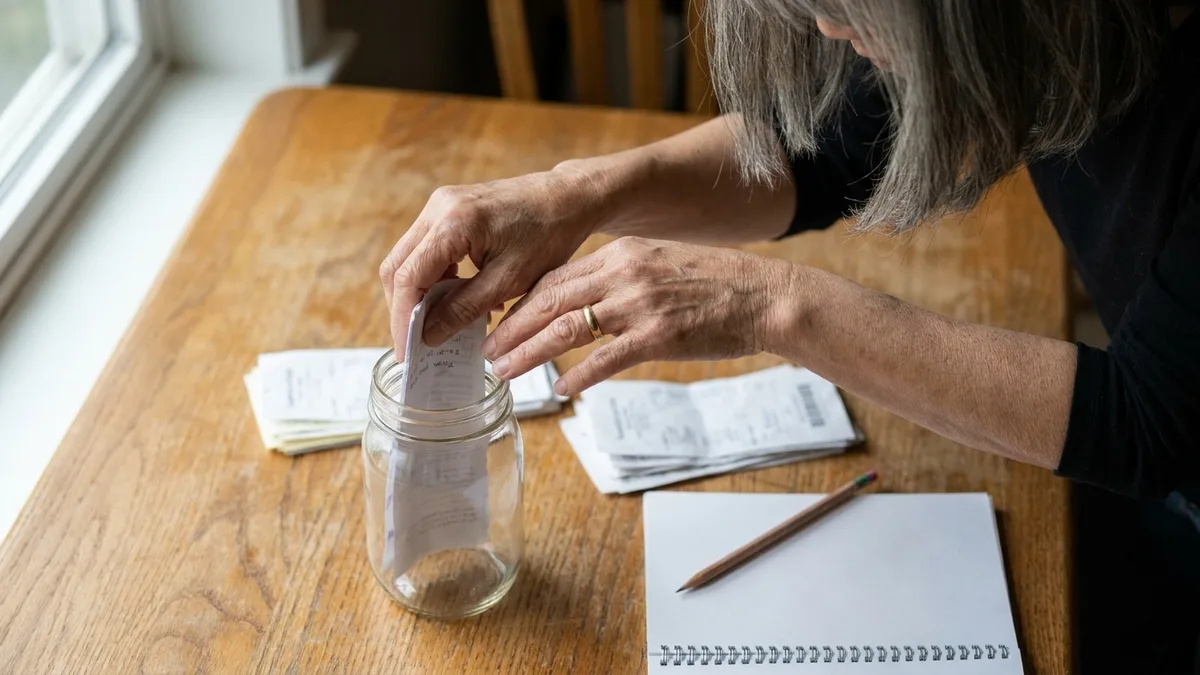
Get the order wrong at 65 and the same doorway costs you $1,800 during a remodel or $5,400 standing alone ten years later. Same doorway, same owner, different decade.
The house in question is a 1,900 square foot colonial built in 1986: both bedrooms and the only full bath upstairs, half bath and laundry off the kitchen, owner 64 and planning on twenty more years there. Nothing about it is a problem today, which is exactly why nothing gets done. The expensive version of every job on this list is never the job itself. It is the second visit. Blocking runs $250 to $600 per wall while the wall is open and $1,500 to $3,000 to reopen it later, and the grab bar that goes into it is $120 to $350 either way.
So the money splits in two stages. Roughly $5,000 to $7,000 this year covers grab bars, a comfort-height toilet, lever handles, path lighting and a hand-held shower. Another $40,000 to $60,000 set aside over five years handles the bath, the entry and a downstairs bedroom.
Your budget buys the most spent in the order the house will need it: the cheap safety layer now, blocking and door widths folded into work you already planned, and the five-figure calls held until a ten-year horizon or a real diagnosis forces them. Three sub-$1,000 jobs get booked this year. Everything else waits, and waiting is the plan.
Quick Tips Before You Start
Measure doorways first
Walk the route from bed to bath to kitchen with a tape measure. Anything narrower than 32 inches is a future bottleneck.
Photograph the blocking
Before drywall goes back up, shoot the stud bays with a tape measure in frame. You will need that picture in ten years.
Keep the year-one budget small
Grab bars, toilet, handles, path lighting and a hand-held shower run $5,000 to $7,000 installed. That is the whole layer.
Add blocking to any wall you open
If a bathroom or hallway is being remodeled for any reason, spend the $250 to $600 per wall while it is open.
Call the Area Agency on Aging
Ask whether a free or low-cost home assessment exists in your county before you pay $200 to $600 for one.
Under $1,000, do it this year
These are the jobs that pay off immediately, cost less than a used car, and do not require a contractor living in your house for six weeks. They are the first line of the year-one budget.
The trap is thinking they are too small to matter. They are the ones that prevent the fall that puts you in the hospital and starts the cycle of decline.
1. Grab bars in blocking beat tile repairs later
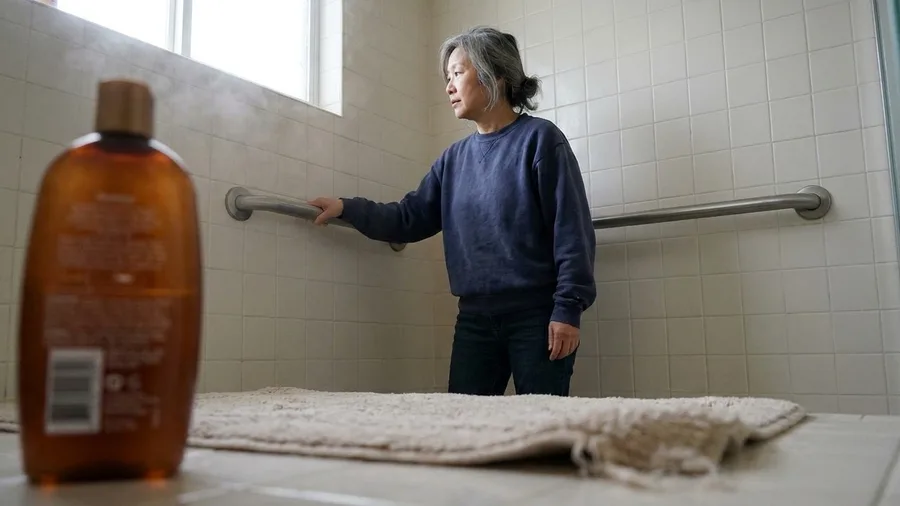
Of all the work to put off, the bar you grip on the way out of the shower is the one people push hardest, because at 64 it feels like a signal you aren't ready to send. The reframe is simpler than it seems: the steel is cheap and forgettable, and the tile work you'd need to mount it later is neither. A bar installed to begin with runs $120 to $350; the difference is whether you cut into a finished wall or not, and that difference is where the real money hides.
Get it wrong later and you're paying someone to snap a hole in the tile, rebuild the waterproofing the cut opened up, and hunt a tile that stopped being made the year the bathroom went in. The bar costs the same either way, maybe $300. The finished wall around it does not, and that gap is exactly what the waiting tax looks like up close.
Placement runs inside the shower, then beside the toilet, then the top and bottom of the main stairs. In a colonial like this one those stairs are the only route both upstairs bedrooms have. If the house is being sold within two years, remember a bar comes back at resale as close to nothing, and that's the one case where it waits.
💡 Tip: The one condition that puts this behind everything else: planning to sell within two years. Resale rarely returns the cost of a grab bar.
| Project | Cost done at 65 | Cost or consequence at 80 | Verdict |
|---|---|---|---|
| Grab bars | $120–$350 each installed into blocking | $400–$700 plus tile repair and waterproofing patch | Do this year |
| Comfort-height toilet and lever handles | $450–$800 toilet; $40–$90 per fixture | Same job plus someone else scheduling it | Do this year |
| Motion-sensor path lighting | $400–$900 | Folded into a hallway rewire at project prices | Do this year |
| Blocking in open walls | $250–$600 per wall | $1,500–$3,000 to reopen later | Do this during any remodeling project |
| Widen doorway to 36 inches | $1,800–$3,500 during other work | $4,000–$8,000 as a stand-alone job | Do it while the wall is open |
| Curbless shower vs. walk-in tub | $9,000–$14,000 shower; $6,000–$15,000 tub | Tub often priced for removal at resale | Shower first |
| Zero-step entry | $3,500–$9,000 regraded walk | $5,000–$10,000 modular ramp on the front of the house | Schedule in dry season |
| Stairlift vs. downstairs suite | $4,500–$8,000 lift; $55,000–$95,000 suite | Lift leaves holes and a scar; suite adds square footage | Answer the long-term question first |
2. A taller toilet and lever handles are one weekend
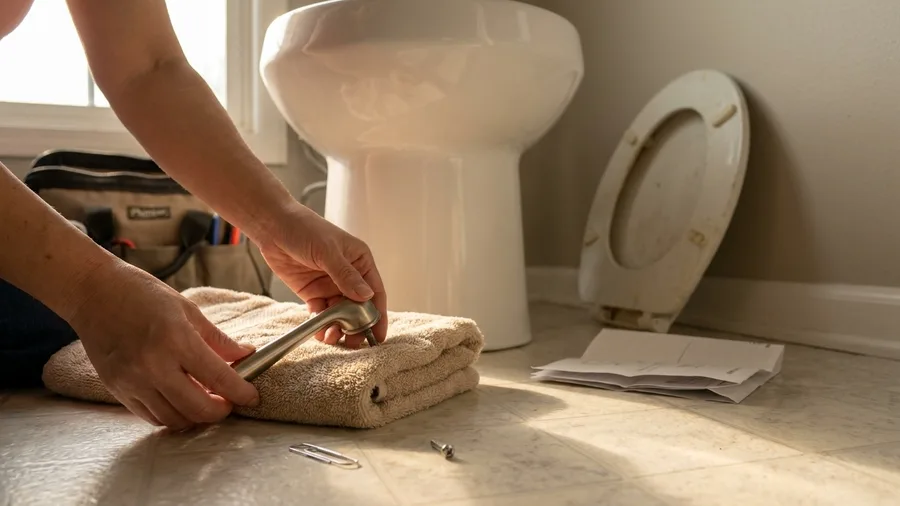
Book one plumber and one Saturday and get both small swaps done in the same visit. A comfort-height toilet sits about two inches taller than the standard bowl, runs $450 to $800 installed, and takes the deep knee bend out of a trip to the bathroom. Lever handles and rocker switches run $40 to $90 per fixture, and you price them per handle or per switch, not per door, which is how the number surprises people.
At 65 that is a plumber's visit plus one afternoon spent picking handles at a hardware store. At 80 it is the same plumber's visit, except someone else arranges it, someone else sits in the driveway waiting for the truck, and the handles get chosen from a catalog in a hurry. Same materials, more hands, less say in it.
Here is where you need a professional's eyes rather than a price list. Comfort height is not right for everyone, and if there is a knee or hip problem already causing trouble, the toilet height, the handle style and the bar placement all interact. An occupational therapist's walk-through, or a contractor certified in aging-in-place work, is $200 to $600 and answers that, and the local Area Agency on Aging is who you call to ask whether a free assessment exists in your area.
Real, but not first. With fixtures that still work and no grip or knee trouble yet, this sits behind the bathroom bars and the path lighting in priority order. The trade-off you accept by doing it now is small and the trade-off you accept by waiting is not.
Leave out of the same job: decorative tile and the fixture upgrade you were eyeing at the showroom. Both add cost to a plumber's visit and neither one changes whether someone gets safely on and off the toilet.
💡 Tip: Count every door and switch you touch daily. That number times $40 to $90 is your real handle budget.
💡 PRO TIP
The grab bar you cannot see
The best $300 you spend this year is the blocking behind a wall that is already open for another reason. It costs nothing to look at, and it decides whether a future grab bar takes one afternoon or one contractor.
3. Light the path from bed to bath
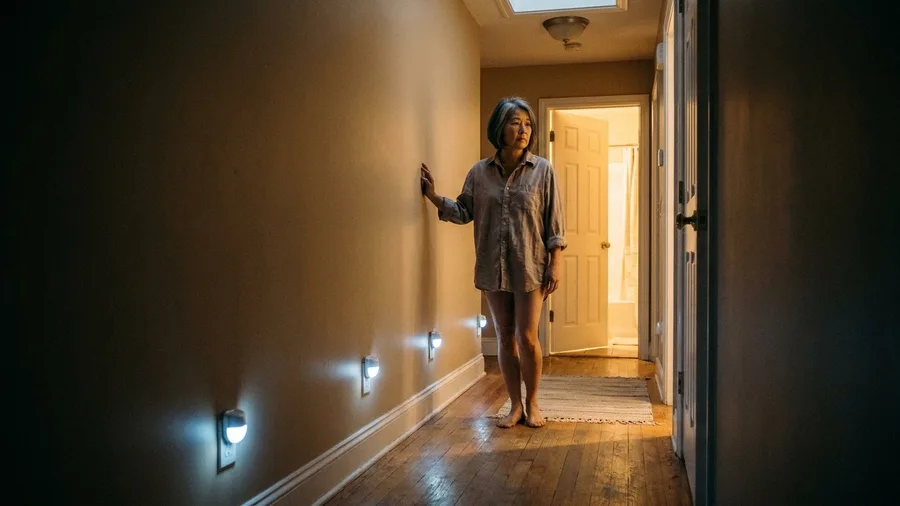
The dark. A hand on the wall at 2 a.m. finds a light switch by memory, but a walker, a rug edge, or one barefoot step onto a stair nose doesn't. A few motion-sensor fixtures along the route from the bed to the bath are the smallest useful spend on the list: $400 to $900, plus brighter bulbs over the sill and down the stairwell.
That's the permission version, and it works because most of the fall isn't a slip on wet tile. It's a patch of floor you couldn't see. You do not need to light the whole house, you need the worst ten feet of hallway to stop being a guess.
Bring an electrician once and the bill is small, $400 to $900. Fold it into a hallway remodel later and the same lighting becomes part of a rewire, drywall out and paint down, with project pricing on every hour. Lighting does not replace a handrail on both sides of the stairs; that's a separate line. And if the house is single-level with a short, already-lit path to the bathroom, the case disappears.
💡 Tip: Skip the whole case for this if you live in a single-level home, the route from bed to bath is short, and it is already lit.
Do it while the walls are open
This is the theme that decides the whole article: jobs that cost two to four times as much once the drywall is back up. If a bathroom, hallway or entry is being touched for any reason, these are the add-ons to bolt on.
The window is not a season. It is the length of time a wall stays open.
4. Curbless shower versus walk-in tub: take the shower
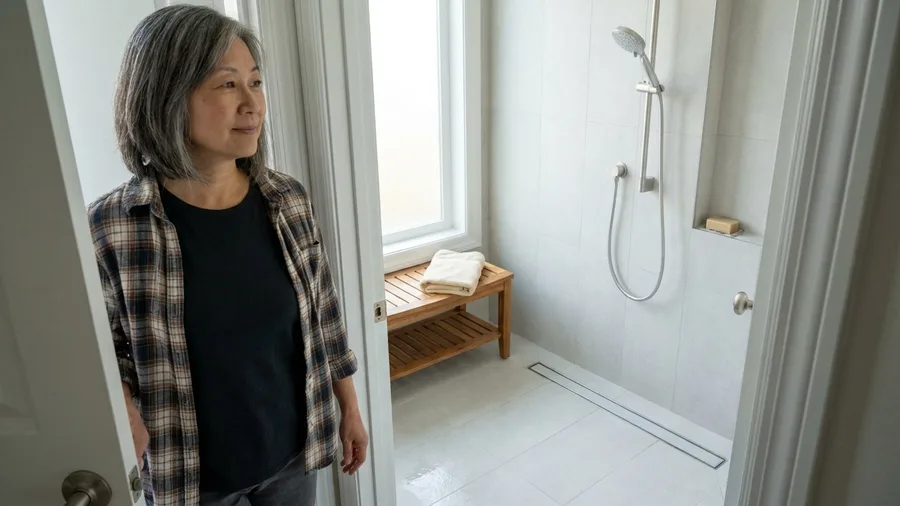
The common belief is that the walk-in tub is the safe choice, because it is made for people who have trouble getting around. That sounds careful and it usually costs more.
Here is the trade in plain numbers. A curbless shower with a bench, blocking behind the tile and a linear drain runs $9,000 to $14,000 when it goes in as part of a bath remodel you were already doing, so the demolition and the plumber's day are already paid for. A walk-in tub runs $6,000 to $15,000 on its own, and if the floor framing or the door swing has to be reworked to fit the shell, add $2,000 to $4,000 and a second trade on the schedule. Same room, same rough price at the top end, and one of them still leaves you standing up to get out.
Think about the ordinary Tuesday. The shower works for whoever is in the house, standing or seated on the bench, and it takes the eight minutes it always took. The tub works for one person, and every single use means sitting through a fill and then a drain, twenty minutes of your day gone before you have washed your hair.
Then there is the day a buyer walks through. A tiled shower with a bench and a good drain reads as the bathroom somebody just paid to update; it looks like the reason the house is priced where it is. A walk-in tub reads as a medical fixture, and the buyer standing in that doorway is mentally subtracting the cost of hauling it out.
That is the part the brochure leaves off. The tub is not a neutral feature you can leave for the next owner to enjoy.
There is one situation where the tub is the right answer, and it is not a resale question at all. If a diagnosed condition makes soaking or supervised bathing the point of the room, the shower stops being the comparison. That call belongs to a doctor and a physical therapist, and it should be made as a medical decision, in writing if you can get it, rather than argued out over a contractor's quote.
For this reader, still healthy at 64 and remodeling a bath that has to serve two people for another twenty years, the bench-and-no-threshold shower is the concrete move: book it into the planned bath work, put blocking behind the walls while they are open, and put the question of a tub aside until a reason arrives that has a diagnosis attached to it.
The decision you make at 65 is a design choice. Made at 80, it is a remodeling project in a house somebody is recovering in.
💡 Tip: A curbless shower needs the floor recessed for the drain. If a contractor says they can skip that, find another contractor.
5. Widen the doors while the drywall is already open
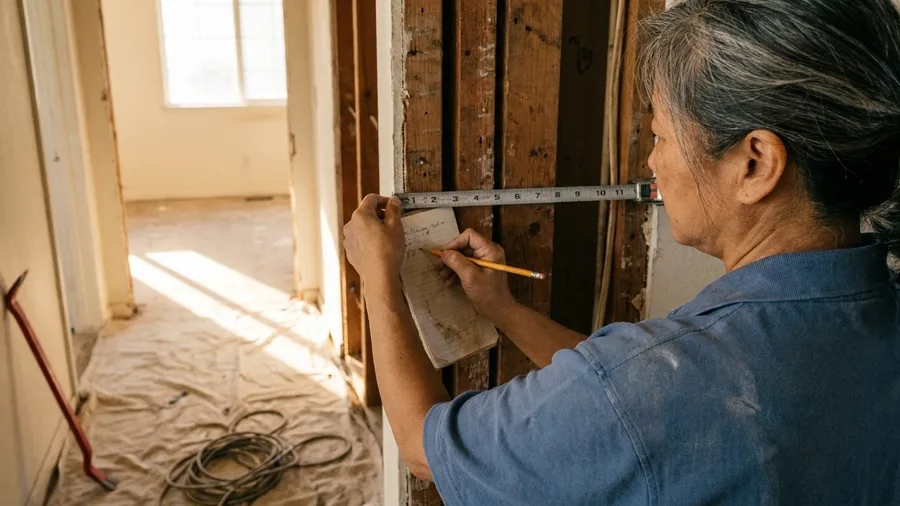
I watched a contractor measure a hallway doorway once, write 29 and a half inches on his pad, and tell the homeowner that number would follow her for the rest of her life. She was 66 at the time and had no trouble walking. The wall was open that week. It has not been open since.
That is the whole case for door widths. Widening a 30-inch opening to 36 while other work is already tearing out trim and flooring costs $1,800 to $3,500. Doing the same doorway as a stand-alone job runs two to three times that, because now the job is moving casing, patching the floor, relocating a switch that ends up in the wrong place, and repainting a wall you did not plan to touch.
Name the openings before the wall is closed, not while the drywall is stacked in the hall. The full bath, the primary bedroom, and the way through to the kitchen are the three a walker has to pass to reach a toilet, a bed and a meal, and those three are the whole list.
Fold the rest into the same open wall while it is open. Blocking behind the grab bars, a foot of plywood between the studs at the right height, costs $250 to $600 a wall now and $1,500 to $3,000 to get at later. An outlet raised to counter height is almost nothing while the drywall is off and a small fortune in bending every day for the next twenty years.
Some houses should leave this alone: if the openings already measure 36 inches, or the plan is to sell before a walker is on the scene, the money goes further somewhere else on the list.
💡 Tip: Skip this if the house already has 36-inch openings, or if you expect to move before a walker enters the picture.
The Price of Waiting
What the same job costs once the walls close back up
6. Build the zero-step entry before you need the ramp
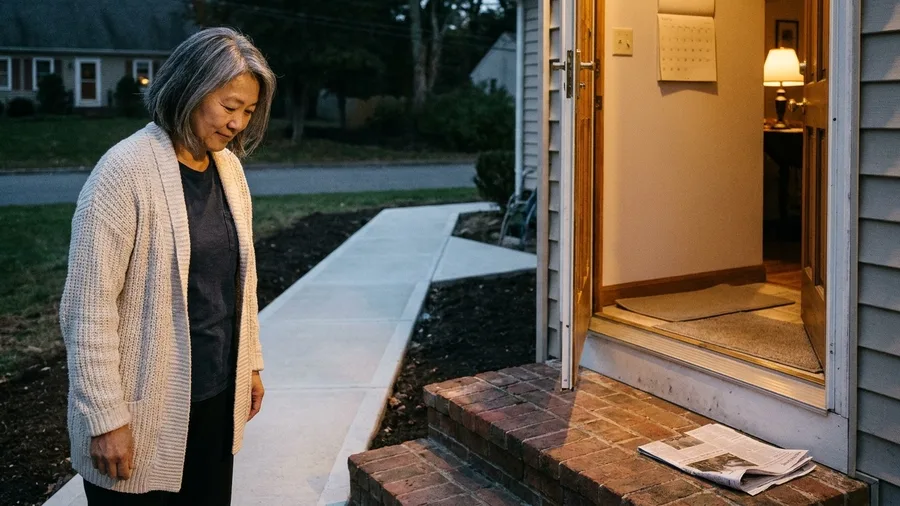
The three steps up to the front door look like a small problem, and the fear is that fixing them means a wheelchair ramp bolted to a colonial that ruins the front of the house. It does not have to. The cheaper, better-looking answer is the one built in calmly.
Doors handle the inside of this problem; the front walk is the same mistake made outdoors, where concrete poured once is a fraction of the cost of hardware added afterwards to do the job worse.
Regrading the walk and cutting in a low threshold runs $3,500 to $9,000. A modular aluminum ramp runs $5,000 to $10,000, arrives about a week after you order it, and stays bolted to the front of the house for good. The regraded walk gets a season of mud and then reads, for the next twenty years, as a normal front path nobody notices. The ramp is the feature the neighbors use to describe the house.
The way to take willpower out of this is to schedule the pour the way you would schedule a roof: pick the dry season, book the crew, and put it on the calendar with the landscaping that goes back around it. Concrete poured on a planned date in July is a project. Concrete poured in the week after a hospital discharge is whoever answers the phone, at whatever they feel like charging.
Buyers read it both ways. A flush entry looks like a house that was built carefully; a bolted-on ramp looks like a house with a problem, and the buyer prices that in before the ramp's own cost even enters the conversation.
💡 Tip: Ask the contractor to regrade toward the door, not away from it, with a 2% slope and a threshold no higher than half an inch.
7. Blocking costs hundreds during a remodel, thousands later
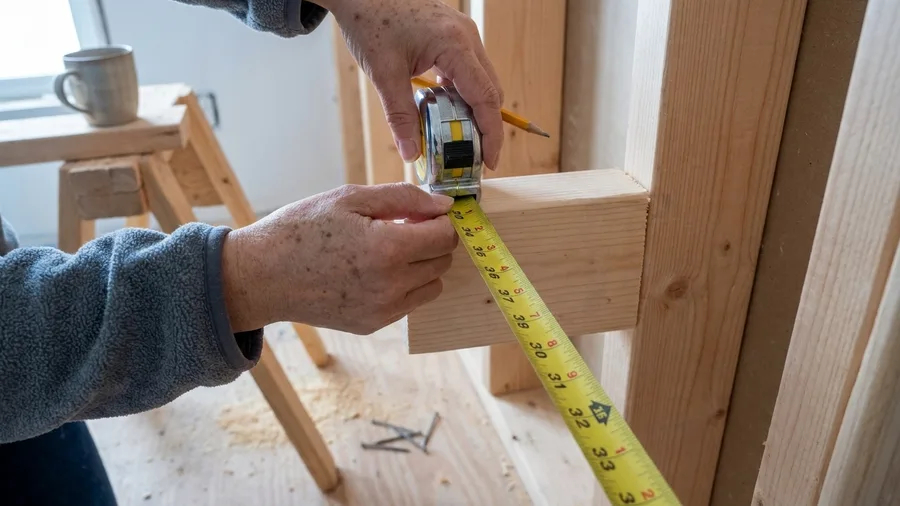
Six hundred dollars is the most a wall will ever cost you. That is the top of the range for putting solid wood between the studs while the drywall is already off – $250 to $600 per wall, depending on length and how much the carpenter has to fit around. Open that same wall in five years and you are looking at $1,500 to $3,000, and that is before anyone has bought a bar to screw into it.
Where it goes is decided by where you grip: a horizontal run behind every toilet, the length of the shower wall, and the hallway and stair walls your hand already touches on the way past. Those are the same spots the bars go, which is the whole reason the two jobs belong in one visit. A bar in drywall is a hole in the wall and a fall; a bar in blocking is a handhold.
So the ask is small and specific. Tell the contractor you want 2×10 or 3/4-inch plywood between the studs at grab-bar height, roughly 33 to 36 inches off the floor, and ask them to photograph each bay with a tape measure in frame before the drywall closes. Those photos are worth more than the receipt later, because nobody remembers where the wood is.
You do not have to block the whole house. Block the bathroom being remodeled and the toilet wall behind it, and leave the rest for whenever that wall is next open. Even one wall done now is a wall you never pay twice for.
This is the quietest item on the list and it will feel like nothing. It is worth nothing today because you cannot see it, and invisible forever once the paint goes on. It is also the reason a $300 grab bar is an afternoon with a drill instead of a scheduled contractor, and the reason the bars go in this year rather than after the next scare.
💡 Tip: This is the purest 65-not-80 item on the list. It is worth nothing today, invisible forever, and the difference between an afternoon and a contractor.
Curbless shower vs. walk-in tub
Curbless shower
- $9,000–$14,000 inside a remodel
- Works standing or seated
- Serves the whole household
- Reads as an upgrade at resale
- Needs the floor recessed for a drain
Walk-in tub
- $6,000–$15,000 plus $2,000–$4,000 to rework floor and door
- Serves one person
- Sit through a fill and a drain every time
- Buyer often prices for removal
- Wins only on a diagnosed soaking or supervised-bathing need
The five-figure decisions, and what to skip
These are the jobs that need a ten-year horizon and a known problem before they are worth answering. They are not year-one money, and most of them should not be answered this year at all.
The reason to look at them now is to know the price of the choices you have not made yet. That is not the same as making them.
8. Stairlift or downstairs suite: a $50,000 difference
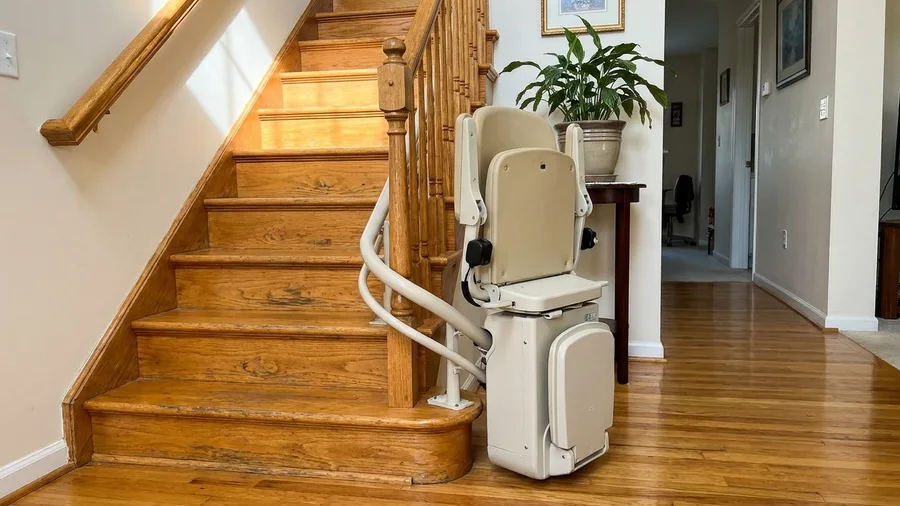
The choice comes down to a stairlift at $4,500 to $8,000 installed plus $300 to $600 a year in service, against converting the downstairs den into a bedroom with a full bath at $55,000 to $95,000. Past the few-hundred-dollar work on the walls, this is where the money turns into five figures and the answer needs a ten-year horizon instead of a free weekend.
Each option does something honest and awkward to the house. The lift gets bolted to the treads, and when it comes out it leaves holes in the wall and a scar on the stair stringer. The downstairs conversion adds a bedroom and a full bath to the square footage, and those rooms stay valuable to whoever buys next.
The trade is real either way: the lift is fast and cheap but it serves one rider and one set of stairs, and the suite costs roughly ten times as much but serves the whole household and any future one. Convert when you plan ten-plus years in this house and the ground floor has the space. Choose the lift when the stairs are one of several problems and spreading the money makes more sense.
Compare moving to a single-level home against that $55,000 to $95,000 as the third number in the same conversation, before committing either way.
💡 Tip: The third option nobody prices: moving to a single-level home instead of renovating this one. It belongs in the same comparison.
9. Skip the elevator and the full universal redesign
I was in a kitchen once where an elevator had been put in during the remodel, and the owner confessed it had been used maybe a dozen times in nine years. The house had held its value, but the $60,000 was sunk in the corner and doing nothing for anyone.
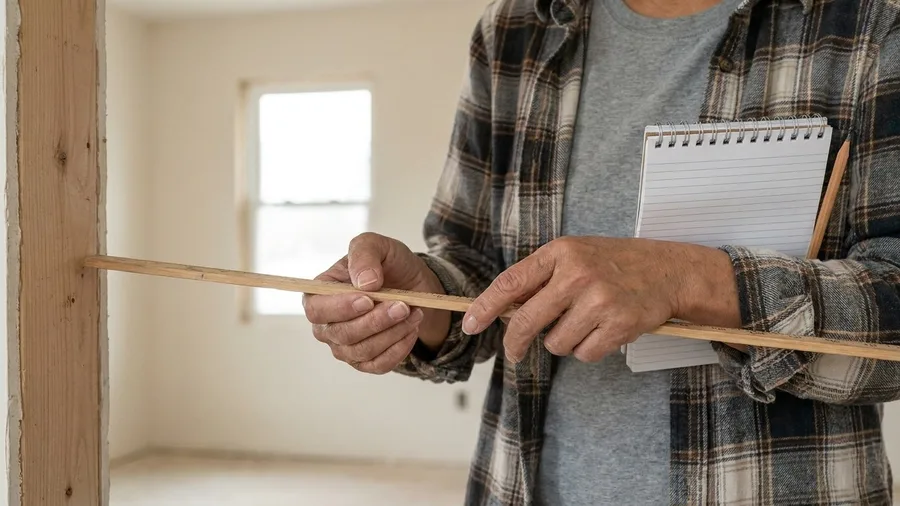
Widen every hallway or three of them, and the difference gets measured at the once-a-year check: walk the hallways with a yardstick, note the doorways that are already 36 inches, and see whether anyone last touched the roll-in shower in the unused bath. If the tally says the elevator moved nobody and the shower stayed dry, the next fifty thousand has answered its own question before the money lands.
The cheap layer plus a pass of blocking over the walls of every room already being worked on covers most futures for hundreds, not thousands, and any part of the larger build needed later costs the same once a specific hip and a specific side of the body are known. The one signal that overrides this rule is a diagnosis or a spouse with a known mobility condition, and when that shows up, the timeline is what changes, not the principle.
💡 Tip: A diagnosis, or a spouse with a known mobility condition, moves the big work forward rather than back. That is the signal that overrides the skip list.
10. Get the house assessed before you take bids

The belief is that the contractor's bid is the plan. Three bids come back on three different letterheads, and the homeowner reads them as competing prices for the same job, picks the middle one, and starts there. But each bid answers the list that contractor likes to sell. None of them answers what this house needs in what order.
The fix costs less than one of the small jobs on the year-one list: a walk-through of $200 to $600 by an occupational therapist or an aging-in-place certified contractor. One of these is trained to watch how a person moves through rooms, not what a sales sheet says a project costs. The other watches the structure. Either can tell a 64-year-old which stair is the trip hazard and where the bathroom is too tight to turn around before a single tile is ordered.
The first call to make is not to a contractor. It is to the local Area Agency on Aging, with one plain question: is there a free assessment in this area? In many regions there is, run through a county or nonprofit program, and the only cost is the wait. If the answer is no, $200 to $600 buys the same walk-through privately, and that number sits under the price of the toilet install.
What the visit has to leave behind is a sequence with a reason pinned to each step, in plain language. Grab bars first because the stairs are the daily route and the bathroom is where a fall hurts most. Doorways later, but flagged now, because the next remodel will have those walls open anyway and the widening is cheap in that window and costly on its own. The document should read like a decision with causes, not a bid sorted from most expensive to least.
A contractor's list arrives in the order of the work that pays best, which is not the same as the order that gets the safest house soonest. That is the common mistake, and it is not a character flaw, just what happens when the sequence is left to whoever is selling it.
Two things make the visit shorter and better. Bring the year-one figure of $5,000 to $7,000 written down, so the assessor knows the shape of the budget. And be honest about which rooms get used every day and how many more years this house is the plan – whether a downstairs bedroom in the ground floor's spare space is real, or whether the answer to that is moving.
The same professional, at 80, comes through a discharge planner's referral. Same house, same assessor, but the deadline is a hospital discharge and the family is making choices under pressure with no room to compare. The $200 to $600 walk is the same service whether it is taken calmly at 65 or urgently at 80. The difference is you still get to choose the order.
💡 Tip: Call the Area Agency on Aging first. Free assessments exist in many counties, and the only cost is the phone call.
📋 The order to actually book the work
Book the assessment
Call the Area Agency on Aging first to ask about a free walk-through, then schedule a paid one if needed.
Do the $5,000–$7,000 safety layer
Grab bars, comfort-height toilet, lever handles, path lighting and a hand-held shower, all in year one.
Add blocking to any open wall
Any bathroom, hallway or entry being remodeled gets a $250–$600 blocking pass while the drywall is off.
Widen the three doorways
Bath, bedroom and kitchen route, during other work, at $1,800–$3,500 per opening.
Schedule the zero-step entry
Pick a dry season and a planned date for a $3,500–$9,000 regraded walk, not a post-discharge scramble.
Answer the $50,000 question
Decide stairlift versus downstairs suite on a ten-year horizon, using the assessment's sequence as the input.
Frequently Asked Questions
Is it worth renovating for aging in place if I plan to sell in five years?
Mostly no, with one exception. If you are selling within five years, the grab bars and a blocking pass may not return their cost at resale. Do the $5,000 to $7,000 safety layer if it makes the next five years easier, and put the five-figure work into a plan to move instead.
How much should I budget for the first year of aging-in-place work?
A realistic year-one number is $5,000 to $7,000 for grab bars, a comfort-height toilet, lever handles, motion-sensor path lighting and a hand-held shower. That covers the jobs that pay off immediately and cost less than a used car. The bigger work goes into a five-year set-aside.
Should I do a curbless shower or a walk-in tub?
A curbless shower wins for most households because it serves everyone, works standing or seated, and reads as an upgrade at resale. A walk-in tub wins on a diagnosed condition where soaking or supervised bathing is the priority. That is a medical decision, not a resale one.
What is the cheapest way to make a bathroom safer?
Grab bars installed into blocking and a hand-held shower head, at $120 to $350 per bar plus about $100 for the shower head. If the wall is already open for another reason, add blocking at $250 to $600 per wall and the bars cost an afternoon instead of a contractor.
Do I need a professional assessment, or can I plan this myself?
An assessment runs $200 to $600 and pays for itself by telling you which items to skip and which to sequence first. Check with your local Area Agency on Aging first, because free assessments exist in many counties. If the answer is genuinely individual, run it against your own budget or bring in a fee-only fiduciary.
How do I know when it is time to move instead of renovate?
When the ground floor cannot hold a bedroom and a full bath, or when the renovation would cost more than the difference between this house and a single-level one. The $55,000 to $95,000 downstairs suite is a real comparison against moving, not an automatic choice.
Book the three cheap jobs, then let the walls tell you the rest
Book the three cheap jobs this year: grab bars into blocking at $120 to $350 each, the comfort-height toilet at $450 to $800 with lever handles at $40 to $90 a fixture, and motion-sensor path lighting at $400 to $900. Then bolt a blocking-and-doorway pass onto any remodel already planned, at $250 to $600 a wall and $1,800 to $3,500 an opening. Then answer the two five-figure questions on a ten-year horizon.
Some houses should skip the rest. Selling within five years, a diagnosis in the family, or a ground floor with no room for a bedroom: in each case the bars, the toilet, the lighting and the blocking still go in, and the five figures stay in the bank. That is the cheap layer plus a plan to move, and it is a decision, not a retreat.
Go back to the 1986 colonial with both bedrooms and the only full bath upstairs. The house that works perfectly today is the house that gets re-plumbed, re-doored and re-graded at panic prices if nothing is settled while it still works. The same budget at 65 buys options. At 80 it buys a deadline, and the only difference is the order you spend it in.
Call the Area Agency on Aging this week
Ask whether a free home assessment exists in your county before you pay $200 to $600 for one. That one phone call tells you which of these ten jobs you can skip entirely.