

The neighbor two doors down just had his roof done, his deck sealed and the whole place repainted, and he is the same age you are. His list is not shorter because his house is in better shape. He did the cheap jobs first, and the cheap jobs are the ones that keep the expensive ones from arriving.
Meanwhile, the hall bathroom toilet has been running at night for a month, and the faint ring on the ceiling below the roof widens after every hard rain.
The worry walking in is usually the roof at $9,000 to $16,000, or the dated kitchen nobody is remodeling. Both feel like the real problem, and neither is. The $150 to $250 flapper is the one quietly compounding – ignored subfloor rot under a leaking toilet runs $3,000 to $8,000 – while the dated cabinets cost you nothing but pride.
So the list splits into three piles: call this week, schedule a year or more out, and stop doing yourself. On $2,400 in Social Security plus a $900 pension, the house stays affordable by ranking jobs by what waiting costs, risk first, looks later.
| Job | Typical cost | Fix now / Delay / Hire out | Why it lands there |
|---|---|---|---|
| Running toilet / supply leak | $110–$250 repair; $3,000–$8,000 if rot sets in | Fix now | Damage keeps working behind the wall after the symptom stops |
| Grab bars and stair rails | $150–$400 each bar; $300–$700 per rail side | Fix now | One fall converts an owner into a care arrangement |
| Roof patch vs replacement | $350–$700 patch; $9,000–$16,000 replacement | Patch now, replace on a clock | A wet ceiling is a countdown; a dry old roof is a schedule |
| Electrical fault | $110–$200 service call; $200–$350 per GFCI outlet | Fix now, by a licensed electrician | Warm covers, buzz and tripping breakers are fire risk, not nuisance |
| Interior paint, carpet, cabinets | $2,500–$9,000 depending on scope | Delay a year or more | Nothing here rots, burns or falls |
| Deck and driveway sealing | $600–$1,200 deck; $200–$500 crack fill | Delay one season, not five | Cheap now, replacement-priced later |
| Gutters, limbs, HVAC service | $150–$350 gutters; $120–$200 HVAC | Hire out | The ladder, the attic and the crawl space are the risk |
| Water heater replacement | $1,200–$2,200 installed | Hire out and budget now | A 2010 unit is already past its expected life |
Water Where It Shouldn't Be Comes First
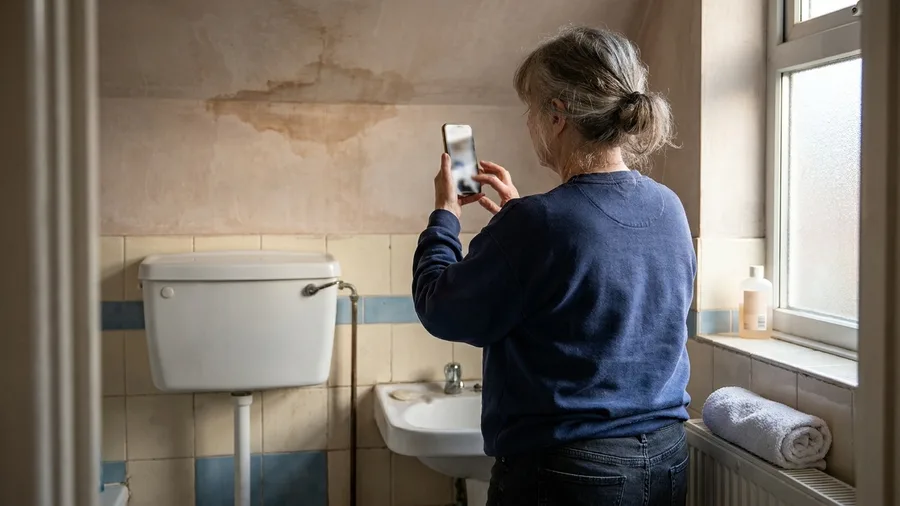
The thing that cannot wait is anything with water moving through it, because a leak keeps damaging the house long after the wet spot looks stable. A toilet that fills itself every few minutes is not a quirk; it is supply water running past a worn flapper and soaking the flange and subfloor underneath, quietly, while the bathroom looks fine.
What should get you moving this week is a water stain on the ceiling below the roof that spreads each time it rains, baseboard pulling loose from the wall, or a toilet cycling on its own overnight.
The dollars tell the story in three steps. A new flapper runs $150 to $250, a plumber's visit $110 to $200, and the subfloor rot you get from ignoring both runs $3,000 to $8,000. Real retirement budgets show the same pattern, where home repair costs sink finances faster than market dips. You are not paying for the flapper so much as buying your way out of the third number.
Your insurer sees a burst pipe and a slow seep as two different events, and one of them gets covered. Before you make the call, photograph the stain or the swollen trim with something in the frame showing the date, keep the files, and act now instead of at the end of the season.
For supply lines and anything behind drywall, book a licensed plumber. A handyman at $60 to $95 an hour is a bargain only on jobs that do not need a license, and this is not one of them.
⚠️ COMMON MISTAKE
The stain you paint over
Painting a ceiling ring before the source is fixed costs $30 and destroys the evidence an adjuster and a roofer both need. Photograph it, note the date, and leave it visible until someone qualified has looked at it.
Grab Bars and Railings Are Not Optional

The same bathroom that hides a slow leak is where the other risk that ends independent living waits, and that risk is a fall. What makes the house safer right now is grab bars, rails and light, and it is the highest-value work you can do at 70.
Think about what one fall actually costs. It is the event that turns a homeowner into a care arrangement – a broken hip, a hospital stay, months of help – and it can happen in a single afternoon on a wet tile floor. A repair protects the house. A grab bar protects the life inside it.
Put bars in the tub and beside the toilet, $150 to $400 each installed, anchored into studs or into blocking added behind the drywall. Handrails on both sides of every stair run $300 to $700 per side. Motion-sensor night lights along the hall and stair route cost $40 to $120 and come on before you find the switch.
The suction-cup bar is not a substitute for any of it. It releases under a real fall load, which is the only load it will ever be asked to carry, so it gives out precisely when you need it to hold.
Renters can ask the landlord in writing, and a reasonable landlord usually agrees, since bars add value. Owners can bundle the bars, rails and lights into one handyman visit and pay a single two-hour minimum instead of three separate calls. Start with the tub bar; add the rest when the budget allows.
Four Numbers Worth Knowing Before You Hire
Typical US rates on jobs this house will need
Typical US cost ranges; confirm local rates with two or three quotes.
A Roof Leak Is a Countdown, Not a Maybe

Water coming in from above on every hard rain buys you time in weeks, not a year, so the honest answer is that a leaking roof cannot be deferred and a dry aging one can. The stain that widens after each storm means the water is already inside. Stop treating the repair and the replacement as one decision.
Patch the leak now at $350 to $700, and start a separate savings clock for the $9,000 to $16,000 full replacement. What tells you which one you have: a dark ring that grows after rain, soft or damp sheathing up in the attic, grit collecting in a gutter under a downspout. The inspection that sorts it costs $150 to $300.
Insurance is where the timing gets sharp. Storm damage is one thing; rot that has been seeping for years is another, and one of them gets paid. Photograph everything, get a roofer's written opinion, then call the insurer.
Old Wiring and Tripping Breakers Need an Electrician
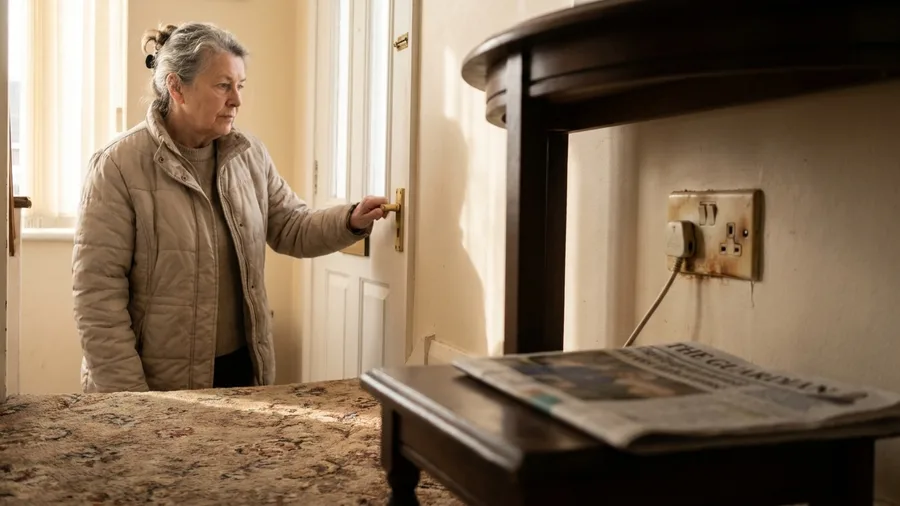
Water comes down from the roof; electricity burns up from inside the wall, and it always warns you first. A warm outlet cover, a faint burning smell near a switch, a breaker that trips again and again, buzzing you can hear when the room is quiet, brown scorch marks around a plug, lights that dim when the refrigerator kicks on – that last one is not the fridge's fault. Every item on that list is a fire risk, not an annoyance, and it sits in second place behind water on this whole triage sheet for a reason: the damage it threatens is the kind you cannot undo with a mop.
The prices are smaller than they feel. A service call runs $110-$200. Replacing a GFCI or AFCI outlet – the kind that shuts itself off when current goes somewhere it shouldn't – runs $200-$350 each installed. Panel work gets quoted per job, not by the hour, so ask for a written scope before anyone touches the box.
One rule holds all of it: you do not open the panel and you do not replace a breaker yourself. If a breaker keeps tripping, stop using that circuit entirely and run an extension cord to a working outlet across the house. One cold room is cheaper than the alternative.
When you call, ask for a state-licensed electrician and write the license number down before you book the appointment. A handyman's $60-$95 hourly rate is genuinely a bargain on a gutter. It has no business near a panel.
What Each Year of Waiting Adds
Typical US costs from this house's own list
Typical US cost ranges; local quotes will vary.
Cosmetic Wear Can Wait a Year or More

Once water, fire and falls are handled, the rest of the house can be sorted by what one more year of waiting actually costs – and for the cosmetic list, the answer is close to nothing. Interior paint does not rot when it fades. Worn carpet does not catch fire. A dated kitchen sits there looking dated, which costs pride and nothing else. Cabinet fronts, light fixtures, landscaping – same verdict. None of them damages the structure, none of them endangers the person walking through it, so none of them outrank a running toilet or a warm outlet cover.
That does not make them free. Whole-house interior paint runs $2,500-$5,000. Carpet for a house this size, $3,000-$6,000. Cabinet refacing, $5,000-$9,000. Those are real numbers on a fixed income, which is exactly why the list goes last – not why it never happens.
Here is the move. Take the monthly difference between your income and your bills – say $200 – and route it to the repair fund instead of the paint. When the urgent list is empty and the fund has three figures in it, open the cosmetic list again and pick one line.
Waiting is a decision you make on purpose, not a failure to get around to it. Put a date on the calendar a year out and let it sit.
Roof Replacement Can Wait If It's Dry

A roof can be dry and old at the same time, and a dry roof does not need replacing this year – it needs an inspection, a patch on any new leak, and a spot on the calendar one to three years out. You earn that deferral by testing for it. Stand in the attic on a bright day and look for daylight through the boards. Walk the yard and look for granules collecting at the bottom of the downspouts, like coarse sand. From the ground, look for shingles curling at the edges or losing their gravel face. Widespread curling or daylight means schedule it now; an active drip into a ceiling goes back to the fix-this-week pile.
The money makes the case for patience. Full replacement on a 1,900 sq ft ranch runs $9,000-$16,000. A patch runs $350-$700. The annual inspection runs $150-$300, and it is the cheapest line item in this whole article while being the one that decides the largest.
The trade-off is honest: waiting lets you save and collect three written quotes instead of taking the first one. It also gives a small leak time to rot the decking underneath, which turns a patch into a bigger bill. That is what the inspection is buying – a pair of eyes on the roof every year so the leak never gets that year.
Fix Now or Delay? The Roof Question
Fix now
- Daylight visible through the attic boards
- Shingles curling across whole slopes
- Granules filling the gutter below a downspout
- Any active leak into the ceiling or a wall
Delay and inspect
- Roof is past midpoint but dry inside
- No staining on ceilings or sheathing
- One patch handles an isolated flashing leak
- Saving toward replacement over 1–3 years
Deck and Driveway Sealing Slip a Season, Not Five

The wood and the pavement outside run on a season clock, not a year clock, so sealing is a one-season deferral and never a permanent skip. Five winters of water sitting in an open crack is what turns a $200-$500 driveway crack fill into $4,000-$8,000 of repaving, and turns $600-$1,200 of deck sealing into $4,000-$9,000 of board-and-rail replacement.
The gap is the whole point.
Those outdoor jobs have a narrow window in most of the country: dry weather, above 50°F, and a clear day in the forecast so the sealer can cure instead of washing off. Miss that window in the fall and the cracks sit open through the freeze and the thaw, widening a little each cycle, and you wait until spring to do a job you could have done in October for a third of the eventual bill. That is not a reason to rush a wet weekend. It is a reason to put the sealing on the calendar the same week you book the roof inspection.
What you can honestly do right now, before the first freeze: fill the driveway cracks and cover the grill. That is it. Cover the grill, not the whole deck – a tarp over boards that are still damp traps moisture and does more harm than leaving them be.
The Sealing Math — At a Glance
🪵 Deck seal
$600–$1,200
🔨 Board and rail replacement
$4,000–$9,000
🛣️ Driveway crack fill
$200–$500
🚧 Full repaving
$4,000–$8,000
🌡️ Application window
Dry, above 50°F
Rule of thumb
Seal on the cheap side of the range and you never meet the expensive side of it.
Pay Someone for Ladders, Attics, and Crawl Spaces
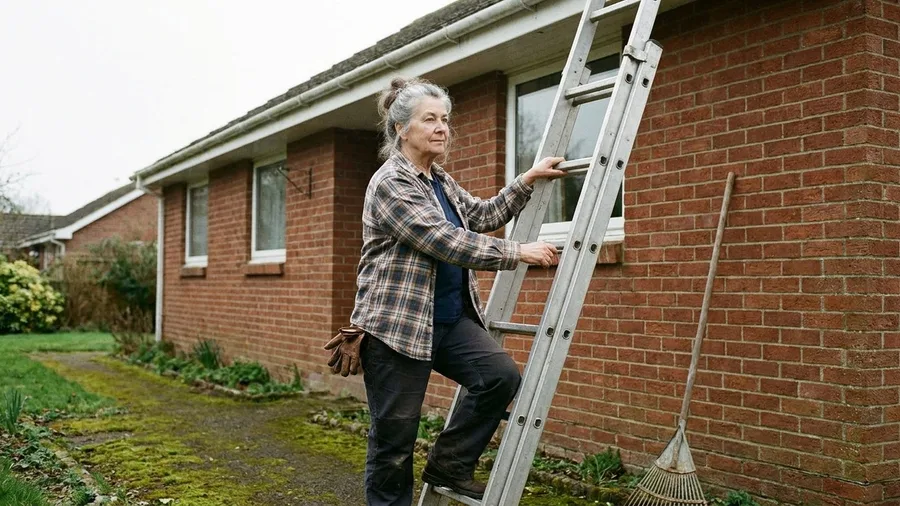
Sealing a deck and filling driveway cracks are jobs a homeowner can still schedule on their own terms. Gutters, limbs, attic units, crawl spaces: once a task needs a ladder, a low roof or a hatch in July, the work stops being the job and the access becomes the hazard. At 78 on a fixed income, the fall is what costs you the house, not a clogged downspout.
A gutter cleaning runs $150 to $350. Tree limb removal is $500 to $1,500. Annual HVAC service is $120 to $200, and that last one buys a $250 to $450 capacitor or contactor repair instead of a $6,000 to $12,000 system replacement. Fifteen minutes of annual service is the cheapest line on the whole list.
A handyman bills $60 to $95 an hour, usually with a two-hour minimum, so a visit that clears gutters and changes an HVAC filter costs you $120 to $190 and an afternoon you did not spend on a ladder. If the repair bills outpace the pension, low-stress side incomes for retirees can cover the gap without feeling like a job. A licensed plumber or electrician for anything inside the panel or behind a wall is a $110 to $200 service call.
The math tips fast. One misstep off a second-story gutter costs more in an ER copay and a lost season of independence than a decade of hiring the work out.
Even a capable DIYer with a full toolbox hires out anything above the first story or anything inside the electrical panel. Nobody's nerve needs to be tested at 75.
What to do this week: write down the jobs you have been climbing for, then find one handyman and put gutters, the attic filter change and any limb over the roof on a single visit.
🧾 How to Hand Off a Job Without Getting Burned
Verify the license
Look up the contractor's state license number on the licensing board's site before you call.
Ask for insurance
Request a certificate of insurance and read the dates; an expired certificate is no certificate.
Get three written estimates
Hand every contractor the same written scope so the quotes compare line to line.
Compare scope, not totals
The low bid often deletes decking repair, cleanup or permit costs from the job.
Pay in stages
Pay as each stage is completed, never the whole job upfront, and keep every receipt.
Photograph the finish
Date-stamped photos of the finished work go in the same folder as the damage photos.
The Cheapest Bid Is Rarely the Cheapest Job

The bid total tells you almost nothing about who will do the work well, so choose on the paperwork and the scope instead of the number at the bottom of the page.
Before work begins, ask for the state contractor license number and write it down. Five minutes on the state licensing board's website confirms whether the license is current and whether it covers the trade. Then ask for a certificate of insurance. That certificate is the line between the contractor's liability and your homeowner's policy when someone gets hurt on your roof.
Get two or three written estimates and read the scope line by line, not the total. One $400 bid may cover a patch and labor; another $400 bid may cover the same patch and leave the decking out. Same number, different job.
Pay in stages as each piece of work is completed, never all upfront. Keep the signed contract, every receipt and the damage photos in one folder, alongside the water and roof shots. Red flags are easy to spot: cash-only, no written estimate, pressure to sign today, and the door-to-door offer in the week after a storm.
One more call worth making for a recurring job: your local Area Agency on Aging can tell you whether contractor referrals or repair help exist in your county.
💡 PRO TIP
The folder that pays for itself
One physical folder holding the license numbers, insurance certificates, contracts, receipts and dated photos does more for you than any warranty. It is what an adjuster, a CPA or a lawyer will ask for first, and it takes an afternoon to assemble.
Budget Repairs Like a Bill, Not a Surprise

A fixed income of $3,300 a month can pay for a house's repairs, but only if the money is treated as a bill that comes due every month rather than a surprise that lands twice a year.
Take $200 to $300 out of that $3,300 on the same date each month and move it to a separate savings account before anything else gets paid. At $250 a month you have $1,500 in six, and $1,500 covers the low end of a water heater replacement outright. The unit in this house carries a 2010 date on its label, which puts it somewhere around fourteen or fifteen years old against a typical service life of eight to twelve. The tank does not announce itself before it goes; it rusts from the inside and one morning the garage floor is wet. Having $1,200 to $2,200 already sitting there turns that morning into an inconvenience instead of a credit card balance you carry for two years.
Spend it in the same sequence this article has walked. Water intrusion first, then electrical and fire risk, then fall risk, then the roof, then anything cosmetic. That order applied to the account means the first four months of saving belong to the water heater and the running toilet, not the paint.
For the jobs bigger than a year of saving, the help exists but the rules are not yours to assume. Call the local Area Agency on Aging and your state housing finance agency, describe the household and the repair, and let them state what you qualify for. Eligibility, income cutoffs and waitlists differ by state and county, and only those offices can confirm them.
One line not to cross: do not borrow against a house that is owned outright to fund cosmetic work while the safety list is still open. A dated kitchen does not put you on the floor. A missing grab bar does.
Frequently Asked Questions
Should I replace my roof or patch it if I'm in my 70s?
Patch anything that is actively leaking now, and treat full replacement as a separate savings goal unless the attic shows daylight or the shingles are curling across whole slopes. On a dry roof, waiting a year or two to collect three quotes and save the cash is the better trade. A leaking roof goes back to the top of the list without debate.
How much should I keep set aside for home repairs on a fixed income?
Aim for $200–$300 a month if your income allows it, held in a separate account you do not spend from casually. That covers a $1,200–$2,200 water heater in under a year, which is the most likely large expense in an older house. If that number is out of reach, start at $50 and keep the account separate anyway.
Is it worth paying a handyman or should I use a licensed contractor?
It depends on the job, not the price. A handyman at $60–$95 an hour is fine for grab bars, sealing, painting and hanging things. Anything behind a wall, on the roof, or inside the electrical panel needs a licensed plumber, roofer or electrician, and their $110–$200 service call is the cheaper risk every time.
Can I get help paying for home repairs as a senior?
Possibly, but the rules vary by state and by program, so confirm eligibility with your local Area Agency on Aging and your state housing finance agency rather than going on what a neighbor was told. Bring your income documents and a written list of the repairs you need. Those two offices will tell you what actually exists where you live.
How do I know if a contractor is legitimate?
Look up the license number on your state contractor licensing board's site and ask for a certificate of insurance with current dates before work starts. Get two or three written estimates on the same written scope and compare them line by line. Cash-only requests, no written estimate, or pressure to sign today are reasons to walk away.
What if I can only afford one repair this year?
Fix the water. An active leak, a running toilet or a ceiling stain does the most damage per dollar of any item on the list, and subfloor rot runs $3,000–$8,000 against $150–$250 for the flapper that would have prevented it. If there is no water problem, put the money toward grab bars and stair rails instead.
Walk the house once with a pencil and rank by what waiting costs
Start with a 30-minute walk-through, pencil and one sheet of paper. Every room, the attic hatch, the electrical panel, the stair. Anything involving water, electrical or a fall risk goes to the top of the sheet, above every cosmetic line.
Then make two calls: the state contractor licensing board, to confirm any contractor holds a current license number, and the local Area Agency on Aging, to ask what repair help this household qualifies for. Their answer beats any assumption.
The list ends where it began: the running toilet at $150 to $250, the ceiling ring that grows after rain. The two cheapest items on the whole sheet are the two that decide whether this house stays affordable. On this income the house is not maintained by spending more. It is maintained by ranking better: risk first, looks later, the ladder handed to someone else.
Do the walk-through this week
Take the pencil, rank water, electrical and fall risk first, then make the two calls — the licensing board and the Area Agency on Aging. Everything else on the list can wait its turn.