

The first HOA bill after the last mortgage payment lands on the first of the month, and it is $425, same as every month before it. The retirement spreadsheet already has its answer: mortgage retires at 65, housing line goes to zero, everything else gets planned around that gap.
The dues on a 1,350-square-foot two-bedroom in a typical US metro do not retire with the loan. They are $5,100 a year, still due the month after the final payment clears.
And they are not a service charge bolted onto a free house. They are a housing cost that escalates about 4% a year, reaching roughly $931 a month by year 20 and totaling about $151,900 across a 20-year retirement, before any special assessment.
So price the 20 years, read the reserve study and operating budget behind the fee, and set that carrying cost against the income that arrives whether markets cooperate or not. Do that and you will know whether this building fits, or whether the search moves on.
Funded Reserves vs. Thin Reserves
Reserve contribution funded
- Annual set-aside matches the reserve study recommendation
- Dues still rise with costs, but steadily
- Assessment odds drop; you can budget 4% and sleep
- The $6,000 roof letter is unlikely to land in a down year
Reserve contribution deferred
- Dues held flat by skipping the recommended set-aside
- Every roof, paving job, or boiler becomes a vote
- Owners fund the project through a lump-sum special assessment
- The cheapest fee is often the symptom, not the bargain
Dues Are a Mortgage-Sized Retirement Line

Four hundred and twenty-five dollars a month is the number printed on the listing, on a 1,350-square-foot two-bedroom in a typical metro, and it is the number the retirement math has to carry for as long as the deed is in the reader's name. That works out to $5,100 a year.
The monthly figure is not a one-time settlement. A title company takes its cut once and the page turns; there is no final check that closes out the association, no statement that zeroes the balance and frees the housing line. The same $425 is assessed again the following January, and the January after that.
At 4% a year, the number climbs the way few fixed costs do. Ten years out it reaches about $629 a month. Year 20 lands near $931. Total those payments across a 20-year retirement and the running sum comes to roughly $151,900, which is the same territory as a second mortgage.
it arrives $425 at a time, then $438, then $451, each bump too small to trip the alarm. A lump sum would stop anyone cold. The monthly drip does not.
In the budget, though, it is a recurring housing cost, and it competes directly with the food, medical, and travel columns every month of the plan. The closing costs are behind you now. The fee is not.
The Fee Disappears Into the Monthly Payment

While the loan is still running, the association gets its money through escrow, tucked inside the same principal-and-interest payment that leaves the checking account on the first of every month. One debit, one line on the statement. The dues portion never gets its own row, so it never appears in a spreadsheet the reader builds from what they can see.
Escrow also swallows the annual increase. When the association raises dues, the servicer recalculates the escrow slice, the total payment ticks up a few dollars, and what lands in the reader's head is a rounding change, not a hike. Twelve years of 4% increases register as noise.
Then the mortgage retires, the escrow account closes, and the cushion is gone. What does not go is the fee. It comes back as a bill in the reader's own name, mailed or emailed by the association, due the first of the month, every month for the rest of the 20 years.
So a plan that writes "paid-off house: $0" understates the housing line by $5,100 in the first year of retirement alone, then by more each year after. The number was never missing. It was hiding in a payment the reader was told would end.
Dues Cover Some Costs, Not All

That $425 buys real things: the landscapers who keep the walkways trimmed, exterior paint and siding on the shared walls, water and trash, master insurance covering the buildings themselves, and the pool and clubhouse. The reader should see the value before deciding it is too high.
Then there is what it does not buy. Property taxes stay in the owner's name, at the county's assessment schedule and its own pace of increases. Interior repairs, the water heater, the furnace, the bathroom floor, all come out of the owner's pocket. Utilities the association does not bundle arrive as separate bills. Those are two budget lines, not one, and the second is invisible in the dues figure.
The insurance point trips people up. Master insurance covers the shell and common areas; the cabinets, the flooring, the furnishings, the belongings inside, are on the owner's separate policy with its own premium, and that premium moves on its own clock.
The fix is in how the plan is laid out. One line reading "HOA" buries three other costs that escalate independently, so the budget should carry a $5,100 line for the dues and separate rows for property taxes, interior reserves, and the utilities the fee leaves behind.
💡 PRO TIP
Read the escrow line before you close
Your escrow analysis statement itemizes the association disbursement inside the monthly payment. That single line is the number to carry into the retirement budget, not the dues figure on the listing sheet.
Special Assessments Are the Hidden Second Bill

The monthly dues are a maintenance charge, not a ceiling. Nothing in the $425 stops the association from voting on a roof or a repaving job and sending every owner a bill for it, separate from the fee, with a due date on it.
In the example, that roof-and-paving project lands at $6,000 per owner. It arrives the way these things actually arrive: a board vote at a Tuesday meeting, a letter in the mailbox a few weeks later, a date by which the money is owed. The letter does not ask whether the year is convenient. You pay it in one lump, or you split it across 12 months at roughly $500 a month, stacked on top of the $425 that never stopped.
What the owner controls is the payment plan, not the charge. The association's exposure for a failed boiler or a roof past its service life does not shrink to fit what the monthly budget collects. When the work can no longer wait, the money comes from somewhere, and the somewhere is the owners.
The real damage is the timing, not the amount. Six thousand dollars in a good year is annoying; the same $6,000 in a year when the portfolio is down and the car just died turns a fixed-income plan into a forced withdrawal, selling assets at the worst moment to cover a bill nobody scheduled.
Small Annual Increases Compound Over Retirement

The escalator does the quiet damage. Four percent a year sounds like nothing on a $425 bill, and in year two it is: the dues move to about $442 and the change barely registers. Run the same percentage out and the picture changes.
Ten years in, that same condo, same square footage, no added service and no upgrade, bills about $629 a month. At year 20 it is roughly $931. The yearly math is starker still: $5,100 today, close to $7,550 by year 10, past $11,000 by year 20, for the identical set of services.
Now put that against the income side of the plan. A pension without a cost-of-living adjustment pays the same in year 20 as in year one. So does an annuity payout, and so does the interest off a bond ladder. The dues line climbs by roughly 129% across the 20-year budget while the money covering it may not climb at all.
That is arithmetic, not opinion, and it is why the percentage in the offering document deserves more attention than the dollar figure. The one-time shock can be planned around. A number that grows every year against income that does not is the part that decides whether year 15 holds up.
Six Questions a Reserve Study Answers
Grade the building, not the marketing brochure.
Weak Reserves Shift Risk to Owners

Whether that escalator stays smooth or jumps depends on what the association has already saved. The reserve study is where you find out: the board's own estimate of when the roof, the paving, and the mechanicals wear out, and what it would cost to replace them, plus the yearly amount it says to set aside now to have the cash ready.
Pull the current reserve study and the operating budget together and put two numbers side by side: the contribution the study recommends, and the amount the budget actually collects for reserves. A gap between them is the warning light. Thin reserves for roofs and paving leave the board only two exits, raise dues or levy a special assessment, and the board takes one of them at the meeting where the work can no longer wait.
The counterweight is real. A well-funded association still raises dues as costs rise, so the $425 still becomes $629 and then $931. What it changes is the odds: the chance of that $6,000 letter landing in your worst year is materially lower when the money is already sitting in the reserve account.
So the fee alone tells you almost nothing. The gap between what the study recommends and what the budget collects tells you which building you are actually buying.
⚠️ COMMON MISTAKE
The cheapest fee is the symptom
The simplest way to hold dues at $425 is to stop funding what the reserve study says to fund. The bill does not disappear. It moves to a later year, in a bigger number, with a special assessment attached.
Amenities Cost You Whether You Use Them
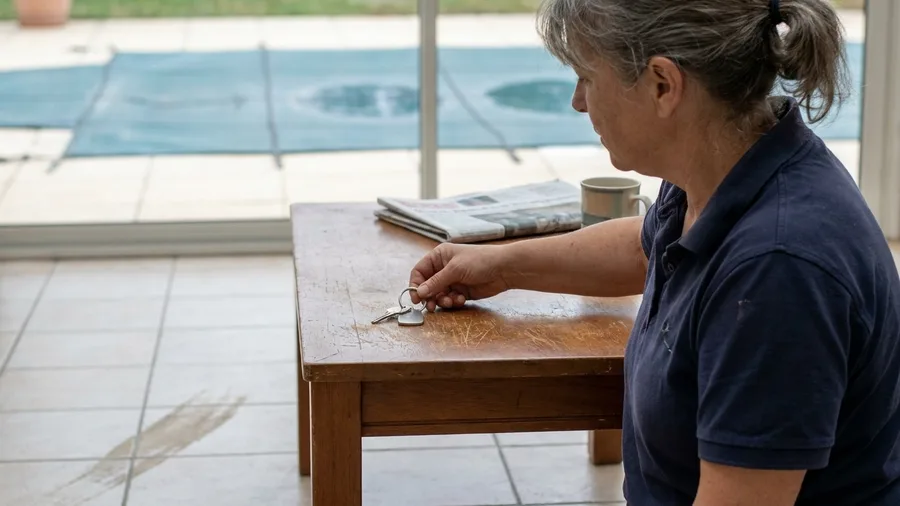
The pool and clubhouse sit inside the same $425 as the landscaping, the exterior painting, the water and trash, and the master insurance policy on the shared structure. One fee, no itemization, no opt-out box to check. A retiree who never once swims and never books the clubhouse pays exactly what the neighbor who is in the water every morning pays, because the cost is baked into the fee rather than metered by use.
The same arrangement claims the shared structure reserves. For one owner the reserve money is protecting a roof over their head. For another it is largely underwriting a recreation budget they will not spend a dime of time on.
Run the comparison the listing page will not run for you. Price the identical unit in a building without the pool and clubhouse, then take that lower figure and put it beside the same building's reserve study. A cheaper fee with thin reserves is not cheaper – it is the $6,000 assessment deferred by a year or two, waiting for a board vote.
This cuts both ways, and honestly. If the pool and clubhouse are where the retirement days actually go, the amenity is worth what it costs, and the fee is buying something. If they are not – if the reader is paying for a lifestyle the guaranteed income cannot also fund – then the amenity is a pure line item with nothing on the other side of it.
The move is to decide that before making an offer, when choosing between buildings is still a thing that can be done.
A Paid-Off Mortgage Still Leaves HOA Dues

The biggest housing number in a twenty-year retirement plan can belong to a building the reader owns outright, because the association keeps charging whether or not a bank is involved. Picture the payoff month: the last principal-and-interest payment clears, the lender sends a release, and the same statement the following month still shows $425 due. Nothing about that changes for two decades.
In the example, the dues run $5,100 a year, and that figure sits at the top of the plan before a single grocery or medical cost is counted.
Then come the costs the association never touches. Property taxes reassess on the county's schedule, owner's insurance covers the interior and contents the master policy excludes, and interior repairs — a water heater, a failed appliance, a bathroom that needs retiling — fall entirely to the owner. And underneath all of it sits the standing risk of a $6,000 special assessment arriving in whichever year the roof finally goes.
The dues are usually the largest fixed housing expense in the whole plan, larger than taxes in many markets, and they are the one line that never drops to zero. What the mortgage payoff removes is principal and interest. It cannot remove the association, because the association is not a lender — it is a standing obligation tied to the deed, and it renews every January whether the owner is healthy, traveling, or gone.
A plan that works carries a real dollar figure in the housing row for all twenty years, escalated at 4% so the $425 becomes $629 by year ten and about $931 by year twenty, with a separate line reserved for assessment exposure, since retirement fixes the work problem only to start new ones. Two rows, not one. The row labeled paid-off house is the one most retirement budgets still fill in with zero — and that zero is the most expensive assumption in the file.
📉 Tracing the Dues Through Twenty Years
Year 1
$425 a month, $5,100 a year, plus taxes and interior costs.
Year 5
About $517 a month after escalation, roughly $6,200 a year.
Year 10
About $629 a month, roughly $7,550 a year, same services.
Year 15
About $766 a month, with roofs and paving aging into the reserve study.
Year 20
About $931 a month, more than $11,000 a year, on income that may not have moved.
Total
About $151,900 collected across the 20 years, before any special assessment.
Compare the Documents, Not Just the Fee

The fee quoted in a listing tells you almost nothing about which of two similar buildings will still be affordable in year twenty, because the same $425 can sit on top of very different books.
One association can be collecting it while holding the full reserve for roofs and paving the study calls for. Another can be collecting the identical amount while one project away from a $6,000 bill to every owner — a gap that only shows up in the paperwork.
Before any offer goes in, request five things: the current reserve study, the operating budget, board minutes for the last two years, the master insurance policy, and the history of past special assessments. Ask for them as a package, in writing, and give the property manager a week.
The minutes are where the tells live. A paving project pushed to next year. A vote to hold dues at $425 by skipping the reserve contribution the study recommended. A pending lawsuit, or a consultant's line about the roof reaching the end of its service life. Each one is a future bill with a date attached.
Read them in a fixed order. Reserve study first, to see whether the recommended annual contribution and the amount actually set aside match. Budget second, for what is really being collected. Minutes third, for what the board has been arguing about.
A low fee can be the symptom rather than the bargain. The easiest way to keep dues at $425 is to stop funding what the reserve study says to fund, and the money does not vanish — it waits, and it comes back as an assessment in a year when the owner can least afford one.
🌱 GROWING TIP
Start the escalation fund this year
If you already own, open a separate account and fund it with the annual dues increase, roughly $17 a month in year one. By year 10 it holds the first $6,000 assessment without touching the portfolio.
The HOA Only Works If the Budget Holds

Line the building, the fee and the reserve position up against guaranteed income, and the fee alone stops being the deciding number.
It holds up when the reserve study is funded at the level it recommends, the pool and clubhouse are amenities the owner will actually swim in and book, and the dues still clear the income line at roughly $629 a month in year 10 and about $931 in year 20. That last part is the one a shopper skips. A budget that stretches to cover $5,100 this year but not $11,000 in year 20 is not a budget for this building.
It fails when the reserve study shows a gap between what is recommended and what the budget sets aside, dues are already climbing, and the assessment risk lands on an income that does not move. Affordable at signing, unaffordable by year 15.
The owner who signs has slack in guaranteed income that outruns the escalator, a real use for the amenities, and paperwork showing the reserve money is there. The owner who walks has a budget that only works at $425 – or a building that cannot show the reserve contribution it recommends. Both walk away for the same reason: the fee does not survive the next 20 years.
Frequently Asked Questions
How much should I budget for HOA fees in retirement?
Budget the escalation, not the current fee. Take the quoted monthly dues, apply 4% a year across the length of your retirement plan, and budget the year-10 or year-15 figure, because that is the number you will actually be paying with your feet up. On $425 a month that means budgeting about $931 by year 20.
Do HOA dues stop when I pay off my mortgage?
No. The mortgage payoff removes principal and interest; the association is a separate charge that continues for as long as you own the unit. When the escrow account closes out, the dues reappear as a standalone monthly bill, usually on the first of the month.
What is a special assessment and how likely is one?
A special assessment is a charge outside monthly dues when the association needs money it has not reserved, often for a roof, paving, or a boiler. The likelihood depends almost entirely on whether the reserve study is funded. Ask for the current funded percentage and read the last two years of board minutes before you buy.
How do I read an HOA reserve study?
Find two numbers: the recommended annual reserve contribution and what the operating budget actually sets aside. Compare them. Then look at the funded percentage and the date of the next big-ticket replacement, because a roof due in three years is an assessment on a known deadline.
Is a higher HOA fee always worse?
No. A higher fee that funds the reserve study properly usually beats a lower fee doing the opposite, because the money not collected shows up later as a special assessment with your name on it. Compare the fee and the funded percentage together, never the fee alone.
Should the HOA fee stop me from retiring?
It should not stop you; it should be in the budget at its escalating figure plus an assessment reserve. If the full 20-year carrying cost still leaves your guaranteed income covering essentials, the plan holds. If it only works at year-one numbers, the plan does not hold.
The 20-Year Carry Test Decides the Condo
Run the decision rule in full: take the 20-year dues total, about $151,900 on this example at 4% escalation, add one realistic special assessment, and set the sum against guaranteed retirement income. Choose the HOA only if the budget still holds after both.
If you already own, run the same arithmetic backwards. Open a separate escalation-and-assessment fund this year, funded for the 4% drift and the next $6,000 letter, before the letter arrives.
The line that read zero at the start of the plan now reads $5,100 and climbing. That is the honest number, and the only question left is whether the income covers it. The fee was never the trap. The trap was the fee with nothing behind it and no escalator in the budget.
Run the year-20 number before you sign
Take the quoted monthly dues, escalate them 4% for two decades, add one assessment, and set that total against your guaranteed income. Then come back and read the reserve-study section again.