

Quiet wealth is not a personality, it is a ledger you can read if you know where to look.
Picture a used $20,000 to $28,000 sedan parked next to a new $65,000 to $80,000 luxury SUV, and a 2,000 to 2,500 square foot house in a good school district a few streets from a 4,000 to 5,000 square foot place with a pool. Which one is the model to copy, and which is the deprivation? The sticker price answers neither question. The luxury SUV is worth roughly $35,000 to $45,000 after three years, and that bigger house carries about $8,000 to $15,000 more a year in insurance, heat and maintenance.
So the modest car and the ordinary house are not a personality type. They are a way of keeping money available for something you value more than a badge, and an upgrade earns its place only when the upgrade itself is the goal rather than the reaction it draws.
By the end you will be able to run any car or house through three questions: what it costs to keep, what signal it sends, and which future option it quietly spends. Then you pay only for the upgrades that clear the test.
Quick Tips Before You Start
Price the loss, not the sticker
Look up what the car is worth after three years before you look at the monthly payment.
Add the annual carrying cost
Insurance, heat, maintenance and pool equipment run $8,000 to $15,000 a year on the bigger house.
Separate signal from use
Write down what the upgrade does for you that has nothing to do with how it looks to others.
Do the maintenance, not the trade-up
A well-kept old car is cheaper than a neglected new one plus a payment on the next one.
Protect savings first
An upgrade is affordable when your savings rate and emergency fund stay intact afterward.
The Money You Keep
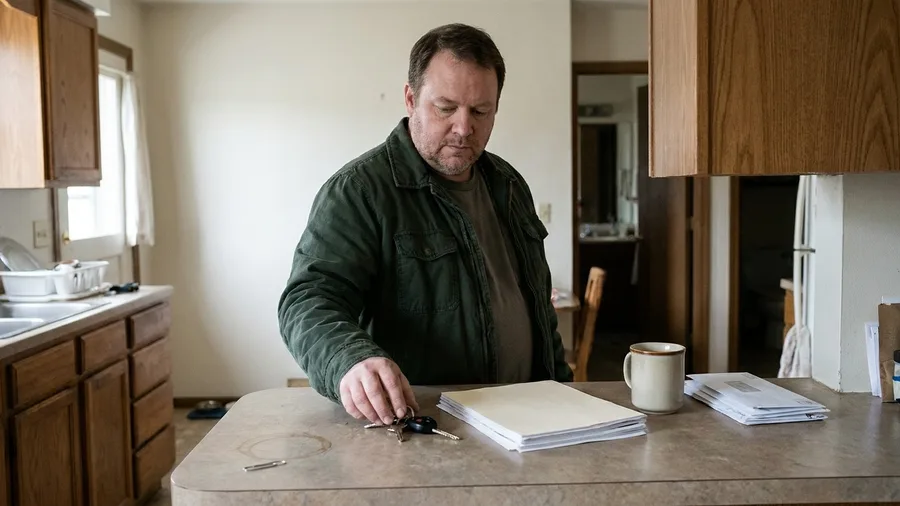
Every upgrade has two numbers: what it costs to get, and what it costs to keep. Most people only look at the first one, which is why the second one ambushes them in year two.
This first group is the balance-sheet half. No talk about status or feelings yet — just what is left over after the purchase, the depreciation and the annual bills have all taken their turn.
1. Depreciation Turns the New Car Into a Loss

The sticker price feels like the cost, but the loss gets set the day you drive off the lot. A new luxury SUV priced around $70,000 is worth somewhere in the $35,000 to $45,000 range three years later, so most of what you paid is already gone before the plates are dirty.
The used sedan sidesteps the worst of it.
A $20,000 to $28,000 used car kept eight years avoids the drop the first owner already swallowed, and it still holds around $14,000 to $18,000. Leasing or buying through a business moves the timing and the cash flow, but the value leaves either way. If you want the car itself, run your own resale numbers with a fee-only financial planner before signing; if you only want the reaction it gets, that decision costs less than you think.
💡 Tip: Check the three-year resale figure on any model before you test drive it. The number is free to look up and it changes the deal.
| Cost item | Boring choice | Flashy choice |
|---|---|---|
| Car purchase | $20,000–$28,000 used sedan | $65,000–$80,000 new luxury SUV |
| Car value after 3 years | $14,000–$18,000 (kept 8 years) | $35,000–$45,000 |
| House size | 2,000–2,500 sq ft, good school district | 4,000–5,000 sq ft with pool |
| Extra annual house cost | $0 | $8,000–$15,000 (insurance, heat, upkeep) |
| Insurance basis | Lower replacement cost | Higher replacement cost, plus pool and specialty parts |
| Money left liquid | $40,000–$55,000 car gap plus the annual house difference | Spent or committed |
2. Ordinary Houses Carry Lower Ongoing Costs

The belief is that the house payment is the finish line. Ownership keeps charging every single year: property tax, insurance, utilities, a roof, a furnace, a pool pump. Maintenance doesn't stop when the loan does.
Picture the two houses side by side. On the 4,000 to 5,000 square foot one with a pool, all those bills run around $8,000 to $15,000 more each year than on an ordinary 2,000 to 2,500 square foot house. More rooms mean more surface, more roof, more systems to replace, and the pool has its own steady appetite for chemicals, electricity and repairs.
But the smaller house may already be the expensive one.
The school district premium can cost you more than the extra square footage saves, so the $8,000 to $15,000 yearly gap is what the upgrade spends: the larger house buys space and a pool, not automatic financial virtue. Before deciding, price the full annual bill on whichever house you're considering.
💡 Tip: Ask the seller for the last twelve months of utility bills before you make an offer. It is the cheapest inspection you will ever run.
💡 PRO TIP
Compare the five-year carry, not the sticker
Take the purchase price, add five years of insurance, fuel or utilities, and maintenance, then subtract the resale value. That single number is the real cost of the upgrade — and it is the number worth arguing about.
3. The Unspent Money Stays Available for Later

Roughly $40,000 to $55,000 is the distance between a solid used car and a new luxury one. Unspent, that money sits in your account well before any emergency arrives.
It protects you in a way a nicer driveway never will. It's a cushion if a job disappears, funding to leave a miserable one, or three or four months you could take off without panic. The second gap quietly tops it up, and each year you skip the bigger house, another $8,000 to $15,000 gets saved or invested instead of being consumed by rooms you don't use and a pool you once thought you'd enjoy.
This is where the trade-off lives.
The boring choice turns present income into future choices; the upgrade turns future choices into present use or display. Past a certain cushion, that saved money is meant to buy something you value, whether that's a better car or a better house. Before you deprioritize the whole thing, ask what the option is actually worth to you.
📅 Reviewing your baseline once a year
Pull the last 12 months of statements
One sitting, all accounts, no judgment — you are looking for the fixed costs that grew.
List every recurring commitment
Insurance, utilities, subscriptions, dues and maintenance contracts, with the annual total.
Check the savings rate held
If the percentage saved dropped while income rose, the baseline ratcheted upward.
Check the emergency fund grew
If the cushion did not grow in a good year, the upgrade is eating it.
Decide one thing to move back
Pick a single cost to cut or downgrade, and set the change for next month.
4. Insurance and Repairs Scale With the Price

The ones that arrive every year, quietly, long after the purchase high has faded. Insurance is the first. Premiums track what it would cost to replace the thing, so the $65,000-$80,000 luxury SUV and the 4,000-5,000 square foot house with a pool both carry fatter insurance bills than the $20,000-$28,000 sedan and the ordinary house they sit beside. That gap does not go away when the loan does.
Then there are parts and labor. A bumper sensor on a luxury brand, a piece of specialty glass, the pool pump that dies in July, the custom roofline that needs a specialist rather than the guy down the street, all of it carries a premium because the replacement is priced to the car and the house, not to the driver's paycheck. I watched a friend budget carefully for a used luxury SUV, buy it at what felt like a steal, and then get a $1,900 repair quote for one sensor and a cracked headlight housing eight months in. The sticker had been the easy part.
Here is the part that should change the math. These bills keep coming after the car is paid off and after the mortgage is gone. A paid-off luxury SUV still costs more to insure and fix than a paid-off sedan, every single year, for as long as it is owned. The upgrade's sticker was the entry fee. The annual carrying cost is the subscription, and it renews whether or not the driver is still excited about the car.
One honest counterweight: a neglected boring car can cost more than a well-maintained fancy one. Deferred maintenance, cheap tires, skipped oil changes, and the $30 savings on the budget part turn into repair bills later. Frugality is not the same as skipping service. The point is not that the ordinary car is free to keep. It is that the ordinary car's bills are smaller and more predictable, and the fancy one's are larger and arrive whenever they feel like it.
So before signing for the larger house or the loaded SUV, price the annual bills on top of the purchase. Add up insurance, the maintenance schedule, and one realistic repair for the first three years, then see whether that number still feels worth it. If the thing itself is what is wanted, the number is the price of admission. If the subscription is a surprise, it is better to know about it now.
💡 Tip: Get an insurance quote on the exact model and VIN before you sign anything. The premium can swing by hundreds a year between two similar cars.
What Each Upgrade Actually Buys
Quiet choice
- $40,000–$55,000 car gap stays liquid
- $8,000–$15,000 a year in house costs stays saved
- Lower insurance and repair bills
- Wider pool of future buyers or renters
- Room to change jobs or take a break
Flashy choice
- Depreciation locked in at purchase
- Bigger annual carrying cost, every year
- Higher replacement-cost premiums
- Narrower resale market for unusual features
- A baseline that is hard to walk back
Why They Don't Need to Show It
The first group was about what the money does. This group is about what the visibility does, which is a separate bill entirely.
A car and a house are signals whether or not you intend them to be. They tell strangers, salespeople, relatives and clients something about your balance sheet. That message has a cost and occasionally a payoff, and the quiet rich are simply running the math on both.
5. A Boring Car Doesn't Invite the Wrong Attention

Think twice before buying the car that announces you. Start with what the car says to a stranger across the parking lot. A plain $20,000-$28,000 sedan tells them nothing about your bank balance; a new $65,000-$80,000 luxury SUV tells them plenty, and not all of it is meant for you.
Cost is half the ledger. The other half is how other people treat what they can see. A car that reads expensive is a more attractive target, and a good sedan sitting in the lot does not draw the same second glance from someone deciding which window to try.
Then come the requests. Visible wealth turns acquaintances into borrowers and family into co-signers, and it never arrives at a convenient time. The friend who has never once mentioned money calls the month after the new SUV shows up.
The signal also cuts the other way. In some rooms the modest car reads as stingy or eccentric, and a client or a peer may mistake thrift for a lack of success. That is a real cost, paid in small social moments, and it is worth naming out loud.
None of it is about hiding. The car is a signal whether you intend one or not, and the quiet choice sends a cheaper signal that keeps you out of obligations you never asked for.
The timing is why this matters now. Every month you own the loud car is a month of strangers reading your balance sheet and a month of premium insurance and repairs on top. Trading down costs you one annoying weekend of listing and paperwork, and the cash difference is immediate.
So do the boring arithmetic before you sign anything. Price the insurance on the flashy one, add a year of expected repairs, and see what the signal is really costing you.
If the number is fine and the car itself is what you want, buy it. If you are buying the reaction it gets, you are paying monthly for an audience that never sends a check.
💡 Tip: If your work genuinely requires visible success, a well-kept mid-range car reads as competence without reading as cash.
6. Wealthy People Spend Where They See Value

I once watched a friend drive a decade-old sedan to a meeting, then write a check for his kid's tuition that would have covered a new SUV. He was not against nice things. He had simply moved that budget line somewhere private.
That is the move worth copying, and it starts smaller than anyone expects. Pick one thing you actually care about, put $50 a month toward it automatically, and leave the visible metal alone for now. A tiny, steady transfer beats a big intention you keep meaning to start.
The same logic scales up. The $40,000-$55,000 gap between the used car and the luxury one can cover tuition, a medical bill, a year of travel, or a few months of business runway. And yes, some people do buy the showy car because the car itself is the joy; that is a fine purchase, as long as you know which one you are making.
💡 Tip: Write down your three private priorities this month. If the upgrade does not outrank one of them, it has your answer.
Four ways this goes sideways
7. Quiet Wealth Doesn't Need to Prove Itself
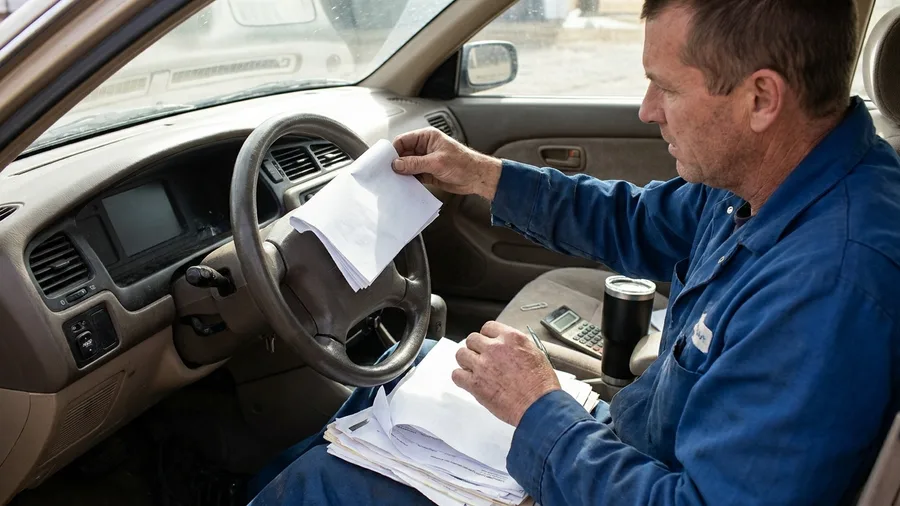
The move is a self-audit: once a quarter, write down every purchase over $100 you made in the last three months, then mark each one S for signal or A for asset and add up the S column. That's the whole exercise. Most people are surprised by the number, and that surprise is the point, because a signal you're not tracking is a subscription you never agreed to.
Having money and needing to look rich are two different conditions. The first can stay completely private. The second only exists if someone is watching, which means the moment you need to look rich, you've hired an audience and you're paying its salary in newer cars, a bigger house, club dues and the wardrobe that fits the room.
Those costs don't arrive as one bill. They arrive as a hundred small ones: the higher trim level, the second guest room you now furnish and heat, the dinners you host because the dining room is big enough to host them. You didn't decide to spend that money. You decided to look a certain way, and the spending followed.
New money tends to spend more on signals, and that's not a character flaw. The display is doing psychological work. It's proving something to a parent, a rival, an old version of yourself. That work is real, but it's also temporary, and the fixed costs it creates are not.
By the time money is genuinely secure, the signal has usually stopped paying. The audience already knows, or the owner has stopped caring what it thinks, and the newer car buys nothing that the old one didn't. That's the moment to stop renewing the subscription.
Here's the fork a single dollar faces. It can buy a signal, which is worth roughly what the audience's attention is worth and depreciates the same way. Or it can buy an asset, something that still holds value when nobody's looking. The quiet rich pick assets not because they're ascetic but because they ran the audit and the signal column came back near zero.
Start with one month instead of a quarter if a quarter feels long: pull your last thirty days of statements, mark the S's, and pick one to cancel before the next billing cycle. You don't have to cancel all of them. You just need to see the column once.
⚠️ COMMON MISTAKE
Don't confuse cheap with quiet
Skipping the $700 timing belt to look frugal is not the quiet wealth move — it is the expensive one wearing a disguise. Quiet means the maintenance is current and the upgrade is deliberate, not that the car is falling apart.
The Freedom You Protect

Here is the part that does not show up in any comparison table: what the quiet choice protects on the other side of the decision.
Money buys the ability to change your mind — about a job, a city, a relationship, a business. The next three sections are about keeping that ability, and about the one-way door an upgrade can quietly close.
8. Lifestyle Creep Is Hard to Reverse
It feels like a reward you've earned, and it is. The trouble is that the reward doesn't stay a reward. It becomes the baseline, and everything is now measured from a higher floor.
That's the mistake almost everyone makes, and it isn't foolishness. The $65,000-$80,000 SUV and the 4,000-5,000 sq ft house with a pool become the new normal within about a year, and going back to the $20,000-$28,000 sedan or the 2,000-2,500 sq ft house starts to feel like failure rather than freedom. Family expectations harden around the bigger house too, because now there's room for the holidays, the guests, the hosting, and the neighborhood comparisons run on square footage. Each upgrade adds fixed costs that are far easier to add than to remove, and that $8,000-$15,000 a year in house costs is a recurring commitment, not a one-time splurge.
The fix is one test before you sign: does the upgrade leave your savings rate and emergency fund exactly where they were? If yes, it's harmless and you can enjoy it. If it dips either one, you've spent future options, and the only honest question is whether it bought something you need more than those options.
9. An Ordinary House Is Easier to Sell or Rent

The belief is that the unusual house is the smarter asset because it is harder to find. It is harder to buy, too, and that is a different thing.
Run the sale in your head before you buy. A 4,000-5,000 square foot house with a pool is a short list of interested buyers, and each one is pricing the pool pump, the higher insurance and the summer utility bill alongside the square footage. The 2,000-2,500 square foot house in a good school district is on a longer list, because the school district is the feature most buyers are already shopping for. More offers, and a shorter stretch of months carrying two mortgages or an empty rental, is what liquidity means in a house. It is not a statistic you can look up; it is the difference between selling in a season and waiting for the one buyer who wants exactly this.
That ease matters at the moments you cannot schedule. A job offer two states away, a divorce, an illness, a retirement that arrives earlier than planned, and the ordinary house can be listed or rented to a wide pool of tenants without hunting for a niche buyer. The pool house may well appreciate more, in the right market, to the right buyer. That is a bet on that market and that buyer. It is not a liquidity feature, and it should not be counted as one on the way in.
At the check-in, a year or two after the purchase, look at three things and nothing else: how many comparable houses near yours sold in the last twelve months, how many days each sat on the market before going under contract, and what it would rent for if you had to move and keep it. Those three numbers tell you whether your exit is wide or narrow. The ordinary house buys options for the day you leave. The unique house buys a specific way of living, and a narrower door out.
💡 Tip: Before you buy, look up how long comparable homes nearby took to sell. Days-on-market is a free liquidity reading.
10. The Boring Choice Buys Time and Options

The point of the boring car and the modest house is not a fatter balance sheet. It is a Tuesday morning when the layoff email lands and your first thought is not the mortgage.
Stack the two gaps and the number gets real. The $40,000 to $55,000 you did not put into the luxury SUV sits in savings instead, and the $8,000 to $15,000 a year the smaller house does not cost you keeps feeding the same pot. That pool covers rent, groceries and utilities while you look for work, walk away from a bad manager, take three months off after a death in the family, or stop working at 62 instead of 67.
You can price the freedom in months. Take the gap, divide by your monthly expenses. If you spend $5,000 a month, $45,000 is roughly nine months where a lost job is an inconvenience instead of a crisis. That is the trade the quiet choices are actually making: present display swapped for future time.
If the car you drive to work every day makes you genuinely miserable, say so plainly. A car you resent is a daily cost, and no badge of virtue cancels it. The honest move is to buy the car you want, name what it spends, and cut somewhere the sacrifice does not hurt.
The endgame is having choices. An upgrade earns its place when the life it buys beats the options it costs. Anything less is paying for an audience that is not watching.
Frequently Asked Questions
Is it bad to buy a nice car if I can afford it?
No. If the purchase leaves your savings rate and emergency fund intact, and the car itself is what you want, buy it and enjoy it. The problem is buying the loss on a car you did not especially want, to impress people who are not paying your bills.
How much emergency fund should I build before upgrading anything?
Get one month of bare expenses into a separate account first — for many households that is $2,000 to $3,500 — then work toward three months. Roughly 6 in 10 US adults could cover a $400 emergency with cash as of the Fed's 2024 survey, and about 13% could not cover it at all. You want to be firmly in the first group.
Does a bigger house always cost more to own?
Not always, but usually. Property tax, insurance, heating and maintenance all scale with size and features, and a pool adds equipment and liability. A 4,000 to 5,000 square foot house with a pool typically runs $8,000 to $15,000 more a year than a 2,000 to 2,500 square foot house in a good school district.
Should I pay off debt or save before making an upgrade?
If you are carrying a credit card balance at around 20% APR, clearing it comes before any upgrade. That is a guaranteed return you will not beat. If the debt is a low-rate mortgage and the emergency fund is full, the order is yours to set against your own budget.
Can I lease instead and avoid the depreciation?
Leasing changes the timing and the cash flow; it does not remove the depreciation, which is baked into the monthly payment. It can suit someone who genuinely wants a new car every three years. Run the total cost of both paths against your own numbers before deciding.
How do I know if I am upgrading for me or for other people?
Name the person you picture seeing it. If there is a specific audience in mind, that is a signal purchase. If the answer is your own Tuesday commute, the third row for your kids, or a kitchen you actually cook in, it is a use purchase. Both are allowed — just know which one you are paying for.
Keep the boring car until the upgrade is the point
The rule is simple to state. Keep the boring car and the ordinary house when the money they free up buys something you value more, and upgrade only when the upgrade itself is the thing you want rather than a signal you are sending to a street full of people who are not watching.
The $20,000 to $28,000 sedan and the 2,000 to 2,500 square foot house are not the goal. They are the visible edge of a balance sheet that stays flexible, and the flexibility is what you are actually buying.
So run each upgrade through the same four questions: the depreciation, the annual carrying cost, the signal, and the option it spends. If the thing itself still wins after all four, buy it without guilt. If it does not, the sedan in the driveway is already the better answer.
Run the five-year carry before you sign
Take the car or house you are considering, add five years of insurance, fuel or utilities and maintenance, then subtract resale. Compare that number to the months of freedom the quiet choice would buy.