

Everyone else seems to have retirement income mapped out. You have a career's worth of skills and no idea which one a company will pay for this month.
Take the retired teacher with fifteen years in a classroom. Two hours a week in a small-group slot bills at $50 an hour, or a platform supplies the students at $25 to $35 and takes the marketing off the table.
The missing piece is rarely a degree. It is proof – two work samples, one former colleague reference and a one-page results list – plus a licensing or background check where it applies, insurance where it applies, and a rate quoted against what the work pays right now.
So the decision is which skill you can already stand behind, and what that skill pays for the schedule you want.
This month, before spending a dollar on training: write a short availability note at the going rate and send it to one warm contact. No new degree is needed for any of the examples here.
The Proof Kit: What to Have Ready
Sample number two
One sample is a story; two is a pattern. A lesson plan plus a parent note, or a finished-job photo plus a supply receipt.
Reference, lined up
Ask one former colleague now, not after a client says yes. Give them the job type and rate so the call is a minute long.
Rate by the hour
Quote the hourly number and the weekly hours in the same sentence: $50 an hour, two hours a week. Hourly alone invites haggling.
Which gate is yours
Repair work follows local licensing rules; companion work stays non-medical; audit help is document prep, not sign-off. Confirm the specific one with your state or local office.
Startup cost check
Invoicing software runs $20-$50 a month, plus any state filing fee. Ask the secretary of state or a licensed agent before the first invoice.
People-facing skills
These are the skills that need the least paperwork to start. A background check and reliable internet or transport usually clear the gate.
If you have spent years calming people down, running a classroom, or keeping a household together, the market pays for that patience. The rates below are illustrative part-time figures, not promises, but they are the range companies are quoting right now.
1. Calm customer handling pays in remote support

The worry here is that the years spent talking angry customers off the ledge were just a job, not a skill anyone still pays for. They pay for it every day. Remote customer support runs $18-$28/hour at 20-30 hours a week, and the qualifying asset is exactly that history, not a fresh credential.
What takes the willpower out is automating the setup before a single shift exists. Apply to two or three support vendors in one sitting, save the applications in a folder, and set a calendar reminder for a Tuesday follow-up so the searching does not depend on remembering to feel motivated. Employers check for a quiet room, dependable internet, and a cleared background check before shifts start, so line those up in the same week and leave them alone after.
A warm contact at a support vendor or an old employer can confirm the one thing an application cannot: the calm under pressure. Two work samples and that colleague's reference carry the claim. It fits people who can stay steady through back-to-back calls. It is a poor fit for anyone who wants to set their own hours from week one.
💡 Tip: Your proof test is two customer-service work samples and one former colleague reference. A warm contact at a support vendor or former employer can confirm the calm-under-pressure claim faster than any resume.
Support Work: The Details Before You Apply
What the setup costs
- Headset and wired backup: $40-$90 one time
- Background check: often paid by the vendor, confirm first
- Invoicing software if you contract: $20-$50/month
- Self-employment tax, quarterly, above $1,000 profit – ask a CPA
The first 30 days
- Expect 2-4 weeks from application to paid shift
- Paid training, usually 1-2 weeks, before paid queues
- Ask the vendor: paid per minute, per hour, or per ticket
- Get the hourly floor in writing before you log in
2. Caregiving patience commands companion-shift rates

Companion work through an agency pays $25-$40/hour, and the same customer-facing patience that can be sold from home over a phone line is what families are buying here, in person, at a higher band. The duties stay non-medical: company, meals, errands, light housekeeping. No clinical instructions.
The realistic review is a monthly look, not a daily scorecard. Once shifts start, check three things on the first of each month: hours logged against what the agency promised, mileage and drive time on the longer runs, and whether the lifting and transport are still manageable after a full shift. That last one matters most, because a background check and reliable transportation are the usual gates, but physical limits decide whether long shifts hold up for a year.
Two cautions stay fixed no matter how the schedule looks. The scope is bounded by what families and agencies allow, so medical tasks sit outside it and always go to a clinician. And a reference from family-care or volunteer work, plus a warm agency contact, is the proof that gets a first shift. Patience is the asset. Lifting and transport are the verdict.
If the monthly check shows the long shifts are wearing on the body, the move is fewer hours or shorter runs, not quitting the work altogether.
| Skill | Typical rate | Typical schedule | First thing to check |
|---|---|---|---|
| Remote customer support | $18–$28/hour | 20–30 hours/week | Quiet workspace and background check |
| Non-medical senior companion | $25–$40/hour | 2–4 shifts/week | Background check and transport |
| Private tutoring | $40–$60/hour | 2–4 sessions/week | Lesson samples and platform rate |
| Small repair jobs | $50–$85/hour | 2–4 half-day jobs/week | Local licensing and liability insurance |
| Seasonal garden maintenance | $30–$50/hour | Seasonal, repeat route | Insurance quote and business filing |
| Remote admin support | $30–$45/hour | 5–10 hours/week | Confidentiality and software access |
| Bookkeeping monthly close | $35–$55/hour | 10–12 hours/month | Redacted close samples |
| Vendor negotiation | $60–$100/hour | 5–10 hours/week | Past savings story and reference |
| Safety-audit prep | $50–$80/hour | Project-based | Current rules from the agency, not memory |
| Scheduling and workflow consulting | $45–$75/hour | 5–10 hours/week | Before-and-after schedule sample |
3. Subject know-how earns small-group tutoring pay

The belief is that tutoring only pays if you go back for a certificate or build a client list from nothing. Neither holds. Private small-group tutoring can be quoted at $40-$60/hour across 2-4 sessions a week, and a teacher with 15 years in a classroom can test one slot at $50/hour for two hours a week before touching any course.
That slot is the small start, and it works because the proof already exists. Two lesson samples and one former colleague's reference do more than a certificate, and the first session tells you whether the prep is worth the rate.
Prep is the part people undercount: a 45-minute lesson plan per session, unpaid unless it is built into the quote. So a $50 hour with 45 minutes of planning behind it is closer to $30 an hour for the time you actually spend. Fold the prep into the quoted rate, or keep the group small enough that the planning amortizes across four students instead of one.
The platform route supplies the students at $25-$35/hour, which lowers the recruiting work and cuts the rate. Quote the small-group slot first. Let the platform cover the gaps while the direct sessions build.
💡 Tip: Build the lesson-plan time into the quote: $50/hour for a two-hour session that takes 45 minutes to prepare is really closer to $40/hour of your time.
💡 PRO TIP
Quote the schedule, not the title
When a client asks your rate, answer with the schedule attached: '$25 an hour for two mornings a week' is easier to accept than a flat hourly number with no shape.
Hands-on trade skills
The pay is higher here, and so is the paperwork. Trades carry two gates that office work does not: licensing and liability insurance.
Check both before you accept the first job. A call to the state or local licensing office takes minutes and tells you whether your old trade needs a renewed license or a simple registration.
4. Small repairs bill higher than retail shifts

The worry is reasonable. A retired tradesperson pictures going back to forty-hour weeks, a company van, and a foreman, and decides the whole idea is dead on arrival.
The rate card says otherwise. Small repair jobs bill in the $50-$85 an hour band, and a half day of work is typically worth $150-$400. Two to four half-days a week is a real schedule at those numbers, not a full-time return.
Two things come before the first invoice, though, and skipping them is the mistake. Price a liability policy and confirm what your state or local licensing office requires of repair work; both belong in the startup math before any tools come out of the garage. Then line up your proof: two finished-job samples and one prior-client or former-colleague reference, a warm voice who can vouch for work quality. If you cannot lift and carry equipment, this route is honestly not the one, and that is worth knowing before you spend a dime.
Trade-Work Startup Gate: Low to High
Where the paperwork risk sits when you start taking repair and garden jobs
- Basic toolkit and transport: Purchase and vehicle: the only cost you control fully
- Business name filing: A state or local fee; confirm with the secretary of state or a licensed agent
- Liability insurance quote: Price it before the first job so the rate covers the premium
- Local licensing check: Call the state or local licensing office before you quote
- Uninsured first job: The one position never worth taking: a job you cannot cover
5. Garden know-how sells as seasonal maintenance

$30 to $50 an hour. That is what seasonal garden maintenance can be quoted at for planting, pruning, and vacation watering, and it sits right next to the repair band on the hands-on side of this list, with a good deal less paperwork standing guard at the door.
that gardening is the thing you do for free, for yourself, so it cannot possibly be work someone pays for. That belief costs more than any package of tools. Families with two working adults do not want to spend a Saturday afternoon watering beds and pulling weeds. Families who travel for two weeks in July need someone to keep the pots and beds alive. That is handled work, and handled work is billable.
The reframe is to see it as a route instead of a set of odd jobs. Repeat clients and vacation watering smooth out spring and fall demand, so the season gets carried by the same homes on a regular loop rather than one-off jobs that disappear in October.
It helps to put a shape on the year. A spring planting and pruning pass, a summer check-and-water rhythm on the same addresses, and a fall cleanup, all on homes you have already been paid at before. Same route, same tools, three passes.
You need to be able to work outdoors and carry tools, and that is the physical limit worth testing honestly on your own body before you quote anything. The real costs are straightforward: equipment, plus weather that will cancel jobs and give you no income on those days. Weather is the honest trade-off in this trade, and it is worth building an empty week into your head before the first invoice goes out.
The proof test is small and warm. Two photos of beds or borders you have actually tended, and a reference from someone whose garden stays green under your care. A liability insurance quote and any state or local business filing fee belong in the startup math here, confirmed with your state secretary of state or a licensed agent, so there are no surprises the first time a client asks whether you are covered.
Then comes the part that matters most: write the rate down, quote the rate out loud, and say what the visit covers. Someone who runs a small route of green, thriving gardens does not need a new degree. They need the same two proof points and one warm contact the rest of these routes ask for.
Three Things That Slow the First Paycheck
Office and oversight skills
The pay rises here because the client is buying trust and judgment, not hours. The gate is usually a software check and a confidentiality conversation, not a license.
Small firms pay for someone who can set the rhythm and flag issues without being managed. If that describes your old job, one of the next five skills is likely your fastest test.
6. Home-office admin pays for trusted scheduling

A woman I helped set this up last fall had spent twenty-two years running the front office of a small manufacturer, and she assumed the only remote work she could get was answering phones for a call center. Her first client was a two-person design firm that could not keep its invoices straight, and she quoted $40/hour for eight hours a week.
The work she actually does is calendars, invoices, and vendor calls for firms too small to hire a full-time administrator. It pays $30-$45/hour at 5-10 hours a week, and the software is the same calendar, invoice, and spreadsheet stack she had used for two decades.
What makes it work is trust. She handles confidential information – what the owner pays a supplier, what a client is owed – and the client needs to know it stops at her desk. That is why the rate holds where a data-entry job would not.
It is not for someone who waits to be told what to do next. The client expects the admin to set the rhythm and flag the issue before it becomes one. Her proof was a one-page results list of scheduling fixes and invoice cleanups from her old job, plus one former colleague reference, and invoicing software at $20-$50/month came out of the first invoice.
Part-Time Close: Where the Hours Go
An illustrative monthly bookkeeping close package, 10–12 hours at $400–$600
7. Bookkeeping experience sells as monthly close help

Book a single trial month before you print a second business card. Pick one small business you already know, quote $35-$55 an hour for a monthly close, and run one cycle to see what the work actually takes. That is the fastest way to find out whether your accounting background is worth money to somebody else – and it is a question the calendar answers in about four weeks, not a resume.
Mid-sized offices hire admins at $30-$45 an hour, and the bookkeeping layer on top of that is the same confidentiality and the same software with a higher rate attached. A monthly close package is illustrative at $400-$600 for 10-12 hours of reconciliation, reporting, and the questions the owner saves up all month. Say that number out loud to yourself. It is real money for a task that runs on the same trust you already earned.
The clock is the reason to move this month. A business owner who needs a clean set of books has a tax deadline, a lender request, or an investor conversation pulling them forward, and they will hire whoever shows up while it is still on their desk. The person who sends a short note this week gets the trial; the one who plans to look into it next quarter lands on a closed window.
Scope matters more than rate. Reconciliation, reporting, and the owner's questions are yours; audit work and tax sign-off belong to a CPA, and saying so plainly is what makes you hireable rather than suspicious. Price liability insurance before the first invoice so a small error does not become a large problem, and confirm any state or local filing fee with the secretary of state.
Do not wait on a stamp. Set your rate, name your scope, and let the first month be the proof that sells the second.
8. Vendor negotiation becomes paid procurement advice

Yes, if you can name what it saved. Procurement and vendor consulting quotes at $60 to $100 an hour, projects typically run 5 to 10 hours a week and close with a short written recommendation the firm can act on, and the buyer is paying for judgment about vendor choice, terms, and process rather than for reconciliations.
This is where the conversation has to include the right people. The boundary is no legal advice. Contract language and legal risk belong to a lawyer, while the consultant works the supplier relationship, the pricing structure, and the process around it. A warm former employer or supplier contact can confirm the savings story in a single call, and so can two past negotiation outcomes written down as short case notes.
Before quoting a rate, run the numbers against your own position. That means checking how the consulting income interacts with your Social Security or pension rules and any self-employment tax with a fee-only fiduciary or a CPA, because the right answer depends on figures only you have. It is one appointment, not a course.
The written recommendation is the deliverable. Five to ten hours a week over a few weeks, ending with a two-page memo on vendor options and terms, is a package a small firm can budget for and a retiree can pace.
Vendor Negotiation — The Numbers Behind the Memo
📄 Scope the memo
2 pages: vendor options, terms, savings estimate
🔁 What to bill for
Supplier outreach, pricing structure, process review
⏭️ Skip if
No past deal you can put a dollar figure on
📉 If savings story is thin
Price a fixed-fee pilot at 5 hours, then raise the rate
📞 One call to make first
Former employer or supplier who saw the outcome
Rate check
Quote at the lower end ($60) for a first memo; move toward $100 once one memo has a named savings figure attached.
9. Safety knowledge earns audit-prep help

Scale the audit-prep work down to one gap list before you quote anyone a rate. $50-$80 an hour is the band, but the entry is a single document that shows an owner where their paperwork stands against the current rulebook. Your old industry's rules route through a state or federal agency, not memory – confirm them there, then build one checklist and see how long it takes.
That product is document prep, not legal or regulatory sign-off, so the boundary is the same at every size. If the response reads as an opinion on compliance rather than a map of the gaps, send it back to the agency that owns the rule. Two redacted gap lists and a warm former safety officer's word make the case – and you can run the test on a single checklist this week.
10. Retired managers sell scheduling calm to small firms
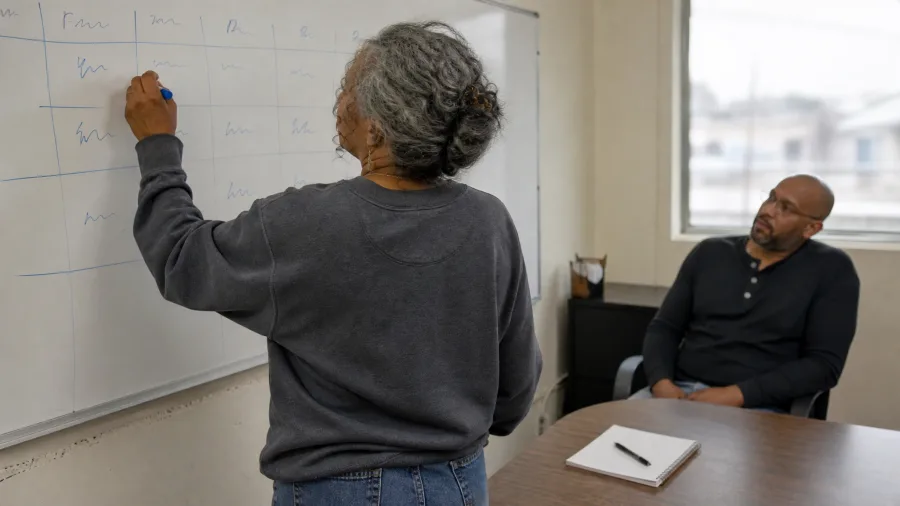
Yes, at $45-$75 an hour, and the work is easier to explain than it sounds. The same oversight that produces a compliance checklist also fixes how work moves through a small firm, which is why scheduling and workflow help is quotable in that $45-$75 band for a project that typically runs 5-10 hours a week.
The trade-off is the meetings. Nobody buys a calendar from a stranger who wants to hide; this is a poor fit for a manager who would rather not sit across from a client and hear what is stuck. What the firm keeps afterward is what makes it sellable: a working calendar and a written handoff, so the fix outlasts the project and the owner can point to it.
Proof is two items and a name: a before-and-after schedule from any past role, one page of results, and one former colleague who will vouch for the calm. A small-firm owner who already trusts the reader can confirm what the resume cannot, which is the difference between asking $45 and being paid $75 this month.
Frequently Asked Questions
Do I need a new certification to start any of these?
Not for the examples here. Remote support, companion work, tutoring, admin, bookkeeping, negotiation, and scheduling consulting need proof and references, not a new degree. Repairs and gardening need a licensing check with your state or local office. Confirm before you quote.
How much can I realistically earn part-time?
The illustrative rates run from $18 to $100/hour depending on the skill and the schedule. A two-hour tutoring slot at $50/hour is $100 that week. A half-day repair job at $50–$85/hour is $150–$400. The total depends on how many slots you book.
Should I worry about liability insurance?
For hands-on work, yes. Get a quote before the first job and price it into your rate. For remote office work, ask the client whether their policy covers contractors. A licensed agent can answer both questions in one call.
Can I pause if a family situation comes up?
Yes, and you should say so up front. Companion and repair work are shift-based, so a two-week pause is easier than on a retainer. Remote support shifts are harder to pause without notice, so ask about the schedule before you accept.
Is it too late to start at 65 or 70?
No. These skills are priced on proof and reliability, not age. The warm contact and the two work samples are what close the conversation. If a client asks about age, redirect to the schedule and the rate.
Pick the skill with two proofs and a warm contact
The verdict is a decision rule, not a training plan. Pick the skill where you already hold two proof points and a warm contact who will confirm them, then send one short availability note quoting the going rate. Check the one gating requirement before you pay for any course.
The retired teacher stays the model: two hours a week at $50 an hour, or a platform at $25 to $35 an hour where the students come supplied – proof in hand, a former colleague named and willing.
One availability note this month beats another course every time. The skill, the rate, the schedule, the first check and the warm contact decide the test – and training waits until a buyer says yes.
Send the availability note this week
Write three sentences: the skill, the schedule, and the rate. Send it to the one contact who can confirm your proof points.